304 or 316 Stainless Steel Jets: Everything You Should Know in 2026
- Share
- Issue Time
- Mar 2,2026
Summary
This guide breaks down what actually matters when selecting stainless steel jets in 2026, and where common assumptions often lead to unnecessary cost or risk.
In spa and hot tub design, the choice between 304 and 316 stainless steel jets is often treated as a simple material upgrade.
In reality, it's a system-level decision that affects appearance, durability, cost, and long-term service performance.
This guide breaks down what actually matters when selecting stainless steel jets in 2026, and where common assumptions often lead to unnecessary cost or risk.
The Short Answer (Before We Go Deeper)
Key Point to Understand First
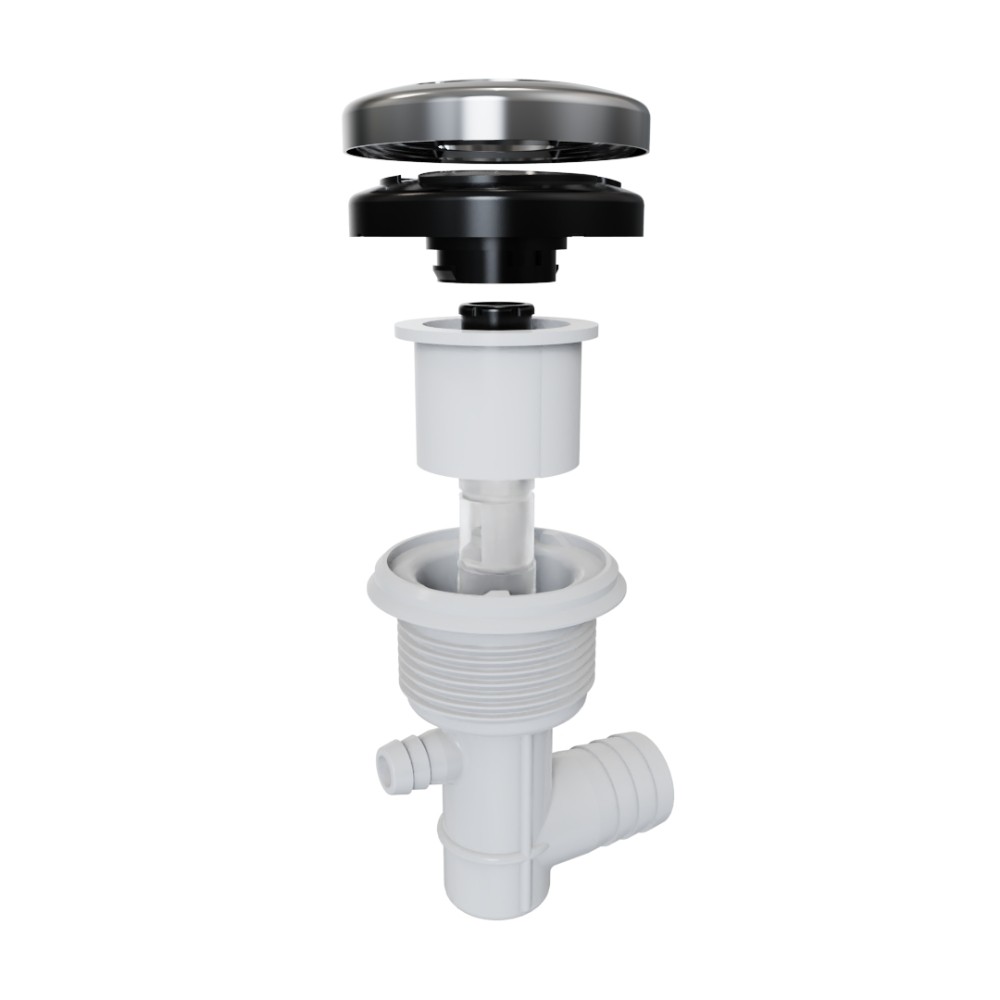
Stainless steel jets are engineered as multi-material components, regardless of whether they use 304 or 316 stainless steel.
Material grade selection should be based on operating conditions, not assumptions about construction.
This perspective is essential for avoiding over-specification, budget inefficiencies, and preventable service issues.
What Stainless Steel Jet Actually Means
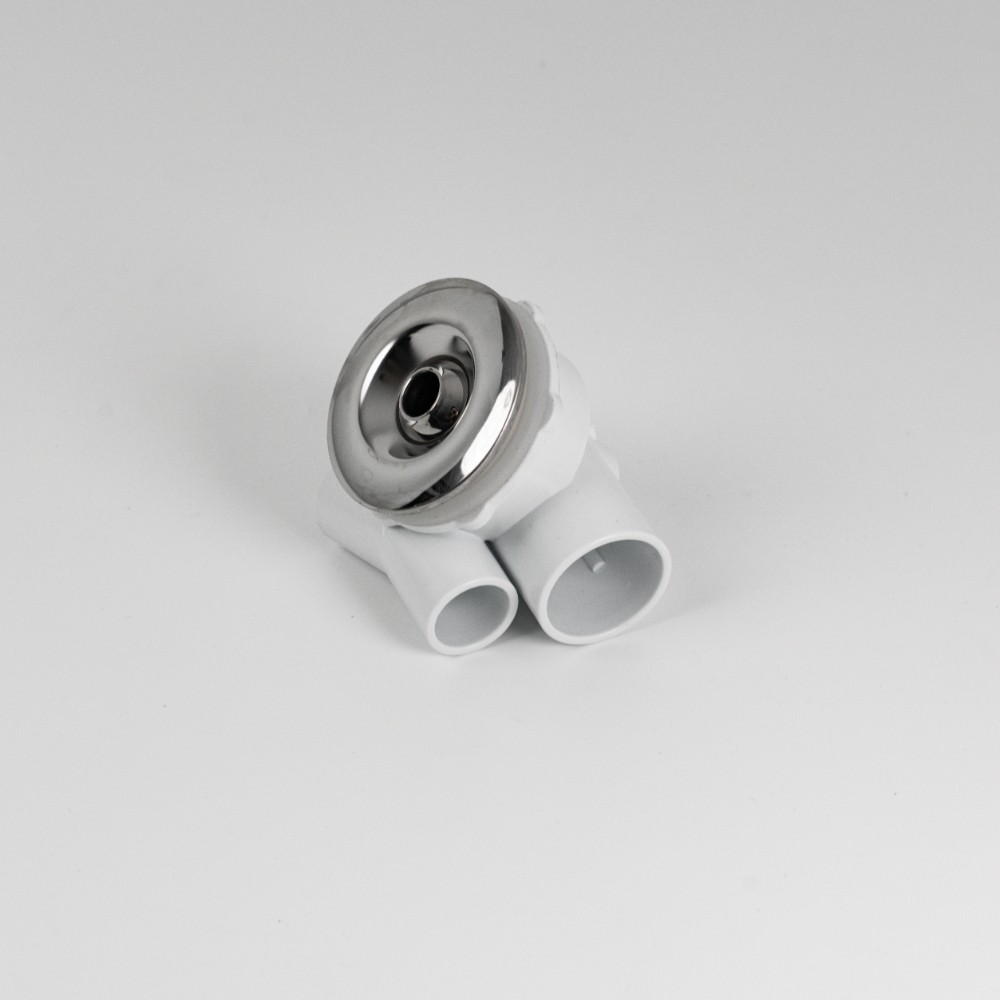
In real-world spa systems, a stainless steel jet is a hybrid spa component, not a single-material part.
A typical structure includes:
Front Face: Stainless Steel (304 or 316)
This is the visible part of the jet.
Its purpose is:
corrosion resistance
surface durability
and visual appeal
This stainless face is the reason the product is called a stainless steel jet.
Internal Moving Parts: Engineering Plastics
The rotating or directional components inside the jet are almost always made from engineering plastics, such as ABS or similar materials.
Why?
Lower friction
Stable rotation
Quieter operation
Better long-term reliability in water environments
Metal internal parts tend to increase wear, noise, and seizure risk over time.
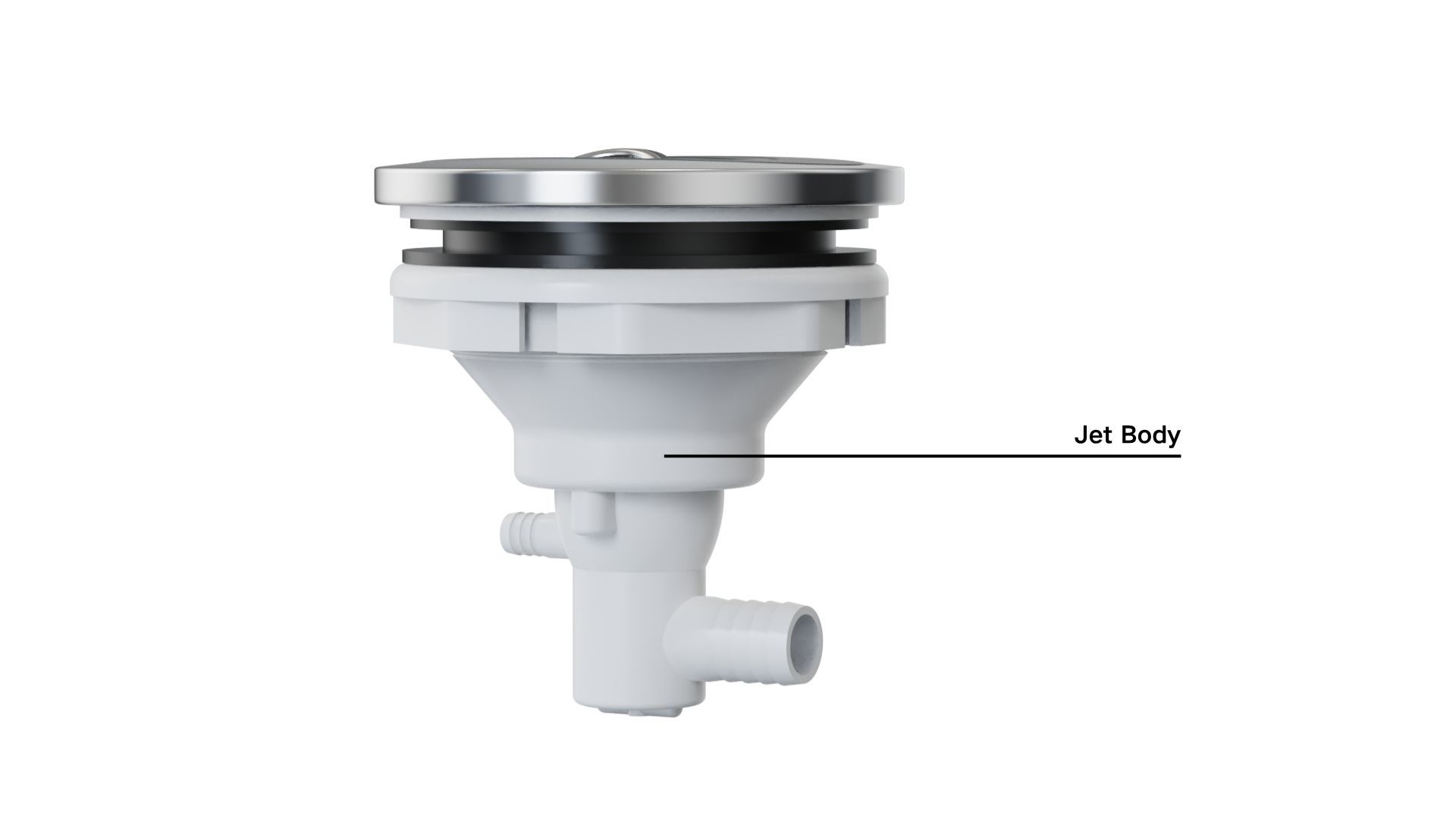
Rear Connection: PVC or ABS
The back of the jet connects directly to the water plumbing.
Using the same material as the pipe system:
improves sealing,
simplifies installation,
and reduces thermal stress.
Inside the Jet
A jet is not just an outlet.
Internally, it often includes:
flow-guiding channels,
air–water mixing paths,
adjustable flow mechanisms.
These structures are not well suited to metal in mass-production spa systems.
All Metal Is Not the Same as Better
From an engineering perspective:
More metal does not automatically mean higher quality.
Durability in spa jets depends on:
material compatibility with water chemistry
structural design
and operating conditions
Not on how much stainless steel is used.
304 vs 316:
If there is one material choice that actually matters, it's 304 vs 316 stainless steel, not "metal vs plastic".
Both are austenitic stainless steels.
Both perform well in normal spa conditions.
The difference is molybdenum (Mo).
When 316 Stainless Makes Sense
316 stainless steel performs noticeably better in environments with:
high chlorine concentration,
saltwater systems,
coastal or high-humidity locations,
commercial spas with frequent chemical dosing.
In these cases, 316 reduces the risk of:
pitting,
surface staining,
long-term cosmetic degradation.
Where 304 Is Usually Enough
For most residential spas:
standard chlorine levels,
non-salt systems,
normal maintenance routines.
304 stainless steel is fully adequate.
Possible long-term effects may include:
slight surface discoloration,
minor edge pitting after several years.
These are typically cosmetic, not functional, issues.
Why Many Manufacturers Use Mixed Jet Configurations
If you look closely at mature spa brands, you'll notice a pattern.
They rarely use stainless jets everywhere.
Instead, they apply a mixed configuration strategy.
1. Typical Configuration Logic
Primary massage zones (shoulders, back, main seats): stainless steel jets
High-visibility areas: stainless steel jets
Foot-well, hidden zones, small jets: ABS jets
2. Practical Advantages
This approach offers:
1. balanced cost control
2. strong visual impact where it matters
3. reduced overall weight
4. simpler after-sales maintenance
For most product planners, this is a more realistic and workable solution.
Cost Reality: 304 vs 316 at System Level
Market pricing is relatively consistent:
316 stainless jets typically cost 1.4–1.6x more than 304.
On a spa with 40–50 jets, this difference compounds quickly.
That's why stainless selection should always align with:
product positioning,
target market,
and expected water chemistry.
Stainless Jets Are a System Decision
Just like blower noise is rarely a single-component issue,
stainless steel jets are not just a material choice.
They are part of a system that includes:
Water treatment
Usage frequency
Cleaning habits
Service strategy
Material decisions should follow system understanding.
Spa Jets FAQ
Do residential spas really need 316 stainless?
Not usually. In most cases, 304 performs well when water chemistry is properly managed.
Will ABS jets look cheap?
Not when used in low-visibility areas. Users focus on primary massage zones.
What causes most stainless jet complaints?
Mismatch between material choice and water chemistry, not the jet design itself.
What is Hydrorelax's role in stainless steel jet selection?
Hydrorelax works with spa manufacturers and brand owners to define application-appropriate jet configurations, balancing material choice, system compatibility, cost control, and long-term service reliability.
Hydrorelax Perspective
At Hydrorelax, we don't promote "more stainless" as a default.
We focus on:
application environment,
system compatibility,
and long-term service outcomes.
If you're planning a new spa model or reassessing jet configurations,
we're happy to support you with practical, system-level recommendations, not just material specs.
Contact the Hydrorelax team for further support.