304 vs 316 Stainless Steel Jets:How to choose the best option for your hot tub?
- Share
- Issue Time
- Dec 26,2025
Summary
This blog compares 304 and 316 stainless steel hot tub jets and guides buyers to select the right material based on product positioning, usage environment and maintenance costs.
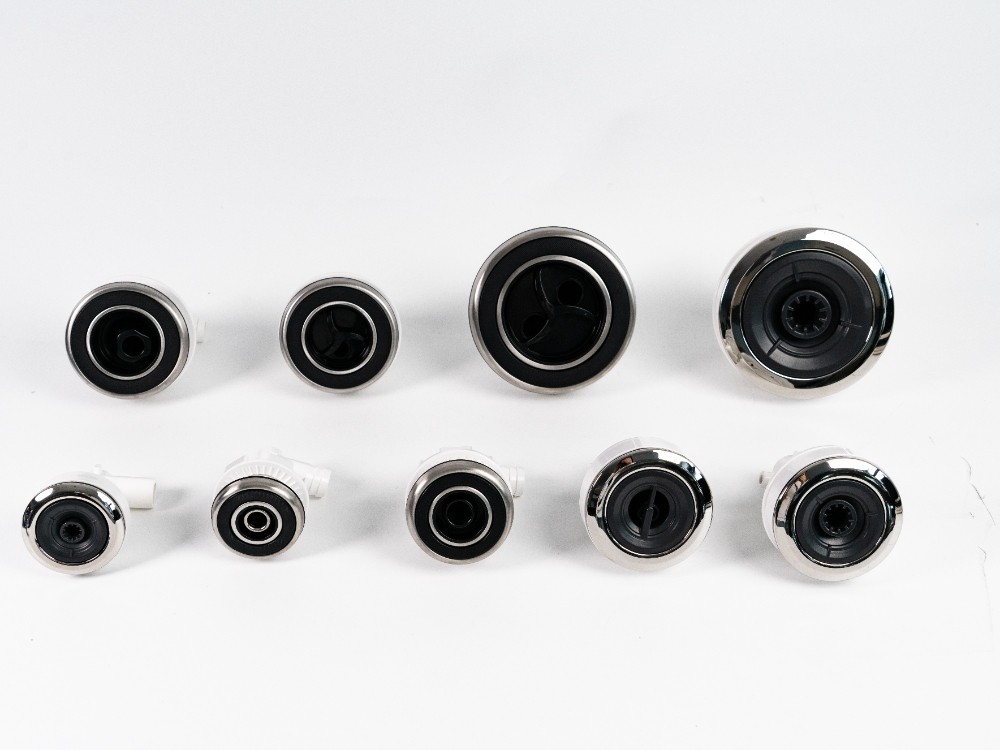
In the Spa & wellness industry, people often say stainless steel jets feel more premium. But why?
Do they really affect appearance, durability, or long term maintenance costs?
More spa brands, buyers, and service teams are now asking a key question:How should you choose between 304 and 316 stainless steel?
If you are planning products, restocking parts, upgrading models, or just trying to improve the user experience, understanding the difference between these two materials will make your decisions easier and more forward looking.
What are stainless steel jets?
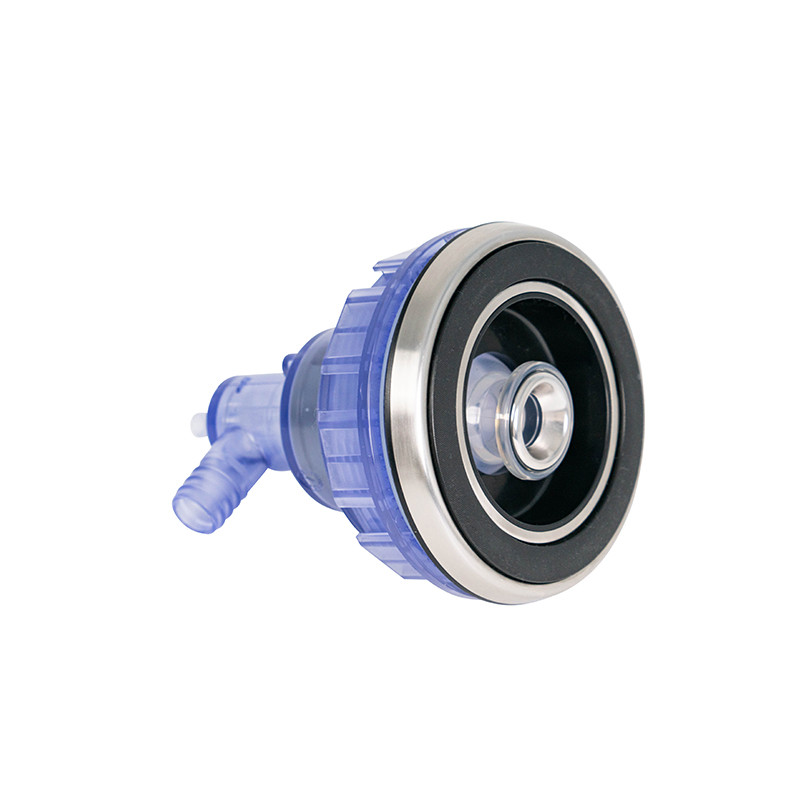
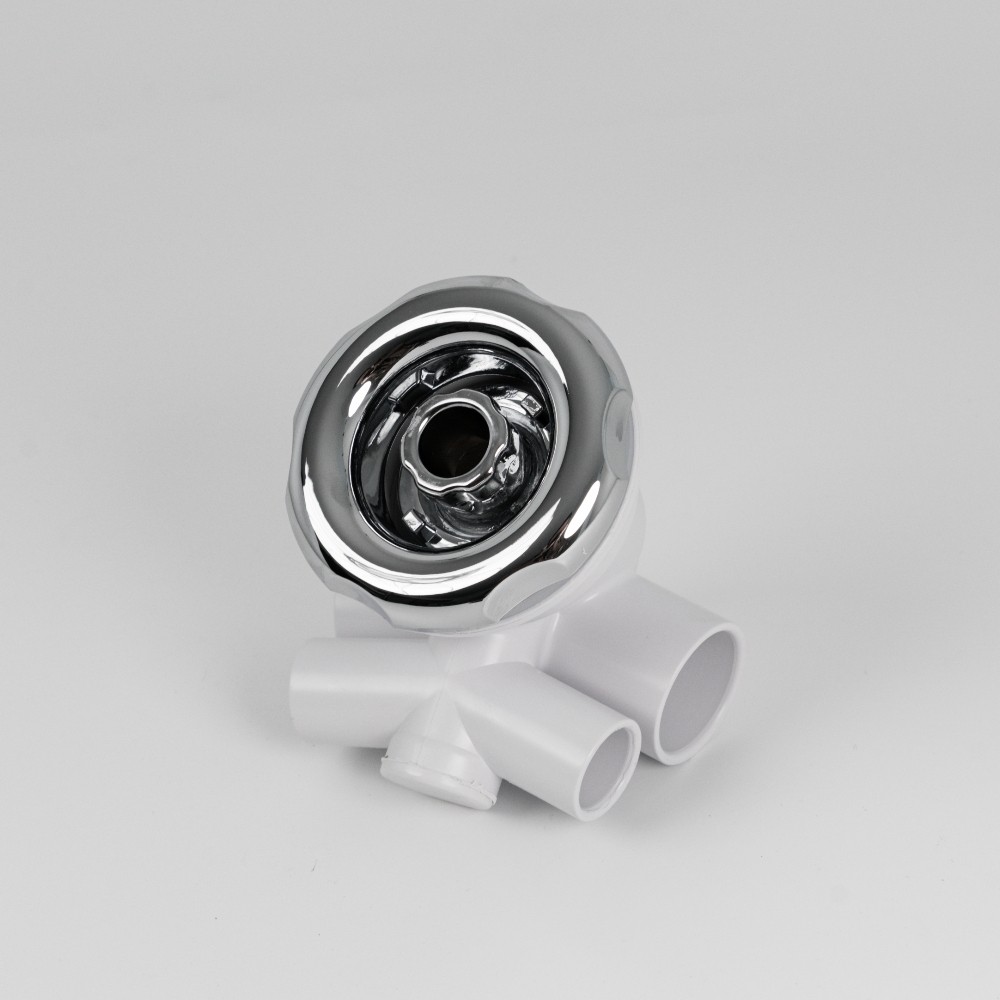
Many people new to stainless steel jets simply think of them as metal jets. But the actual structure is more complex:
1.The outer ring is stainless steel(304 or 316 S.S.).
2.The internal rotating components are still made of engineering plastic.
3.The rear connectors and plumbing are made of PVC or ABS.
4.Inside, there are structures for water flow guidance, air mixing, and adjustable settings.
So stainless steel jets are not fully metal. Their core value lies in appearance, touch, corrosion resistance, and brand perception. This is why high end hot tubs have increasingly made stainless steel jets standard. They enhance the overall look, make the product feel more premium, and improve durability.
Both 304 and 316 are austenitic stainless steels and are the most commonly used in the industry. What exactly is the difference between them?
304 vs 316 Stainless Steel Jets
If you check the specifications, you will see lots of data on chemical composition and metal content. For practical use, just remember one key point:
316 stainless steel contains one element that 304 does not, molybdenum (Mo). The addition of molybdenum significantly improves corrosion resistance.
304 stainless steel already offers good oxidation and corrosion resistance and is the standard material for most home equipment.
With molybdenum, 316 performs noticeably better in these situations:
1.High chlorine water
2.Saltwater systems
3.Coastal areas or high humidity and salt spray environments
4.Commercial settings with frequent use of chlorine or chlorine tablets
In short, if your water is stable, not a salt system, and usage is light, 304 is enough.
If the environment is harsh or usage is heavy, the benefits of 316 become more significant over time.
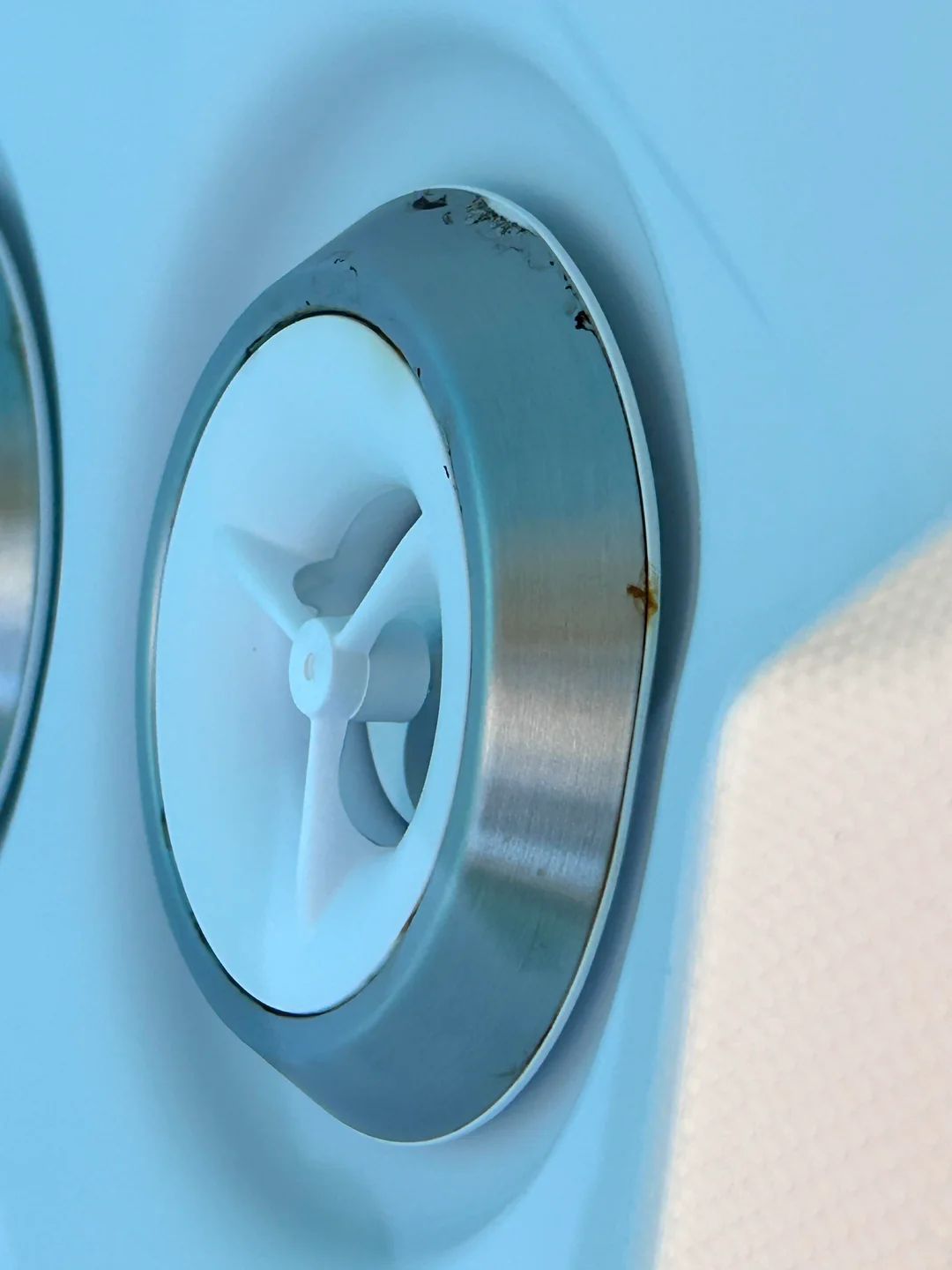
A common misunderstanding in the industry is that 304 rusts while 316 does not. This is not entirely true.
304 stainless steel has very good corrosion resistance and usually does not show surface corrosion or pitting.
However, in high chlorine or salt environments it may experience:
1.Slight surface discoloration
2.Small pits along the jet edges
3.Stains that are difficult to remove after long term use
These issues rarely affect function but can impact appearance and may become more noticeable after two to four years.
The industry trend is clear:
304 is standard and suitable for most home projects
316 is premium and recommended for salt systems, high chlorine water, or coastal projects
Understanding this helps with product positioning and long term cost management.
Do you need stainless steel jets for the entire hot tub?
Many people ask:
"Do all positions need stainless steel jets to make the tub feel premium?"
In reality, this is a design choice rather than a functional requirement.
Many professional manufacturers use a mixed setup:
Main massage areas (shoulders, lower back, large seats): stainless steel jets
Visually prominent positions: stainless steel jets
Foot area, hidden spots, small jets: ABS jets
This approach offers several advantages:
Balanced cost as full stainless steel can greatly increase the budget
Strong visual impact since users focus on the larger jets above
Lighter shipping weight
Easier maintenance as small jets wear more often and do not need to be stainless
For hot tub planners, a mixed setup is a more practical and engineering friendly solution.
Cost and value of 304 vs 316 stainless steel jets
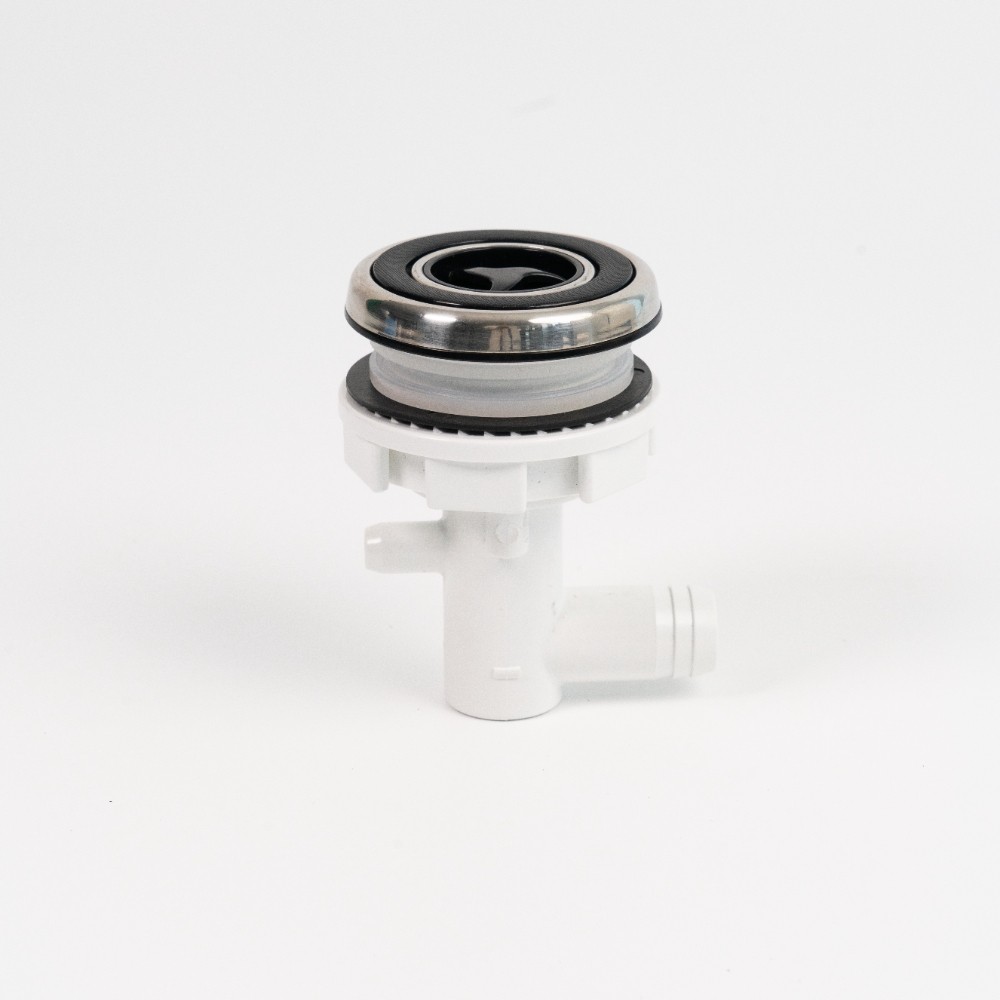
This is one of the most important considerations in practice. It is not just about material selection but also product positioning and profit structure.
Material cost difference
Market norms show that 316 stainless steel jets cost about 1.4–1.6 times more than 304.
For hot tubs with 40–50 jets, the cost difference becomes significant. Decisions must align with product positioning.
Material selection logic
1.Mid range products
Usually use 304 as the main material. It is durable and keeps the budget under control.
2.High end or flagship products
Key massage jets are upgraded to 316 to ensure long term corrosion resistance and salt water compatibility.
3.Coastal resorts or rental tubs
Often 50–75% of jets are 316 due to high maintenance frequency and variable water quality.
Spare parts market logic
Purchasers usually stock two types:
Standard: 304
Upgraded: 316
The reason is simple:
Salt system users have low tolerance for discoloration and are willing to pay extra for 316.
Maintenance teams prefer recommending 316 because it reduces after sales risk.
Brand image and value
Stainless steel jets have a visual appeal. Their reflection and metallic feel make the tub look stronger, more durable, and premium.
This is critical for brand positioning, so even with higher cost, many manufacturers prioritize stainless steel jets for key visual areas.
Is your business suited for more 316 stainless steel jets?
To make the decision easier, you can quickly assess using these four questions.
They apply to most hot tub brands, factories, and spare parts teams:
1.Do customers use saltwater systems?
If yes, 316 is usually the clear choice.
2.Is the product positioned as high end?
The more important the visual impact, the more noticeable the benefits of 316 in durability and appearance.
3.Is the project located near the coast or in a high humidity area?
Coastal projects almost always recommend 316 since salt spray accelerates pitting.
4.Do you want to reduce after sales costs over the next 3–5 years?
316 has much lower pitting risk, reducing complaints like jet discoloration.
If two or more answers are yes, upgrading to 316 is the more reasonable option.
Why is the adoption of 316 jets on the rise?
In the past three years, the hot tub industry has seen a clear trend: the use of 316 jets is steadily increasing.
Reasons include:
1.More users are adopting saltwater systems
2.The high end market demands better appearance and durability
3.Display environments value metallic aesthetics more
4.Supply chains for 316 are more stable and cost differences are narrowing
This means that in the coming years, the share of 316 jets in high end or professional projects will continue to grow.
Final words from Hydrorelax
The choice between 304 and 316 ultimately depends on product positioning, usage environment, and long term maintenance costs. Understanding their differences allows you to create the right jet combination for each model or project, balancing durability, budget, and user experience.
Hydrorelax has been specializing in the hot tub industry for 25 years, providing jet systems, plumbing accessories, lighting, control systems, and complete solutions for the European and North American markets.
If you are planning new models, updating parts catalogs, or want to confirm the best 304 vs 316 setup, we can provide specifications, technical advice, and sample support.
Contact Hydrorelax to find the ideal jet material configuration for your products.