Bathtub Electrical Control System: From Core Components to Selection Guide
- Share
- Issue Time
- Mar 10,2025
Summary
Explore bathtub electrical control systems, including controllers, control panels, protection devices, sensors, installation considerations, and a practical selection checklist for bathtub brands and B2B projects.

In modern bathroom spaces, smart bathtubs are changing the bathing experience. Coordinated control of water temperature, water level, massage, and lighting depends on the bathtub electrical control system. Although the system may appear complex, it mainly consists of a controller, a control panel, related sensors, and protection devices.
This guide explains the core components, connected accessories, installation considerations, control panel types, and purchasing criteria that bathtub brands and project buyers should review when specifying a system.
Bathtub Controller: How Does It Manage the Electrical Control System?
The bathtub controller receives information from sensors and accessories, processes that information, and sends commands to coordinate water temperature, water level, massage, and other functions.
Controller configurations range from basic switching to automatic adjustment and smart modes. Buyers should check more than the number of available functions. The controller, control panel, pump, heater, lighting, and sensors must work together as one system. For an overview of available components, visit the Hydrorelax bathtub electrical control system category.
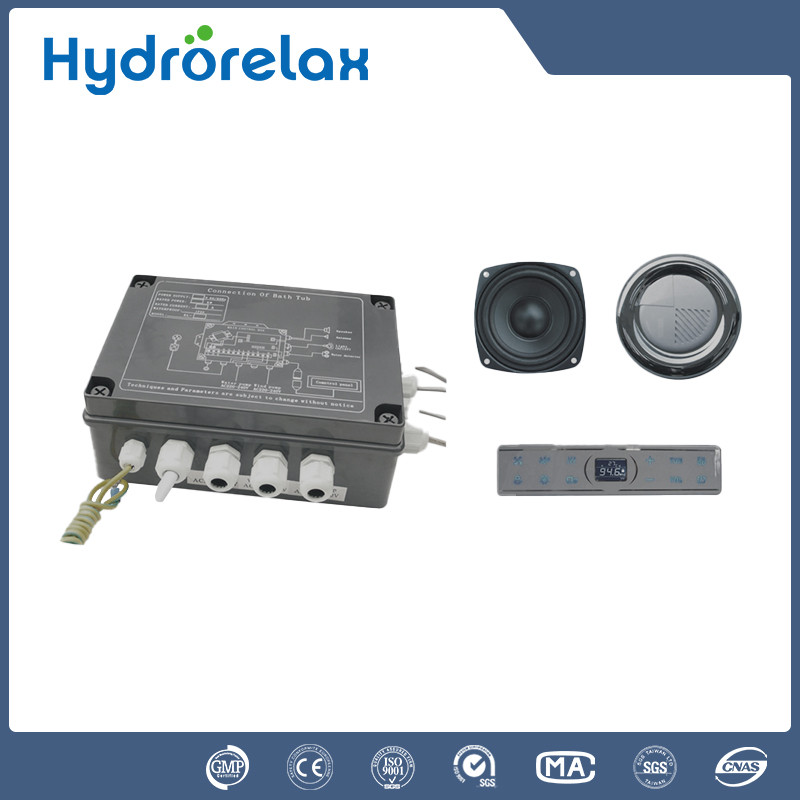
Bathtub controllers can be grouped into three functional levels:
- Basic: Handles fundamental on/off commands.
- Enhanced: Supports coordination between multiple sensors and accessories.
- Smart: Can include modules for Wi-Fi or Bluetooth connectivity and remote control.
Connected Accessories: What Does Each Component Do?
A controller usually works with protection devices and sensors to maintain operation and reduce risks in an environment where water and electricity are both present.
Ground-Fault Circuit Interrupter (GFCI)
A GFCI detects current leakage and disconnects the power supply when an abnormal condition is detected, helping reduce the risk of electric shock. Buyers should confirm that the selected control system includes a leakage-protection solution suitable for the target project.
Overload Protector
When current exceeds a preset limit, an overload protector cuts off power to protect components such as the controller, heater, and motor. This protection is commonly used in bathtubs designed for North American and European markets, especially models with heating or hydro-massage functions.
Not every simplified bathtub configuration includes a separate overload protector. During selection, confirm whether the controller includes overload protection and whether the protection method matches the complete electrical design.
Water Level Sensor (Optional)
A water level sensor monitors changes in the bathtub water level. When the level moves outside the set range, the controller may issue an alert or perform a configured action. The exact control logic depends on the product specification.
Temperature Sensor (Optional)
A temperature sensor monitors water temperature and sends the data to the controller. The controller then coordinates the heater or other temperature-control components according to the set value. For projects focused on heat retention, see the bathtub thermostat system guide.
Controller Installation: What Conditions Should Be Avoided?
The controller is usually installed beside the bathtub or in a nearby equipment space, with access for wiring, inspection, and maintenance.
The installation position should limit long-term exposure to steam, standing water, and excessive heat. Location, clearance, and protection measures should follow the controller supplier's instructions and the complete bathtub electrical design.
Bathtub Control Panel: How Does the User Operate the System?
The control panel is the main interface for sending commands to the controller. Depending on the system, it may operate the water pump, lighting, heater, blower, ozone generator, or other equipment.
A control panel does more than display information; it also defines how users operate the bathtub and receive feedback. Different product configurations are available in the Hydrorelax bathtub control panel category.
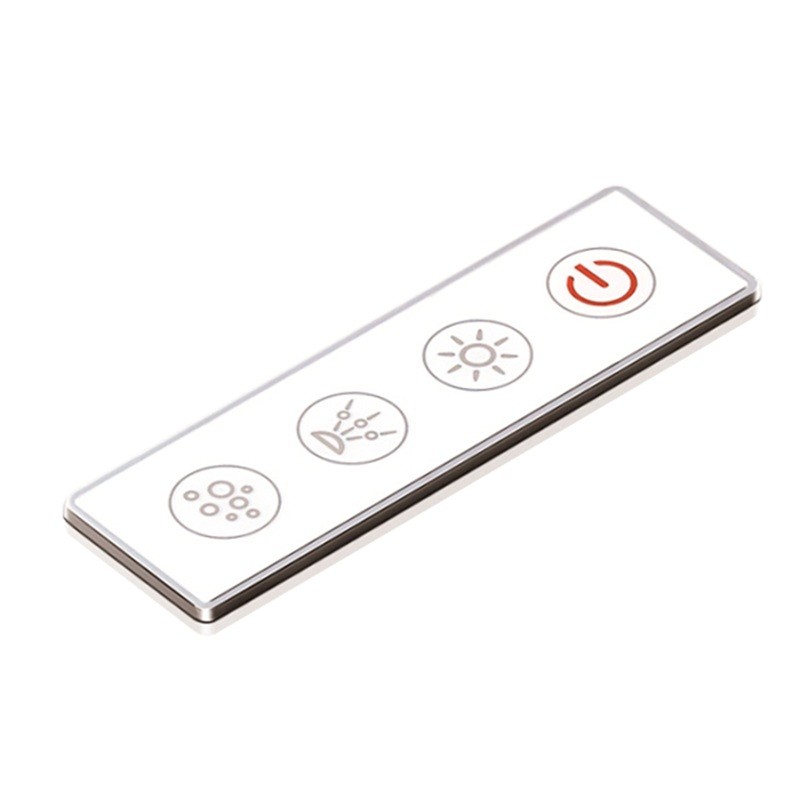
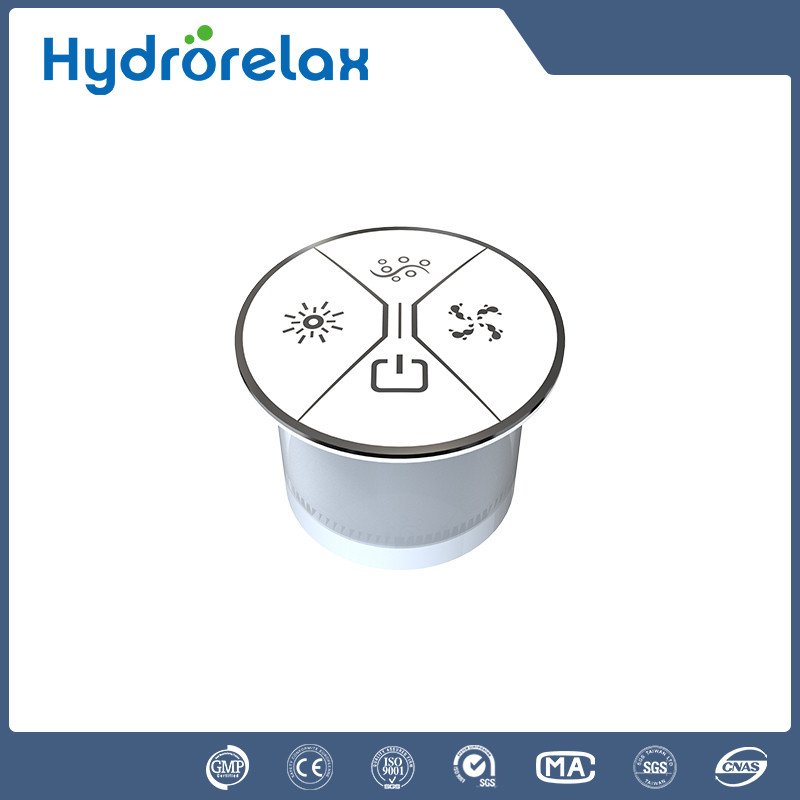
Button Control Panel
A button control panel uses physical buttons for different functions. Its direct operating method is suitable for bathtub configurations that prioritize straightforward controls.
Knob Control Panel
A knob control panel adjusts functions by rotating a dial. It is commonly used where continuous adjustment of water flow, water temperature, or another setting is required.
Touchscreen Control Panel
A touchscreen panel allows users to tap icons or swipe across the display. It can accommodate more information and controls, making it suitable for configurations that centralize several functions.
| Panel Type | Operating Characteristic | Typical IP Rating | Service Life |
|---|---|---|---|
| Button | Precise commands | IP65 | Approximately 500,000 presses |
| Knob | High adjustment precision | IP54 | Approximately 100,000 rotations |
| Touchscreen | Responsive operation | IP68 | Unlimited |
Control Panel Design: Why Is Appearance Only One Factor?
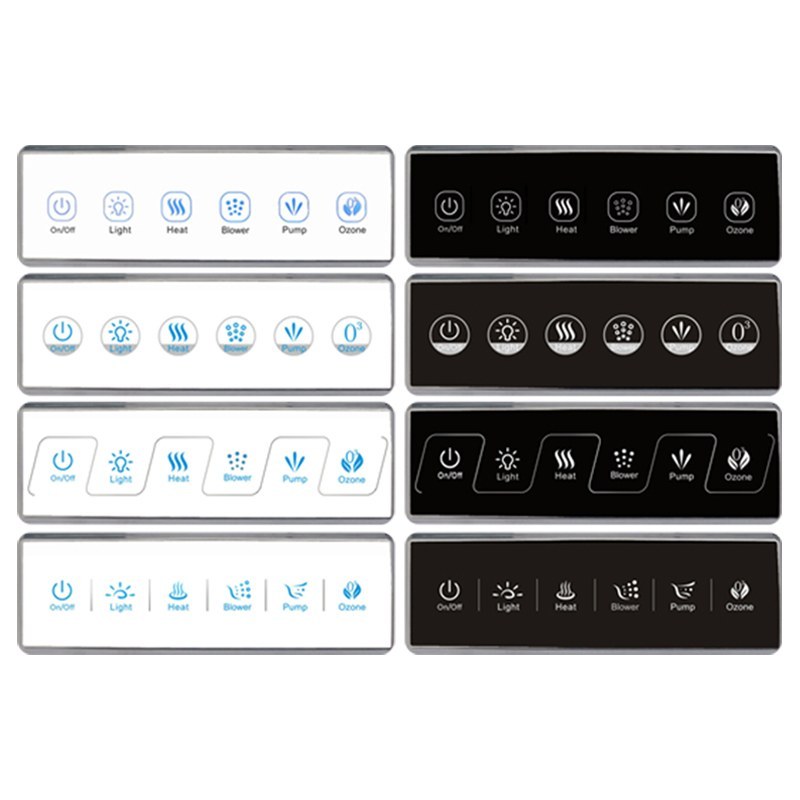
A control panel must account for operating habits, function layout, and suitability for a humid environment. Appearance is only one selection criterion.
Modern panels may incorporate water-resistant, moisture-resistant, and heat-resistant designs, along with LED displays, audio prompts, and intelligent adjustment functions. Buyers should evaluate the panel and controller as one system rather than assuming compatibility from dimensions or connector appearance alone. For more details, see this guide to controller and control panel compatibility.
Controller Selection: What Should Bathtub Brands Check?
The controller must match the bathtub functions, electrical parameters, target-market requirements, and product design rather than being evaluated as an isolated component.
Performance Parameters
Review response speed, operating stability, durability, anti-interference capability, and processing capacity. Because controller faults can affect the complete control system, performance should be checked through samples and testing under the intended load.
Safety Parameters
Confirm whether the controller supports the overload protection, leakage protection, and ingress protection required by the project. Also check the certification and test documents required by the target market. Pump configuration affects load matching, so buyers may also consult the bathtub water pump guide for B2B buyers.
Appearance and Design
The shape, color, icons, display method, and installation dimensions of the control panel affect both the bathtub's appearance and the operating experience. Design confirmation should therefore take place alongside functional confirmation.
System Compatibility
Check the communication method, connectors, rated electrical parameters, and controllable loads of the panel and controller. For a broader project checklist, read the massage bathtub controller selection guide.
- List the functions to be controlled, such as the water pump, blower, heater, lighting, and ozone generator.
- Confirm input voltage, output load, connectors, and communication method.
- Check the IP rating, protection functions, certifications, and test documents.
- Confirm panel dimensions, installation method, icons, and color.
- Use samples or complete-system testing to verify control logic and compatibility.
Brand and Material: What Should Buyers Review?
The CG Air Topside Keypad provides one example of a chrome-plated control surface designed for a modern appearance, corrosion resistance, oxidation resistance, and use in humid environments.
Materials, protection ratings, functions, and interfaces vary by brand and model. Buyers should check the documents for the specific model rather than applying the characteristics of one product to an entire brand or all control panels.
Selection Summary: Four Points to Confirm First
Bathtub brands can begin electrical control system selection by confirming four areas:
- Function matching: Define which equipment and sensors the controller must coordinate.
- Safety configuration: Check whether leakage, overload, and ingress protection meet project requirements.
- System compatibility: Confirm the electrical and communication match between the panel, controller, and connected loads.
- Document verification: Confirm parameters through model-specific specifications, test reports, and certification documents.
Looking Ahead
As bathtub control functions expand, controller and panel matching will require a more systematic selection process. Hydrorelax will continue to support bathtub brands with electrical control components, compatibility checks, function combinations, and project-specific configuration before sampling and mass production.