Bubble System in Bathtub: Detailed Guide to Air Massage System Components
- Share
- Issue Time
- Feb 26,2025
Summary
The components involved in bathtub bubble systems are diverse, and their operating principles differ significantly from those of massage systems using water jets.
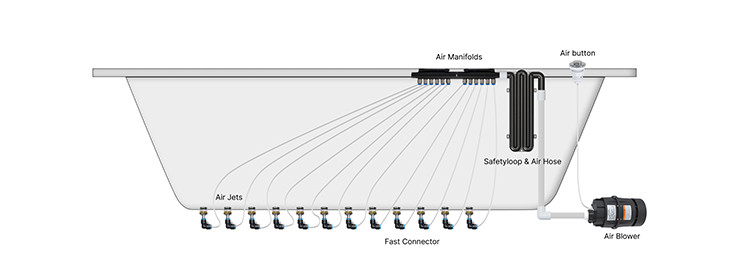
A bathtub bubble system, also called an air massage system, does not use a water pump to drive water. Instead, an air blower sends air through the air circuit, where manifolds, hoses, and air jets release bubbles into the bathwater.
For bathtub brands, manufacturers, and project buyers, selection is not simply about the appearance or power rating of one part. The air blower, jet quantity, air distribution, backflow prevention, connections, and control method must work together as one system. This guide follows the actual airflow path to explain the components, control logic, and common troubleshooting steps.
How Does a Bathtub Bubble System Produce Bubbles?
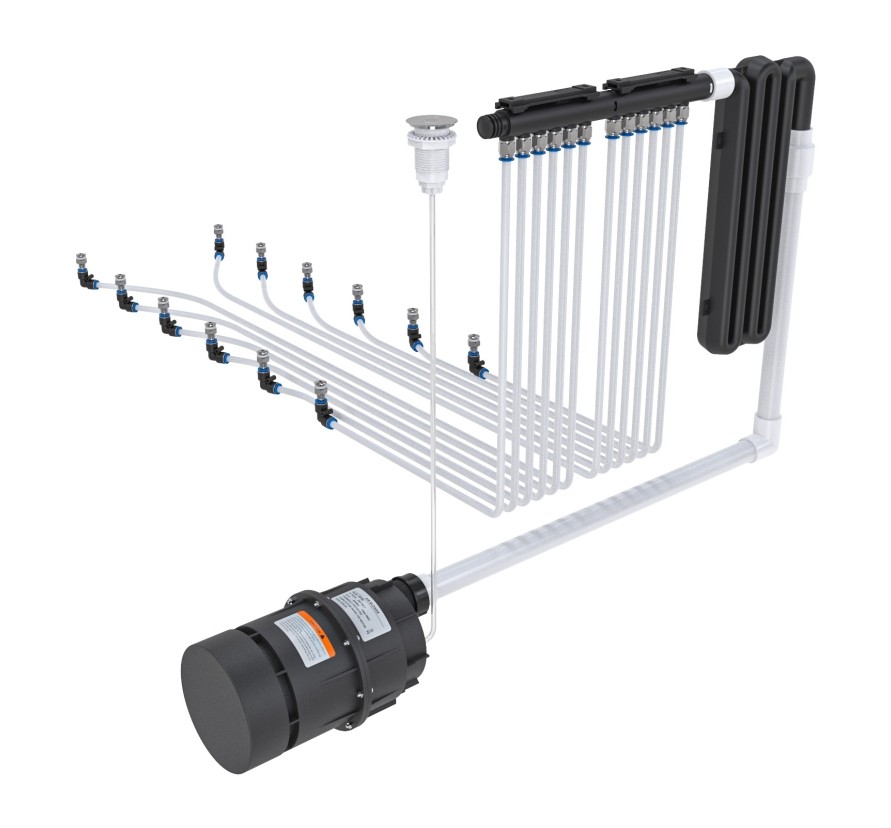
When the system starts, the air blower draws in ambient air and pushes it into the main air line. Distribution components divide the airflow among multiple branches, and the air travels through hoses to jets installed in the bottom or sides of the bathtub before entering the water as bubbles.
This is an independent air circuit, unlike a water massage system that uses a water pump, water jets, and recirculating bathwater. Both systems may create a visible bubbling effect, but their drive equipment, plumbing, and jets are not interchangeable. For a closer comparison, see our guide to air jets versus water jets.
Bubble distribution depends on how well the blower output matches the number of jets, branch lengths, air distribution layout, connection seals, and backflow-prevention design. The performance of the complete system cannot be judged from one component alone.
What Are the Core Components of an Air Massage System?
A basic bathtub bubble system normally includes an air blower, air jets, air distribution components, a check valve, air hoses and fittings, and controls for starting and stopping the system. Each part sits in the same airflow path, so an incompatible connection or control method can affect both installation and operation.
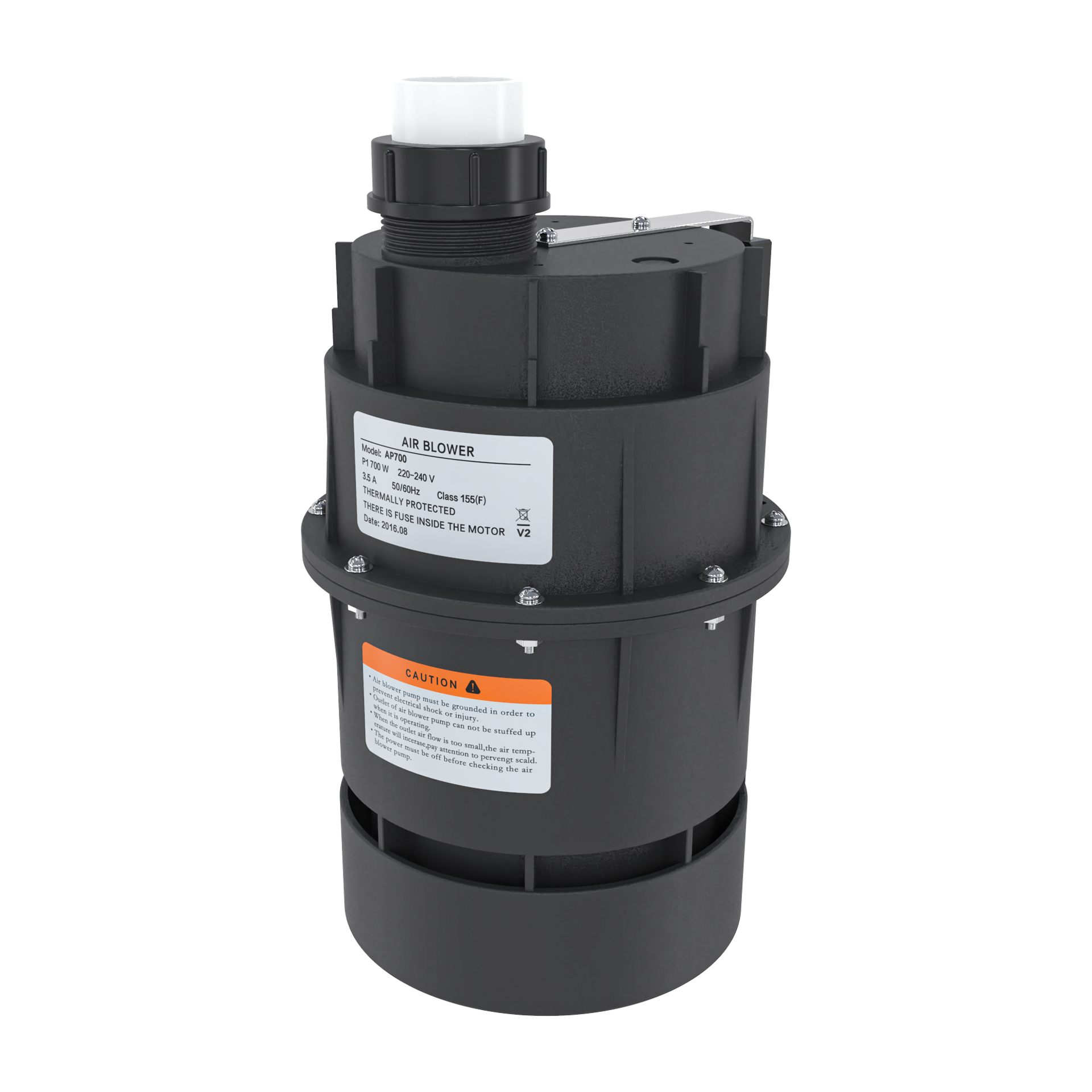
Air Blower: Power for the Air Circuit
The air blower draws in and moves air through the system. Selection should consider the bathtub structure, number of air jets, pipe length, number of branches, intended bubble effect, and electrical conditions rather than relying on power rating alone.
If a blower becomes unusually loud after installation, the unit itself may not be the only cause. Supports, pipe resistance, connections, installation space, and vibration should also be checked. See our analysis of excessive air blower noise after installation for related troubleshooting points.
Air Jets: Releasing Air into the Bathwater
Air jets are normally installed in the bottom or sides of the bathtub and disperse airflow into the water through their outlets. Jet quantity, position, outlet structure, and branch distribution collectively affect bubble coverage and uniformity.
The body materials, cover materials, and surface finishes listed in the original article can be treated as possible options, but each project should confirm them against the relevant product information. Material, connection type, and operating suitability should not be inferred from appearance alone.
Air Distribution Components and Push-In Fittings: Dividing Airflow Among Branches
Air distribution components divide the airflow from the blower among multiple jet branches. The number of outlets and their connections should correspond to the jet layout to avoid unnecessarily long branches, loose connections, or uneven distribution.
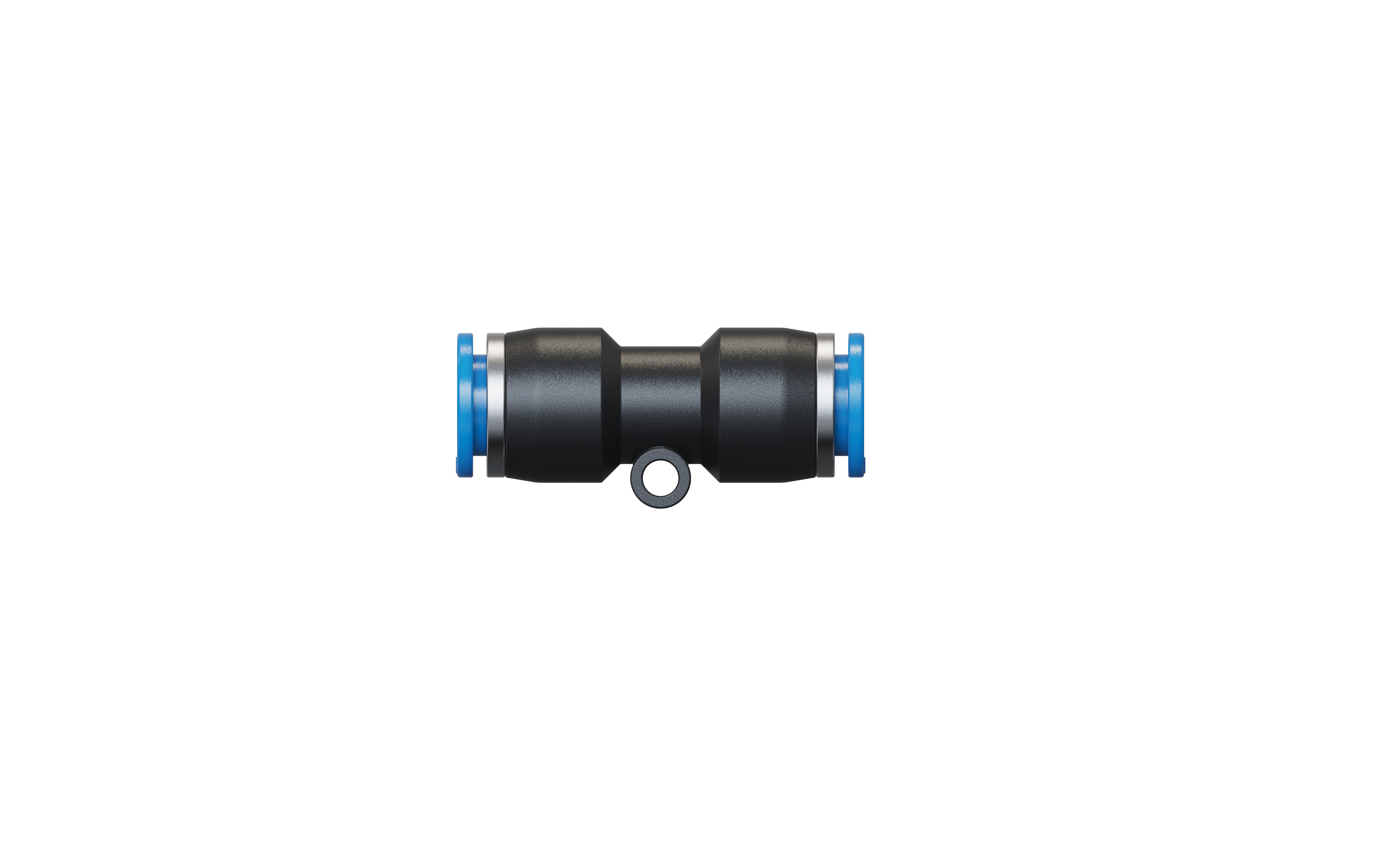
Push-in fittings can connect, divide, or combine air hoses. During assembly, check the hose outside diameter, insertion depth, locking structure, and seal. Quick installation does not remove the need for a pull test and complete-system testing.
Check Valve: Restricting Reverse Flow in the Air Circuit
A check valve allows media to move in the intended direction while restricting reverse flow. In a bathtub bubble system, its main purpose is to reduce the risk of bathwater flowing back through the air line and entering parts of the circuit or blower area that should remain dry.
The original article described the check valve as allowing water to flow in only one direction, which could imply that it belongs in a water-circulation line. In this system, it is more accurate to understand it as part of the air circuit's backflow-prevention design. Valve orientation, installation position, and overall pipe routing should be confirmed for the specific system.
Air Hoses, Clamps, and Sealed Connections: Completing the Air Circuit
Air hoses connect the blower, distribution components, and air jets. Project selection should confirm hose dimensions, bending space, connection method, operating environment, and interface sealing. Confirming the hose material alone is not enough if it does not match the fittings and jets.
For a broader view of how jets, drive equipment, and valves work together, read our air system component guide.
Air Push Button, Pneumatic Switch, and Control Panel: Managing Start and Stop Functions
An air push button sends a pressure signal through a small air tube to a matching pneumatic switch or control component, which starts or stops the blower. Its main function is to send a switching signal, not to adjust airflow strength or bubble frequency at the jets.
If the bathtub uses an electronic control panel, the blower may instead be switched through the matching control system. Whether pneumatic or electronic control is appropriate depends on the blower and complete bathtub design. For further diagnosis, see our guide to bathtub air push button problems.
Why Does a Bubble System Usually Not Need an Air Control?
A bubble system uses a blower to supply air directly, so it does not need to draw air into a water stream through the Venturi effect in the way that some water massage jets do. It therefore usually does not include the air control used to adjust air intake at those water jets.
An air control is more commonly used in a water massage system. A water pump drives water through a jet designed to mix air and water, the jet draws air through negative pressure, and the air control changes the opening of the intake passage. A bubble system instead uses an active air-supply circuit consisting of a blower, distribution components, air hoses, and air jets.
| Comparison | Bathtub Bubble System | Water Massage System with Air Mixing |
|---|---|---|
| Main drive equipment | Air blower | Water pump |
| Main outlet component | Air jets | Water jets |
| How air enters | Air is supplied by the blower | The jet draws air into the water stream |
| Air control | Usually not a basic component | Can adjust air intake at the jets |
| Project checks | Blower, distribution, backflow prevention, air lines, and air jets | Pump, water lines, water jets, and air-intake passage |
What Should You Check If the Air Jets Will Not Turn Off?
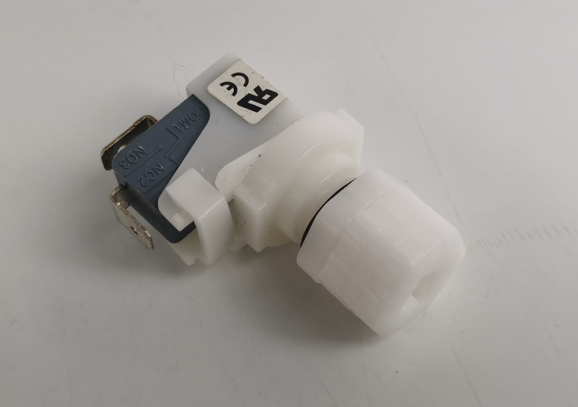
If the blower keeps running after the control button is pressed, first determine whether the problem is in the switching signal, small air tube, pneumatic switch, or electronic control component. Do not begin by replacing the air jets. The jets are airflow outlets and normally do not control whether the blower receives power.
Step 1: Confirm What Is Actually Running
First confirm that the bubble system, rather than a separate water massage or drying function, is producing the airflow. Note whether the blower continues to make operating noise, whether the control button feels normal, and whether the problem occurs every time or only intermittently.
Step 2: Inspect the Air Push Button and Signal Tube
If the system uses an air push button, check whether the small tube between the button and pneumatic switch is detached, kinked, damaged, or leaking. The switch may not change state correctly if the pressure signal cannot travel through the tube.
Step 3: Inspect the Pneumatic Switch or Control Component
If the button and signal tube show no obvious problem, inspect the switching component inside the blower or its matching control box for sticking or failure. The last image on the original page shows a pneumatic switch component inside the blower, not a check valve.
Step 4: Disconnect Power Before Qualified Service
Before inspecting electrical connections inside the blower, disconnect the power supply and have a qualified person check or replace the matching component. Do not open the equipment while it is energized, and do not select a replacement from appearance alone.
What Information Should B2B Buyers Confirm Before Selection?
When sourcing an air massage system, use complete air-circuit information as the basis for quotation and component matching. The following information makes compatibility easier to assess:
- Bathtub structure: bathtub dimensions, available installation space, and planned blower position.
- Jet layout: air jet type, quantity, installation positions, and branch plan.
- Air-circuit conditions: main and branch lengths, distribution method, connection dimensions, and backflow-prevention design.
- Control method: air push button, electronic panel, or a control arrangement linked with other functions.
- Electrical conditions: the project's power supply and the electrical requirements applicable to the complete bathtub.
- Project stage: new product development, sample production, existing-system replacement, or mass production.
For replacement projects, also provide the blower label, photos of existing jets and fittings, hose dimensions, control method, and installation space. A request for "an air blower" alone is normally not enough to determine compatibility.
Four Key Takeaways
- A bubble system is an independent air circuit: the blower, distribution components, air hoses, and air jets must be matched as one system.
- A check valve restricts reverse flow: in this system, it should be understood as part of air-circuit backflow prevention rather than as a standard water-line valve.
- An air push button mainly controls start and stop: it sends a pressure signal and should not be described as directly adjusting bubble strength or frequency.
- Troubleshooting should start with the control path: if the blower will not stop, check the button, signal tube, and pneumatic switch before replacing parts.
Looking Ahead: Moving from Individual Parts to Complete Air-Circuit Matching
As bathtub functions become more complex, air massage performance depends increasingly on component compatibility. For brands, manufacturers, and project buyers, confirming the jet layout, air-circuit drawing, control method, and service space before sampling can reveal connection, distribution, and switching problems earlier.
Hydrorelax can help review the composition and matching direction of a bubble system based on the bathtub structure, intended functions, and available component information. Any final proposal should still be based on the project's actual dimensions, connections, electrical conditions, and operating requirements.
Provide the bathtub structure, air jet layout, blower label, pipe and connection photos, and planned control method. We can use this information to discuss the matching direction for the complete air circuit.
Contact UsFrequently Asked Questions About Bathtub Bubble Systems
No. A bubble system uses an air blower and air jets, while a water massage system uses a water pump and water jets. Both can be installed in the same bathtub, but their drive equipment, piping, and jets normally require separate designs.
The blower already supplies air directly to the air jets, so the system does not need a water jet to create negative pressure and draw in air. Air controls are mainly used with certain water massage jets designed to mix air and water.
It restricts reverse flow and reduces the risk of bathwater moving back through the air line. Valve direction and installation position must be confirmed against the specific air-circuit design.
A standard air push button mainly sends a start or stop signal and does not directly adjust bubble strength. If speed or multi-level control is required, confirm that the blower and control system support that function.
No. First confirm whether the blower continues to run, then check the air push button, signal tube, pneumatic switch, or electronic control component. Disconnect power and use qualified service personnel when internal electrical connections are involved.