Cold Plunge Tub vs. Chiller: Which One Is Right for You?
- Share
- Issue Time
- Nov 13,2026
Summary
Compare a complete cold plunge system with a standalone water chiller. Learn how water capacity, cooling, flow rate, voltage, filtration, installation, maintenance, and long-term use affect your choice.
Choosing between a complete cold plunge system and a standalone water chiller is not about which option is more advanced. The right choice depends on your existing equipment, usage frequency, installation conditions, and maintenance plan.
You do not need to understand every technical specification before buying. Start with three questions: Do you already have a suitable tub? How often will it be used? Do you need automatic cooling, circulation, and filtration? This guide compares the options by practical purchasing scenario.
Quick Answer: Which Cold Plunge Setup Fits Your Needs?
- You want a complete, ready-to-use setup: Choose an integrated cold plunge system with cooling, circulation, and filtration. Its main functions are combined in one system.
- You already have a tub or water tank: A standalone water chiller may reduce duplicate equipment costs, but the water capacity, connections, flow rate, voltage, and cooling capacity must match.
- You only use cold immersion occasionally: A basic plunge tub with ice may meet simple needs, but you must prepare ice for each session and manage temperature and water care manually.
- You plan to use it regularly: Compare cooling speed, target temperature, filtration, energy use, replacement parts, maintenance, and support, not just the purchase price.
Cold Plunge Tub or Standalone Chiller: What Does Each Option Do?
A cold plunge tub provides the immersion space, while a water chiller cools the water and maintains its temperature. Whether you need a complete system depends on what equipment you already have and how you plan to use it.
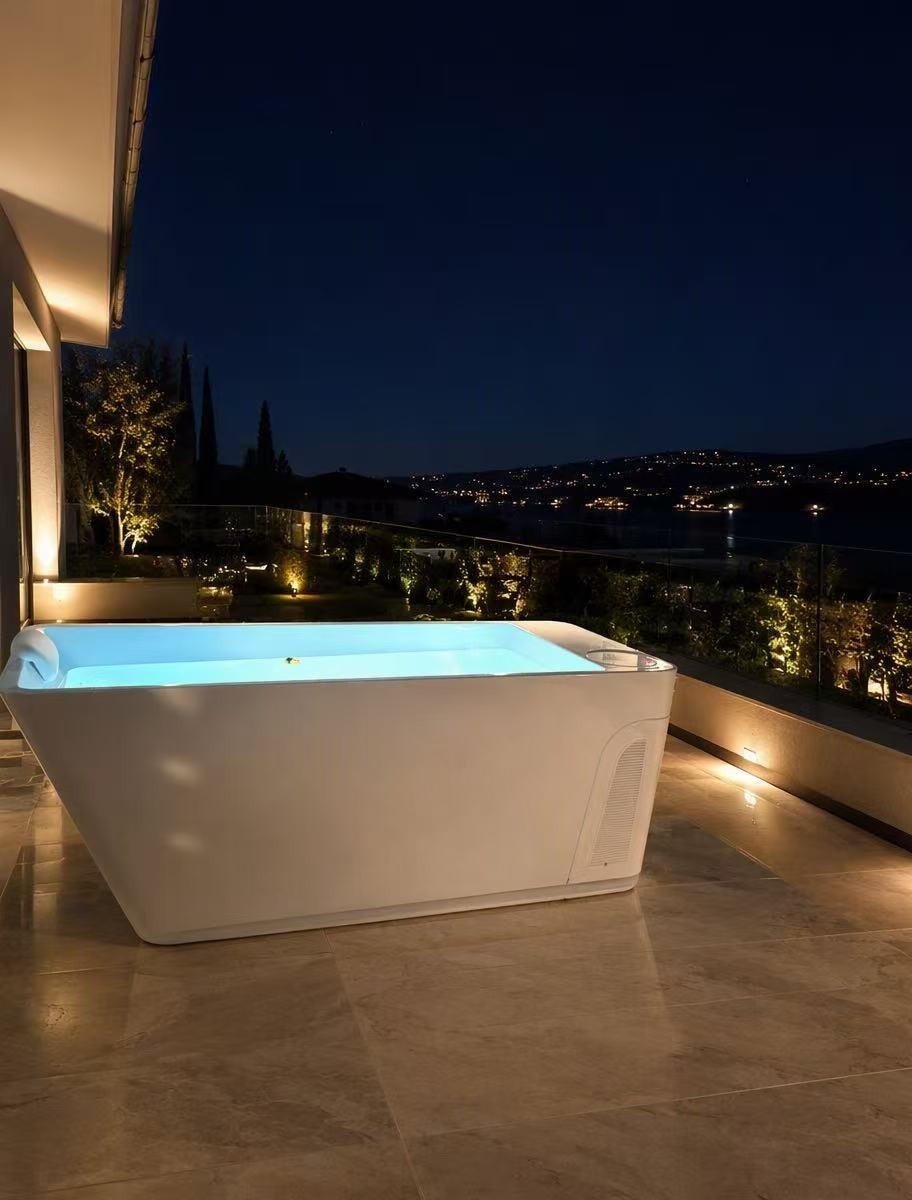
Integrated cold plunge tub on an outdoor patio
Three Common Cold Plunge Options
Basic cold plunge tub: This option suits buyers with a limited budget, low usage frequency, or a need for portability. Purchasing and setup are relatively simple, but ice preparation and water care are usually handled manually.
Cold plunge tub with a standalone chiller: This setup suits buyers who already have an appropriate tub or want to select the tub and cooling equipment separately. The chiller cools and maintains the water temperature and may work with circulation and filtration equipment.
Integrated cold plunge system: This option combines the tub, cooling, and related water functions in one system. It is more suitable for frequent use and projects that want to reduce on-site equipment matching.
| Common Type | Cooling Method | Initial Cost | Daily Use | Best Fit |
|---|---|---|---|---|
| Basic cold plunge tub | Cooling with ice | Lower | Prepare ice and manage water temperature manually | Occasional or portable use |
| Cold plunge tub with standalone chiller | External equipment cools the water | Medium to higher | Automatically cools and maintains the set temperature | Existing tubs and regular use |
| Integrated cold plunge system | Built-in cooling and circulation | Higher | Main functions are combined in one system | Frequent use and commercial settings |
There is no single answer for every buyer. Purchase price matters, but daily preparation time, temperature control, cleaning, maintenance, and replacement parts also affect the long-term cost.
Buying Only a Water Chiller: What Should You Confirm First?
A standalone water chiller can avoid buying another tub, but it will only work as expected when the water capacity, plumbing, and electrical conditions are compatible.
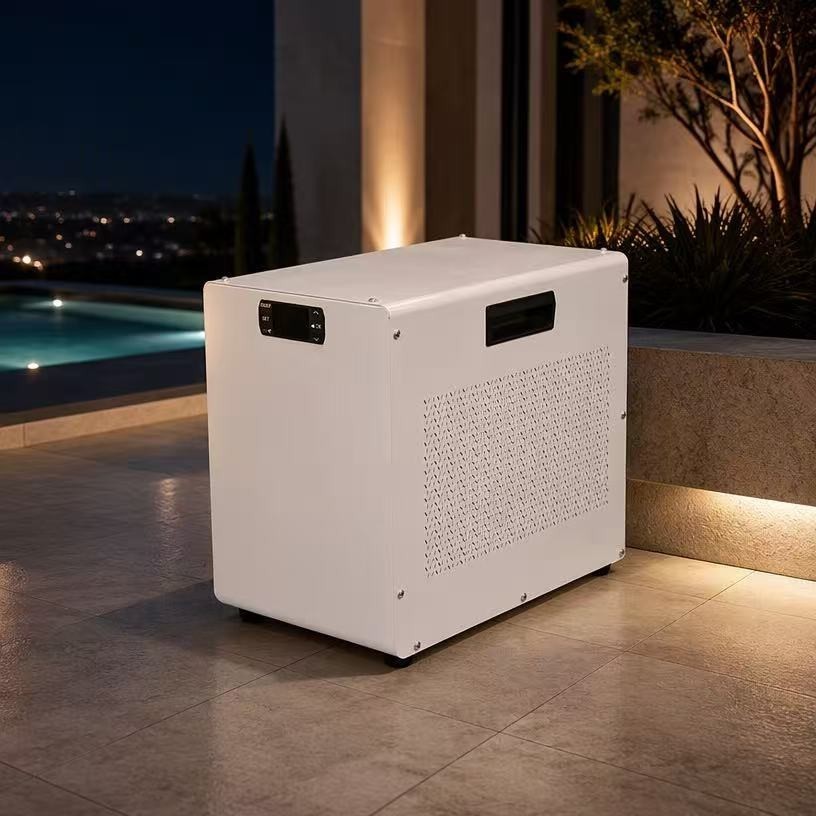
Standalone cold plunge water chiller with digital control
1. Water Capacity and Cooling Load
A larger volume of water generally creates a higher cooling load. If the unit is undersized, the water temperature may still decrease, but reaching the target temperature can take longer, and maintaining it may be more difficult in a warm environment.
2. Connection Size and Flow Rate
A water chiller connects to the tub through inlet and outlet plumbing. Mismatched connections or an unsuitable actual flow rate can affect circulation and cooling, even when the unit has sufficient cooling capacity. Confirm the connection specifications, pipe layout, and recommended flow rate together. For more background, read our guide to connector, thread, and flow matching.
3. Voltage, Frequency, and Plug
Electrical conditions differ by market. Confirm the required voltage, frequency, plug type, and site power conditions before purchasing so the equipment can be installed after delivery.
4. Circulation, Filtration, and Replacement Parts
Cold water still needs maintenance. Hair, skin particles, and other debris can enter the water after use. A system with circulation and filtration can simplify routine care, and buyers should also confirm whether filter cartridges and other replacement parts are readily available. See our water circulation system guide for more context.
10 Questions to Ask a Water Chiller Supplier
- What water capacity is the unit designed to handle?
- What target water temperature can it reach under the specified water volume and operating conditions?
- At what ambient temperature can it maintain the target water temperature?
- What is the cooling capacity, and how is the estimated cooling time calculated?
- What are the inlet and outlet connection specifications?
- What flow rate is recommended?
- Is a circulation pump included?
- Is a filtration system included?
- Are the voltage, frequency, and plug suitable for the target market?
- Are filter cartridges and other replacement parts easy to source?
How Can an Existing Tub Be Converted for Cold Plunge Use?
An existing tub can gain a cold plunge function by connecting it to a suitable water chiller, but the water capacity, available space, plumbing, power supply, and installation environment must be checked first.
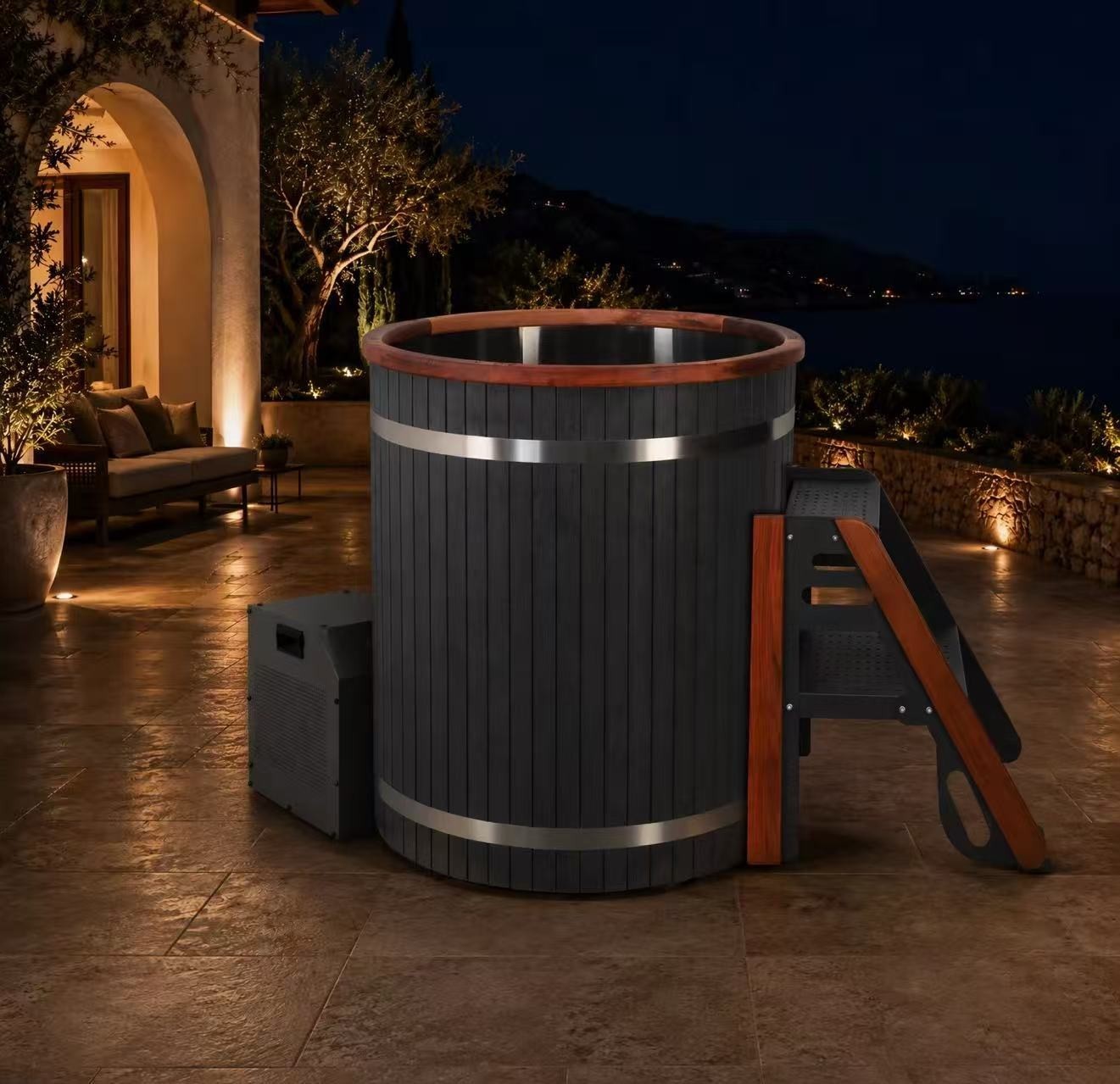
Round cold plunge tub with an external water chiller
The basic circulation path is straightforward: water leaves the tub, enters the chiller for cooling, passes through circulation or filtration functions according to the configuration, and returns to the tub. The equipment capacity still needs to match the actual water volume.
What Else Does the Installation Environment Affect?
- Equipment space: Leave enough room beside the tub for the chiller, plumbing connections, ventilation, and maintenance access.
- Indoor installation: Consider drainage, waterproofing, power location, and equipment noise.
- Outdoor installation: Confirm whether the equipment is suitable for the operating environment and follow the supplier's protection and ventilation requirements.
- Routine water care: If the same water will be reused, establish a circulation, filtration, and cleaning plan. Our water troubleshooting guide explains common signs that require attention.
Four Cold Plunge Purchasing Takeaways
- If you already have a suitable tub, you may not need to buy a complete cold plunge system.
- Before buying a standalone chiller, confirm the water capacity, target temperature, connections, and flow rate.
- Check the voltage, frequency, plug, and installation environment for the target market.
- For regular use, include filtration, energy use, maintenance, and replacement parts in the total cost.
Looking Ahead: Define the Use Case Before Matching the Equipment
A cold plunge purchase should not begin with the lowest equipment price. Define the water volume, usage frequency, target temperature, installation location, and maintenance method first. A supplier can then match the equipment to those conditions and reduce the risk of plumbing changes, electrical changes, or insufficient cooling capacity after delivery.
Discuss Your Cold Plunge Configuration With Hydrorelax
If you already have a tub, prepare its water capacity, connections, flow conditions, electrical requirements, and target temperature. The Hydrorelax team can use this information to review the chiller, circulation, and filtration configuration.
Contact UsCold Plunge Product FAQ
1. How cold can a water chiller make the water?
Cooling capacity varies by model. For example, some water chillers can cool water to approximately 3-5°C (37-41°F). The actual minimum temperature also depends on water volume, ambient temperature, insulation, and equipment configuration.
2. Does a water chiller need to run continuously?
Not necessarily. A unit with temperature control can normally start and stop according to the set temperature and actual water temperature. The exact control method depends on the selected model.
3. What functions matter besides cooling?
Circulation and filtration are also important. They keep water moving, reduce debris, and affect routine cleaning and maintenance.
4. What cold plunge products can Hydrorelax provide?
Hydrorelax can provide cold plunge tubs, water chillers, and related circulation and filtration components. OEM configurations can also be discussed according to project requirements.
5. What information should I provide before buying a water chiller?
Start with the actual water capacity, operating environment, connection sizes, target-market electrical conditions, and target water temperature. These details help the supplier determine whether a unit is suitable.
· · ·