Custom Oxford Fabric Spa Covers: Materials, Structure & Buying Guide
- Share
- Issue Time
- Nov 25,2026
Summary
A B2B guide to custom Oxford fabric spa covers, covering 600D fabric, foam structure, dimensions, stitching, accessories, inspection, and comparison with vinyl.
Published: November 25, 2026 · By Shirley · Category: Blog
Vinyl is a common outer material for spa covers, but Oxford fabric is another option for hot tub brands and distributors that want a woven surface. This guide uses a custom project for a U.S. customer to explain the material, structure, production checks, and sourcing questions behind custom Oxford fabric spa covers. The aim is to help B2B buyers define specifications before sampling or bulk purchasing.
Oxford Fabric Spa Cover Structure: What Should Buyers Specify?
An Oxford fabric spa cover combines an outer protective fabric, an internal foam core, and functional accessories; each part requires its own specification.
1. Outer Protective Fabric
The outer fabric faces rain, sunlight, and friction during normal outdoor use. Buyers should therefore look beyond the material name and confirm the fabric specification, coating, surface treatment, and required resistance to water, wear, and ultraviolet exposure.
600D Oxford fabric is one common specification. The letter D refers to denier, a measure used to describe yarn linear density. It does not, by itself, confirm waterproof performance or overall fabric quality. If the cover will be used outdoors, the buyer should also confirm whether the fabric has a waterproof coating and define the required weather performance.
2. Internal Foam Core
The foam core contributes to the insulating structure of the cover. It is normally processed to match the hot tub dimensions and top profile rather than treated as a simple flat board. Density, thickness, taper, and overall dimensions all affect the finished structure.
For outdoor hot tubs, a tapered design can be higher near the center and lower toward the sides so rainwater can move toward the edge instead of remaining on the top. Buyers can review the design difference in Tapered vs Non-Tapered Spa Covers before confirming foam specifications.
3. Handles, Straps, Buckles, and Skirts
Handles, tie-down straps, locking buckles, and skirts are not the main insulating components, but they affect installation, restraint, opening, and daily handling. Their color, quantity, dimensions, and positions should be confirmed before sampling.
The strap and buckle locations should follow the hot tub dimensions and installation environment. Connection areas may require reinforcement where repeated opening and closing places stress on the stitching. For a closer look at this component, see the SPA Cover Straps B2B Selection Guide.
A Custom 600D Oxford Fabric Project: How Was the Cover Produced?
For this U.S. customer project, the confirmed outer material was 600D Oxford fabric, with requirements for fabric compactness and water resistance.
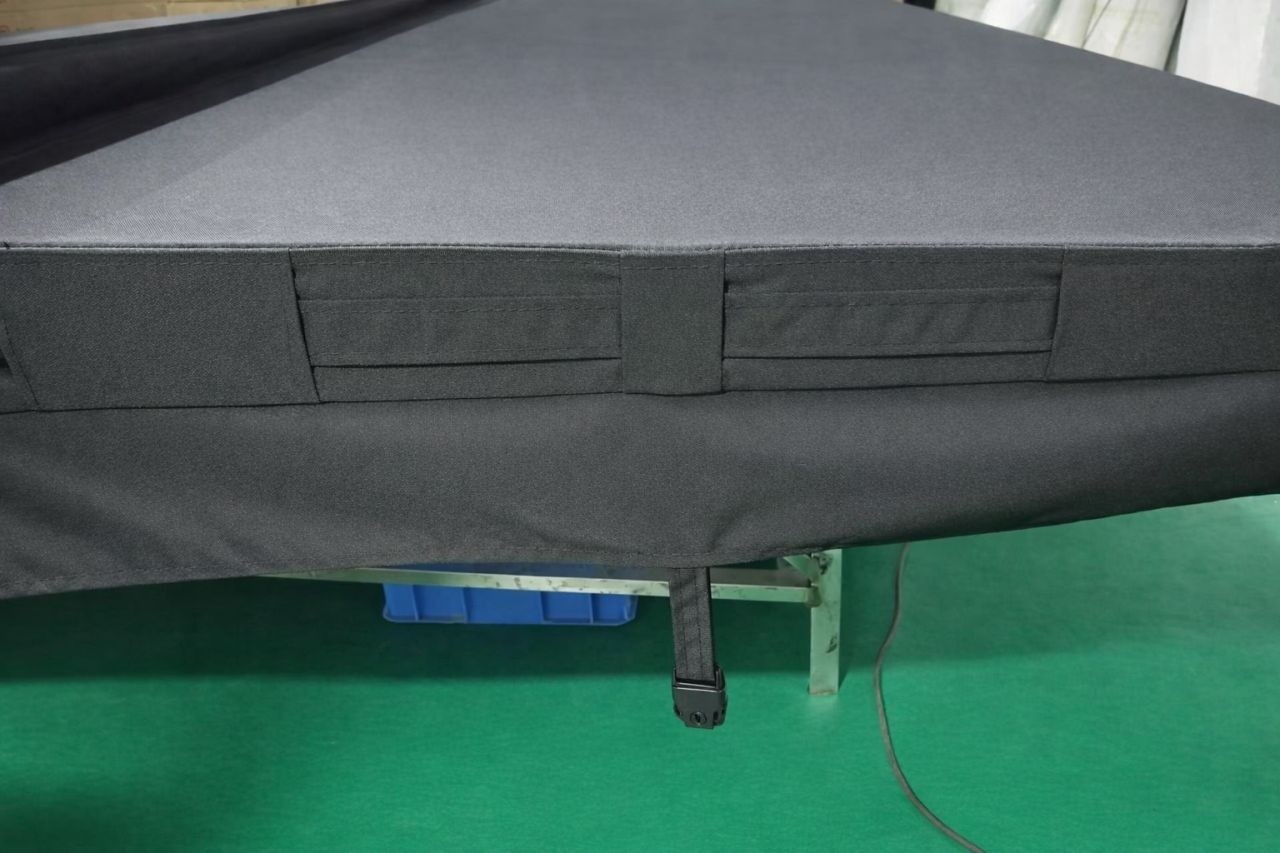
Custom Oxford Fabric Spa Cover with Reinforced Handles and Safety Buckle
Step 1: Confirm the Fabric Specification
The project began with confirmation of 600D Oxford fabric. The same denier specification can still perform differently when the weave, coating, or finishing process changes. Material confirmation should therefore connect the written specification to the actual use requirements rather than rely on the fabric name alone.
Step 2: Process the Internal Structure to the Confirmed Dimensions
The outer skin and foam core were processed according to the customer dimensions. Length, width, corner radius, fold position, foam thickness, and taper should be aligned before production. For a special-shaped cover, the corner radius is particularly important because it determines how closely the finished cover follows the hot tub edge.
Buyers who are preparing dimensional data can also review how to measure a hot tub cover before submitting a drawing or sample.
Step 3: Cut and Sew the Outer Skin
The fabric was cut to the confirmed dimensions and then joined and sewn around the cover structure. Flat seams, accurate edges, and correctly formed folding areas help the skin fit the core without visible distortion.
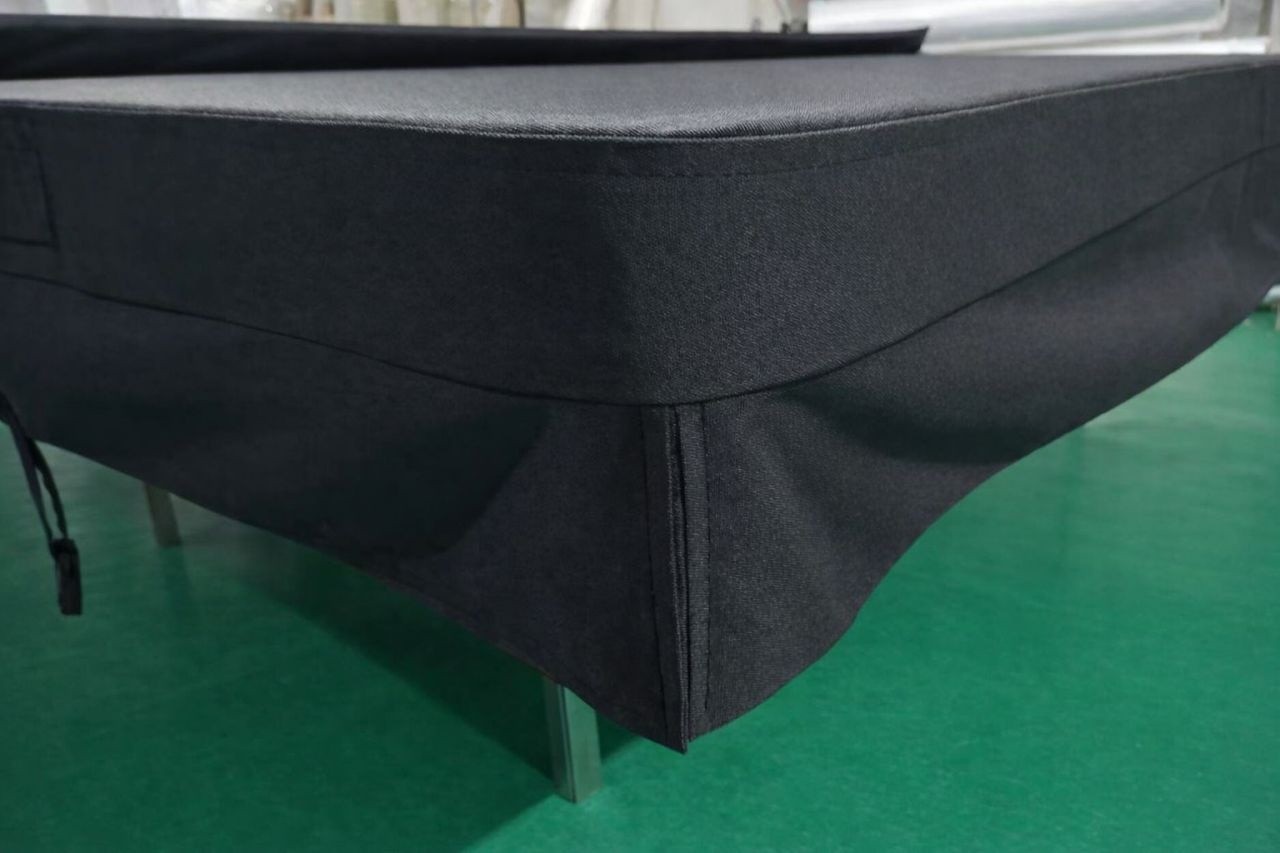
Oxford Fabric Spa Cover Tailored Skirt with Split Corner Design
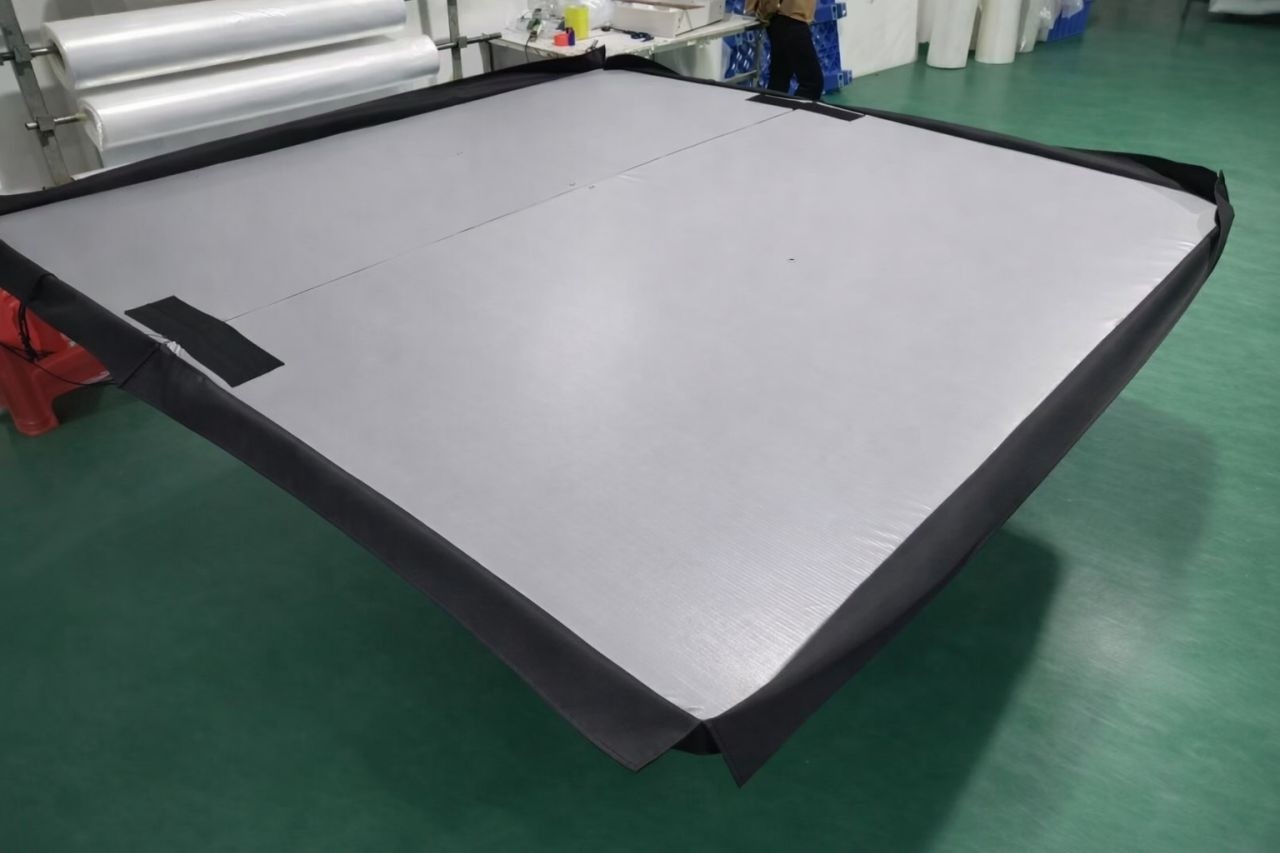
Underside View of Oxford Fabric Spa Cover with Vapor Barrier Foil
The split corner skirt and the underside arrangement show why buyers should provide more than overall length and width. Edge construction, skirt geometry, underside material, and fold details should all be included in the sample review. A broader overview of this workflow is available in How Do Manufacturers Produce SPA Covers?
Step 4: Install and Check the Accessories
After the main skin was sewn, the handles, straps, and locking buckles were installed at the confirmed positions. Straight stitching, secure attachment, and dimensional consistency were checked before packing.
Finished Cover Inspection: What Should Be Checked Before Packing?
Final inspection should verify the agreed fabric, dimensions, stitching, accessories, foam-core fit, surface condition, and packing method.
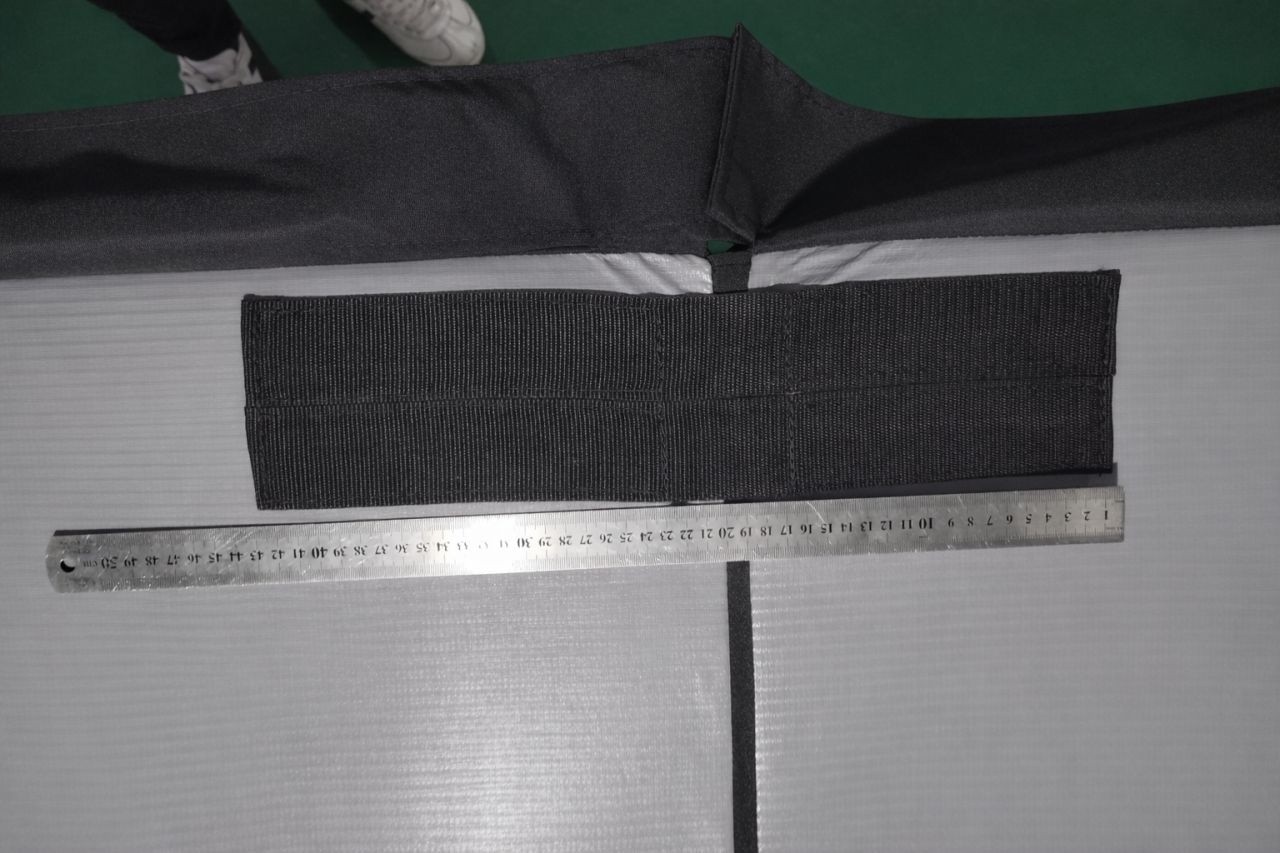
Quality Inspection and Precision Ruler Measurement of Spa Cover Handle Stitching
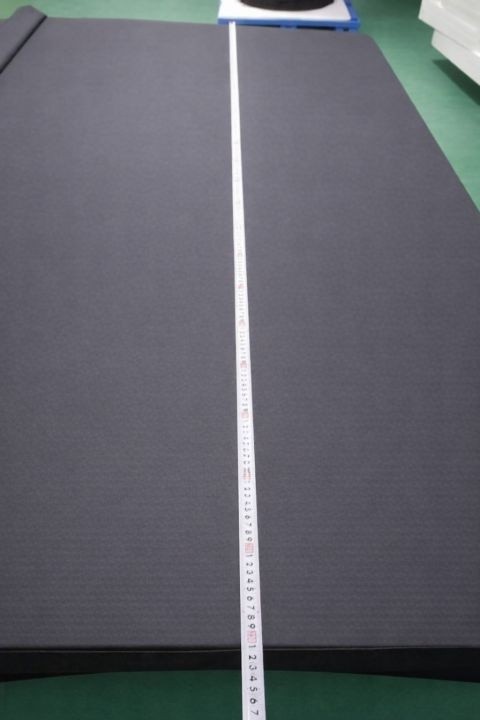
Dimension Verification of Oxford Fabric Spa Cover with Measuring Tape
The outer surface should be checked for damage or visible defects. Overall dimensions and corners should match the drawing, while handles, straps, buckles, and stitched joints should match the approved positions. The foam core should also fit the intended cover structure.
If the buyer has a defined waterproof requirement, the test method and acceptance standard should be agreed before production. Fabric coating and seam construction both matter because water may still enter through needle holes or joints even when the base fabric itself has a water-resistant treatment.
Oxford Fabric vs Vinyl Spa Covers: What Is the Practical Difference?
Neither material name alone determines durability; the result depends on the exact material, construction, processing, use frequency, and local climate.
| Comparison Point | Oxford Fabric Spa Cover | Vinyl Spa Cover |
|---|---|---|
| Outer material | Woven fabric base, normally combined with a coating | Vinyl material, commonly PVC-based |
| Surface character | Visible woven texture | Usually smoother |
| Water resistance | Depends on coating, seams, and processing | Depends on the material specification, seams, and processing |
| Wear performance | Depends on weave and surface treatment | Depends on material thickness and construction |
| Appearance | Suitable for a woven-fabric product direction | Suitable for a conventional spa cover appearance |
| Main customization checks | Denier, coating, water resistance, seams, and surface treatment | Material thickness, weather resistance, seams, and reinforcement |
Buyers evaluating the outer skin as a separate sourcing item can also consult the SPA Cover Skin Sourcing Guide.
Choosing the Material: Which Questions Should a Buyer Answer First?
The material choice should follow the target market, product positioning, expected environment, and inspection requirements rather than a general claim that one surface is always better.
Oxford fabric is worth considering when a brand wants a woven appearance or a visible difference from a conventional product line. Vinyl remains a common choice when buyers prefer its familiar surface and straightforward wipe-clean maintenance.
For long exposure to sunlight, rain, and temperature changes, confirm water resistance, weather resistance, ultraviolet requirements, seam treatment, and edge construction before placing the order. The cover should also be evaluated as part of the wider spa support system, including how it will be opened, secured, stored, and used around the hot tub.
Five Buying Takeaways
- Do not treat 600D as a waterproof rating. Confirm the coating, construction, and required test method.
- Provide complete dimensional data. Length, width, corner radius, fold position, foam profile, and skirt details all affect fit.
- Define accessory positions before sampling. Handles, straps, buckles, and skirts need agreed dimensions and locations.
- Check both fabric and seams. Water resistance depends on more than the outer textile.
- Set inspection criteria before production. The drawing, material specification, appearance standard, and packing method should be reviewed together.
Looking Ahead
Oxford fabric gives spa cover buyers another surface and design option, but a workable custom project still depends on clear specifications. We recommend aligning the fabric, foam structure, dimensions, accessories, inspection method, and packing requirements before sampling so the finished cover can be evaluated against the same written standard.
Work With Us
Hydrorelax supports B2B buyers with spa cover supply and customization. To discuss an Oxford fabric spa cover project, prepare the product dimensions, reference images, material requirements, accessory details, and expected purchase quantity.
Contact Us
Custom Oxford Fabric Spa Cover FAQ
Can an Oxford fabric spa cover be made to custom dimensions?
Yes. Production can be based on a CAD drawing, dimensional data, or a reference sample.
Is 600D Oxford fabric automatically waterproof?
No. Water resistance depends on the fabric coating, seams, and processing method, so the required test and acceptance standard should be confirmed.
Is an Oxford fabric spa cover suitable for outdoor use?
It can be, provided the selected fabric and construction meet the project's water-resistance, weather-resistance, and ultraviolet requirements.
Which is more durable, Oxford fabric or vinyl?
There is no universal answer. Durability depends on the material quality, coating or thickness, seam construction, processing, use frequency, and environment.
What information is needed for a custom Oxford fabric spa cover?
Provide the dimensions, corner radius, foam specification, fabric requirements, accessory requirements, reference images or drawings, and expected purchase quantity.
· · ·