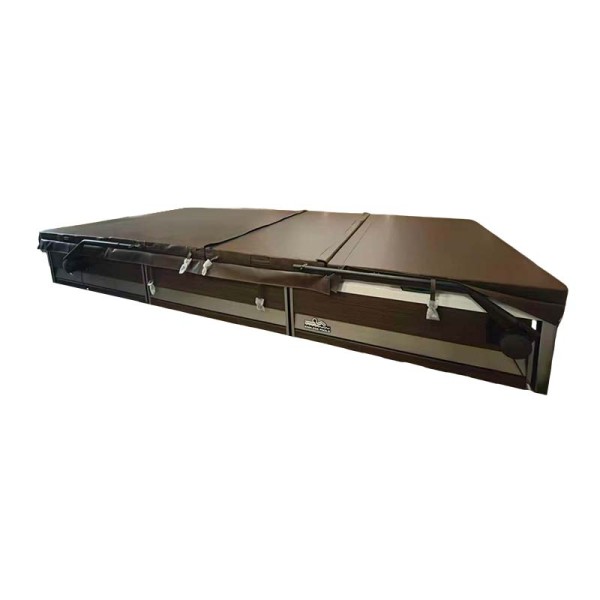
From Frost to Snow Load: Selecting Hot Tub Cover Materials for Winter-Ready Markets
- Share
- Issue Time
- Aug 11,2026
Summary
The core challenge for hot tub covers is freeze resistance, snow load capacity, and freeze-thaw cycle durability — not UV protection.
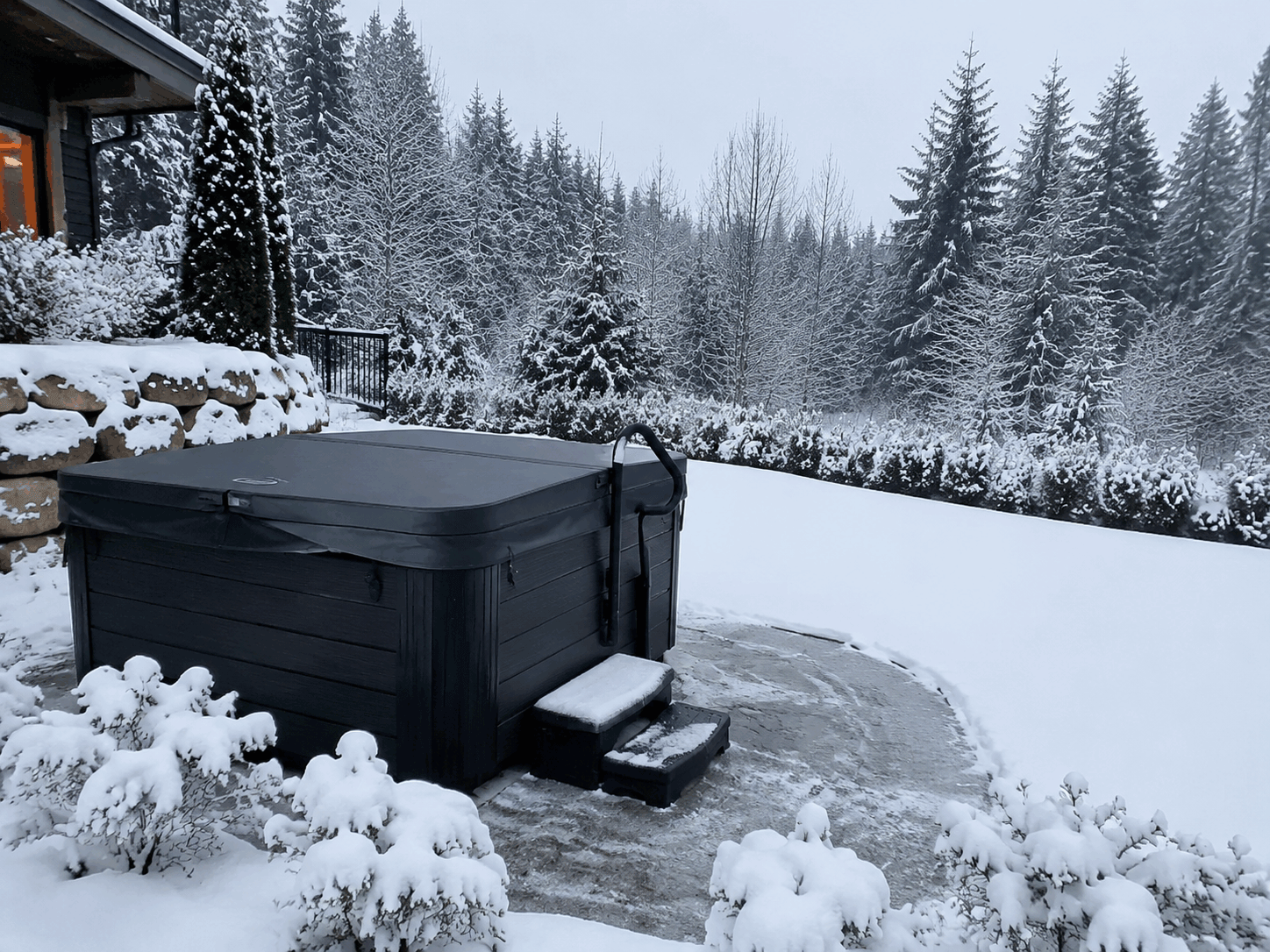
A few years ago, an importer from Russia gave us feedback: a batch of hot tub covers they had sourced cracked extensively across the surface within the very first winter. The cause was not improper use — the material's low-temperature brittle point was far higher than the actual minimum temperature recorded locally. Another customer, facing the same harsh winter conditions, had their spa covers perform reliably through three consecutive winters. The difference came down to the plasticizer formulation in the outer vinyl and the density of the foam core.
That experience made one thing clear: for any market with a genuine winter season, the core challenge for hot tub covers is freeze resistance, snow load capacity, and freeze-thaw cycle durability — not UV protection. As an ODM/OEM spa cover manufacturer, a single material mismatch can translate into a full container of warranty claims.
This article approaches hot tub cover material selection from three angles — material properties, cold-resistance ratings, and climate matching — to help importers and distributors build a reliable, science-based framework for sourcing winter-ready spa covers.
5 Keys to a Winter-Ready Hot Tub Cover
For a spa cover to make it through a real winter unscathed, five performance factors must be met.
Low-Temperature Flexibility
This is the first line of defense for any cold-climate market. The outer vinyl of a hot tub cover must remain flexible — not brittle, not cracking — at the actual extreme low temperatures of the target market.
Standard PVC or low-grade vinyl becomes brittle and cracks at around -15°C. Quality vinyl formulations can withstand down to -25°C. High-resilience cold-rated vinyl, engineered specifically for subarctic climates with specialized plasticizer compounds, can maintain flexibility at -30°C or below.
The first step in material selection is not the annual average temperature of the target market — it is the historical extreme minimum. That is the temperature at which a spa cover either holds or fails.
Snow Load Capacity
For high-snowfall markets, this is a non-negotiable structural requirement. Wet snow carries an exceptionally high density — if a hot tub cover cannot bear the weight or fails to shed accumulation efficiently, the consequences range from permanent surface deformation to collapsed spa edges and damaged lift mechanisms.
Two structural features determine snow load performance:
Tapered surface design: A spa cover built with a raised center and sloped edges allows snow and meltwater to slide off naturally rather than pool on the surface. This is not a cosmetic detail — it is the primary mechanism for preventing cumulative load buildup after successive snowfalls.
High-density foam core: The internal EPS foam must provide sufficient structural support to bear the weight of accumulated snow without compressing or collapsing. A higher-density core also preserves the hot tub cover's shape under sustained pressure, protecting the spa rim from deformation over an entire winter season.
Freeze-Thaw Cycle Resistance
The repeated cycle of daytime thawing and overnight refreezing is one of the most damaging forces a hot tub cover faces across a full winter season. Water — even in microscopic quantities — works its way into small gaps, then expands as it freezes, progressively forcing open heat-welded seams and stitching.
To withstand this, a spa cover must have fully sealed, heat-pressed edges and hydrolysis-resistant coating along all seam lines. Without these, freeze-thaw cycling will eventually compromise the structural integrity of both the seam bond and the thread, regardless of the outer vinyl quality.
Thermal Insulation and Heat Retention
In cold-climate markets, spa heating costs are substantial. A hot tub cover that fails to contain heat does not just inconvenience the end user — it drives up operating costs every single day the water temperature needs to be maintained.
The primary metric for insulation performance is the R-value (thermal resistance value). The higher the R-value, the greater the resistance to heat transfer. For spa covers, R-value is determined by two factors in combination: the density of the internal EPS foam core and its thickness.
| Rating | R-Value | Foam Density | Taper Profile |
| Level 1 Entry | R-10.5 | 1.0 lb | 4"→2" |
| Level 2 Standard | R-12~13.5 | 1.5 lb | |
| R-15 | 2.0 lb | ||
Level 3 Cold-Climate Rated | R-16~18 | 5”→3” | |
R-21+ | 6”→4” | ||
Level 4 Commercial / Heavy-Duty | Multi-layer composite | ||
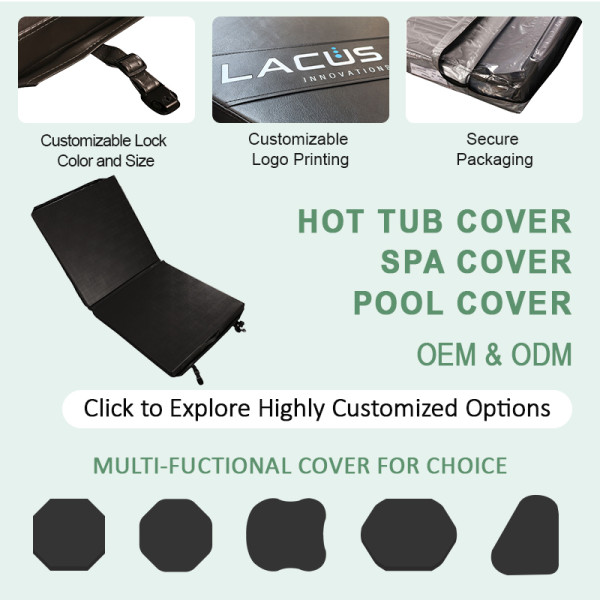
SPA COVER 1800x2400x(100x70mm)
spa cover 2050X2050X(100X70)mm
Wind Resistance and Securing Systems
In exposed locations — coastal areas, open plains, and high-altitude markets — wind is not a secondary concern. When a hot tub cover is lifted by strong winds, the damage goes well beyond the cover itself: the vinyl tears, hinges fracture, and the exposed water surface loses heat rapidly. Accelerated evaporation follows, and in extreme cold climates, the spa rim can ice over while the heating system is forced into overload just to compensate for the sudden heat loss.
For these markets, a robust wind-securing system is not an optional upgrade — it is a baseline specification requirement for any spa cover sold into open or coastal environments. Key components include locking tie-down straps and a weighted skirt design that seals the cover against the spa rim, preventing wind from getting underneath and lifting the cover from the edges.
Materials Ranked by Cold Resistance
Level 1 Entry Grade: Standard PVC
Suitable for mild-winter markets with short frost seasons and no sustained freezing periods, such as the southeastern United States and parts of southern Europe. Not recommended for any market where sub-zero temperatures persist.
Standard PVC becomes brittle and cracks at around -15°C. Once the surface is compromised, moisture penetrates the foam core and the hot tub cover's R-value drops to near zero — a dual failure of structural integrity and thermal insulation.
Level 2 Standard Grade: Vinyl
Suitable for markets with short winters where minimum temperatures typically stay above -10°C, including most of the United Kingdom, Ireland, the Netherlands, Belgium, low-altitude plains of Romania, and the U.S. Pacific Northwest.
A UV inhibitor coating is recommended to handle summer sun exposure, along with reinforced locking straps. In high-rainfall and high-wind regions, a tapered drainage profile should be prioritized to prevent water pooling on the spa cover surface.
Level 3 Cold-Climate Grade: High-Resilience Cold-Rated Vinyl
Applicable to all markets where extreme winter temperatures can drop below -15°C, including Russia (European zone and Siberia), Ukraine, Poland, Estonia, Latvia, Lithuania, mountainous Romania, Finland, northern Sweden, Canada, and the northern United States (Great Lakes region, Minnesota, North Dakota, and Alaska).
Material specifications for this grade of hot tub cover:
Specialized plasticizer formulation: maintains outer vinyl flexibility at extreme low temperatures, preventing brittleness and cracking
High tear-strength reinforced base fabric: resists mechanical stress from ice and snow load
Fully sealed 6 mil PE vapor barrier, heat-welded: prevents moisture from penetrating the foam core and degrading the spa cover's R-value
Central steel C-channel reinforcement: supports snow load and prevents structural collapse
Level 4 Commercial / Heavy-Duty Grade
Performance specifications vary by composite construction and typically exceed Level 3. Suitable for extreme environments with heavy snowfall and persistent wind, as well as commercial facilities and public spa centers. The significant self-weight of this hot tub cover grade requires a heavy-duty hydraulic lift system and is not suitable for residential use or lightweight support frames.
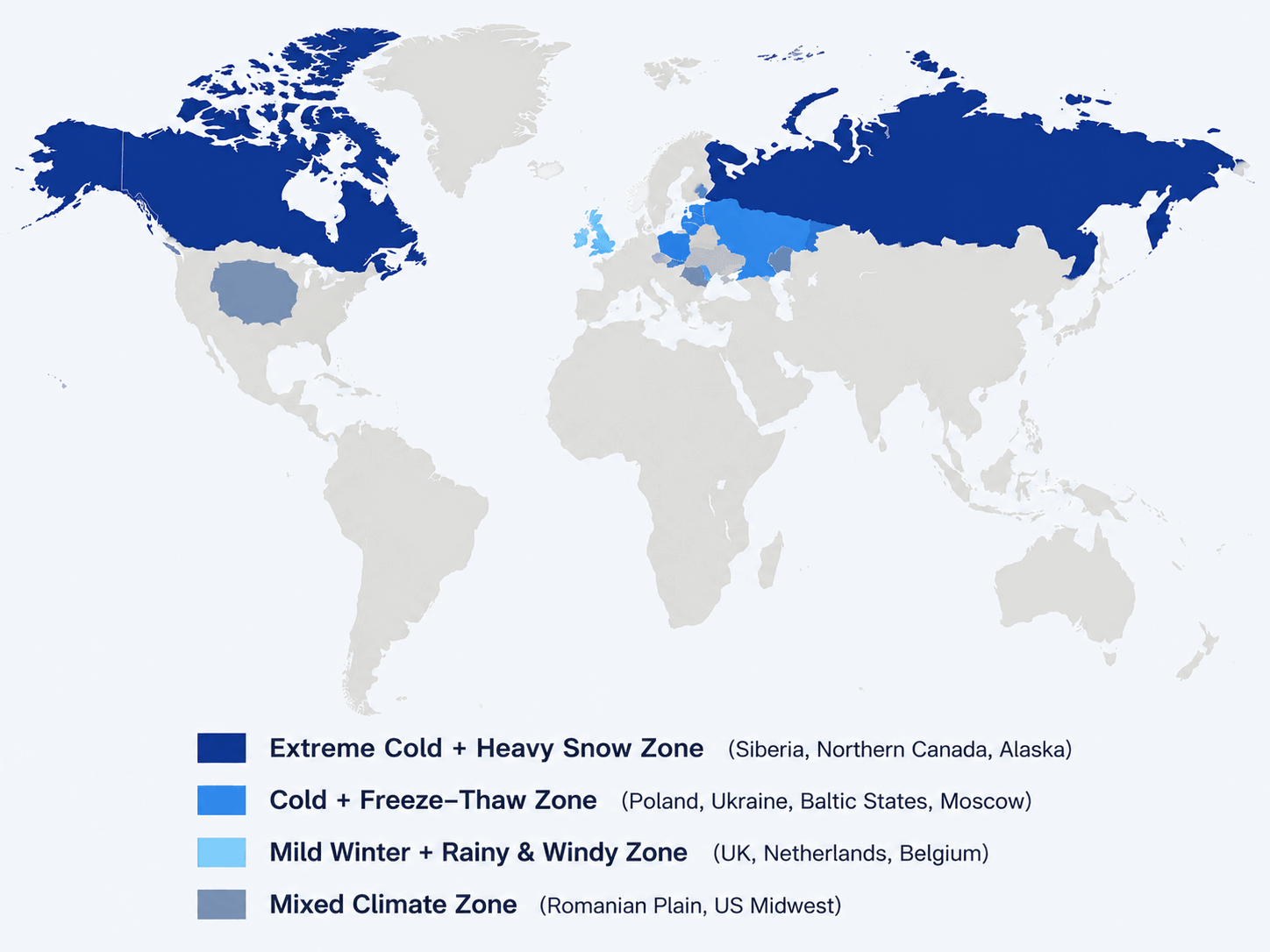
Global Winter Climate & Spa Cover Material Guide
| Climate Zone | Winter Characteristics | Recommended Grade | Key Configuration | Representative Markets |
| Mixed Climate Zone | High annual temperature range Both UV resistance and low-temperature tolerance required | Level 2 Standard | UV inhibitor coating Cold resistance to -25°C | Romania (Low-altitude areas) Central US (Kansas, Nebraska, Iowa) |
| Mild Winter + High Rain and Wind Zone | Short winters Average temperatures typically above -5°C High rainfall and wind Short freezing periods | Level 2 Standard + reinforced wind securing | Locking tie-down straps Tapered drainage profile UV coating | United Kingdom Ireland Netherlands Belgium U.S. Pacific Northwest |
| Cold + Freeze-Thaw Zone | Extreme winter low reaching -10°C to -20°C Large diurnal temperature swings Frequent freeze-thaw cycling | Level 3 Cold-Climate Grade | Fully sealed freeze-thaw resistant seams Hydrolysis-resistant stitching Tapered drainage profile | European Russia Northern Ukraine Poland Estonia Latvia Lithuania Mountainous Romania Southern Finland Southern Canada |
Extreme Cold + Heavy Snow Zone | Extreme winter low ≤ -20°C Heavy and persistent snow accumulation | Level 3 Cold-Climate Grade | Snow load reinforcement structure Anti-ice-adhesion coating 6 mil heat-welded vapor barrier | Russia Northern Finland Northern Sweden Northern and Central Canada Alaska |
Note: Climate conditions vary significantly within a single country. European Russia (Moscow) and Siberia, southern Finland and northern Lapland, and the Romanian lowland plains versus the Carpathian mountain region each span two distinct climate zones despite sharing the same national border. Importers are advised to confirm the end user's specific city or region when placing an inquiry, in order to match the correct hot tub cover specification accurately.
ODM/OEM Tips for Cold Markets
For ODM/OEM hot tub cover suppliers, reducing after-sales issues in cold-climate markets is not a matter of reactive problem-solving — it starts at the order stage, by helping importers avoid material mismatches upfront, and continues at delivery, by providing technical documentation that ensures correct end-user handling.
The following are three areas where suppliers can build systematic professional output:
1. Material Specifications
For importers sourcing across different climate zones, suppliers should proactively provide a graded material selection proposal — rather than a single universal specification. The quotation should clearly state:
Cold-resistance brittle point of the outer vinyl (°C)
Foam core density and corresponding R-value of the spa cover
Securing system configuration (number of tie-down straps, whether locking hardware is included)
2. User Care Guide
The cost of producing this document is minimal. It significantly reduces after-sales disputes caused by improper handling and reinforces the importer's perception of supplier professionalism. The guide should cover the following:
Snow removal: After heavy snowfall, clear accumulated snow using a plastic shovel or soft-bristled brush. Metal tools must not be used, as they will scratch and damage the hot tub cover's surface coating.
Ice removal: If ice forms on the surface, do not attempt to break it off by force. Allow it to melt naturally, or apply a small amount of warm water not exceeding 40°C. Boiling water must not be used — the sudden heat exposure will cause the outer surface to crack.
Routine inspection: Inspect the seams and stitching of the spa cover every 2 to 3 weeks throughout the winter season. Any small crack or opening found should be sealed immediately with purpose-made repair tape to prevent freeze-thaw cycling from enlarging the damage.
Off-season storage: When the cover is taken out of use for an extended period, allow it to dry thoroughly before storing. Store the hot tub cover flat or upright in a cool, indoor location away from direct light. Folding is strictly not recommended — the foam core will develop permanent compression deformation under fold pressure, and the hinge area is particularly vulnerable.
3. Heat Retention Solutions
For extreme cold-climate markets including Russia, Canada, and Estonia, suppliers are advised to recommend an additional floating thermal blanket to importers as a complementary accessory for the hot tub cover. The blanket sits directly on the water surface, reducing heat loss and evaporation at the water level. Combined with a high R-value spa cover, this creates a dual-layer insulation system. At low unit cost, it can reduce heating energy consumption by 15% to 20%, making it a practical standard inclusion or optional upgrade for cold-climate market packages.
Conclusion
The Russian importer's experience described at the opening of this article plays out in cold-climate markets around the world every winter — in different forms, but with the same root cause. Someone chose the "adequate" grade instead of the "safe" grade, saved a few cents per square foot on material cost, and paid it back at ten times the price on the coldest night of the first winter.
No single hot tub cover specification fits every market. But every market has a correct answer — one that is determined by its actual climate, not by a price point.
Hydrorelax is an ODM/OEM spa cover manufacturer specializing in climate-matched custom production. We offer graded material selection proposals tailored to different climate zones. If you are uncertain which insulated hot tub cover specification is right for your target market, contact us directly.
Based on the actual climate data of your target city, we will match the appropriate outer vinyl grade, foam core R-value specification, and securing system configuration, and provide samples along with a climate compatibility assessment to help you confirm the right material selection before placing your order.
Recommend Product
spa cover 2050X2050X(100X70)mm