Hot Tub Water Troubleshooting Guide: How to Fix Foam, Odor, and Discoloration
- Share
- Issue Time
- Aug 7,2026
Summary
Hydrorelax synthesizes data-driven insights from thousands of spa owners maintenance experience to create this diagnostic-style water quality guide.
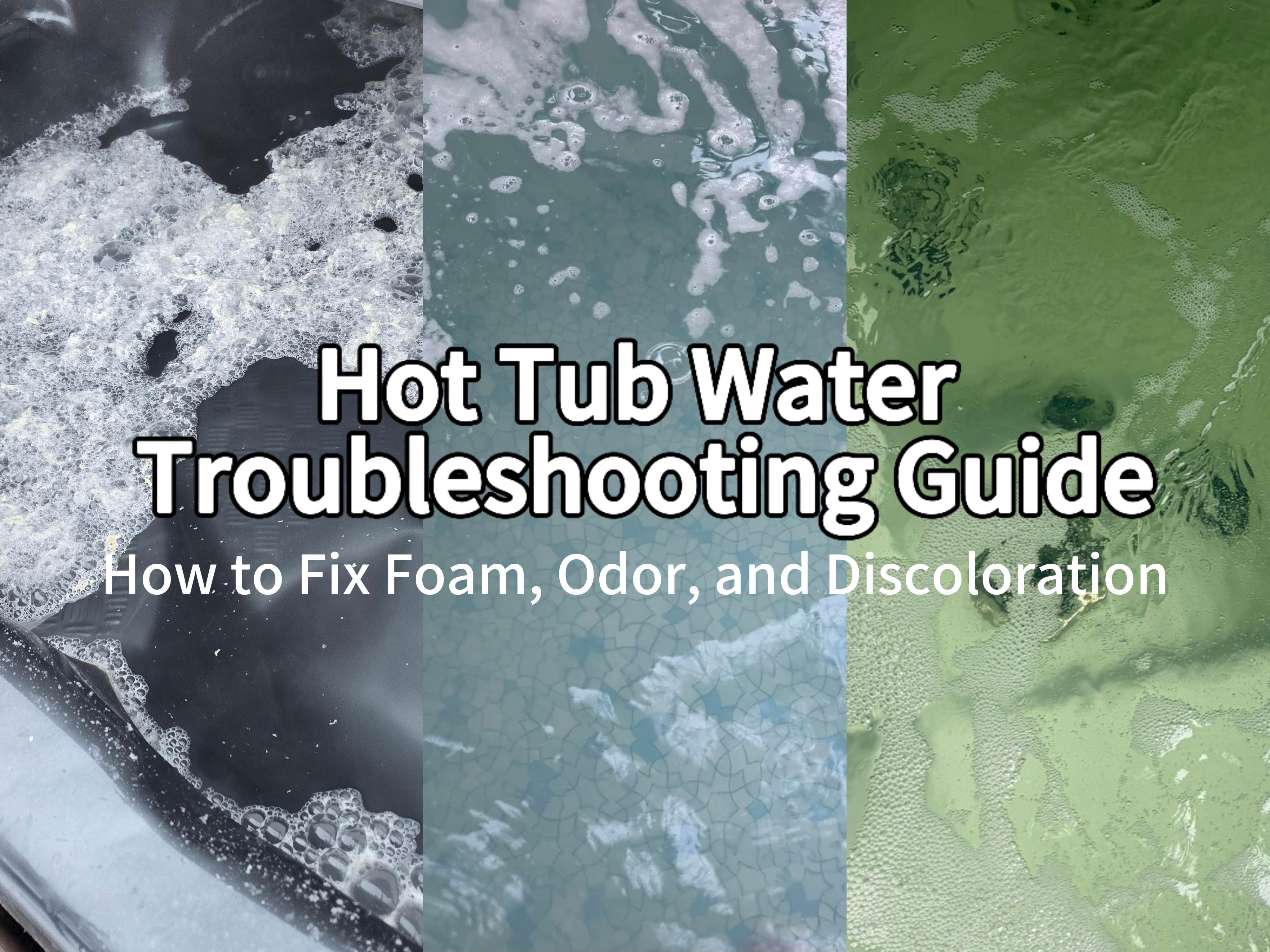
Most hot tub water quality problems can be quickly resolved through effective spa water troubleshooting. By identifying visible symptoms, you can pinpoint the root cause—like biofilm buildup or sanitizer imbalance—and apply the correct water treatment for crystal clear results.
Hydrorelax synthesizes data-driven insights from thousands of spa owners maintenance experience to create this diagnostic-style water quality guide. You don’t need to be a chemistry professional. After reading this guide, you’ll become the 'water care specialist' of your own spa.
Instantly Diagnose Hot Tub Water Quality Issues
| Symptom | Most Likely Cause | |
Persistent spa foam | Detergent / soap residue | |
Oil and grease contamination | ||
Soft water(low alkalinity / low calcium hardness) | ||
Turbid water & Musty odor | Biofilm buildup inside plumbing lines | |
Shock treatment failure at standard dosage | ||
pH imbalance | ||
Water discoloration | Yellow or reddish-brown (iron ions) | Iron contamination from well water or corrosion of aging iron pipes |
Green or bluish-green (copper ions) | Copper ions released from spa components or piping due to acidic water corrosion | |
Yellow-green (algae growth) | Disinfectant failure Possible high cyanuric acid (CYA), leading to chlorine lock (chlorine is present but ineffective in spa water / hot tub water) | |
Adjustment priority when multiple parameters are off:
1. Total alkalinity first
2. Then pH
3. Finally disinfectant levels
If the problem is severe or difficult to resolve, seeking professional assistance can save time and effort.
How to stop your hot tub water foaming?
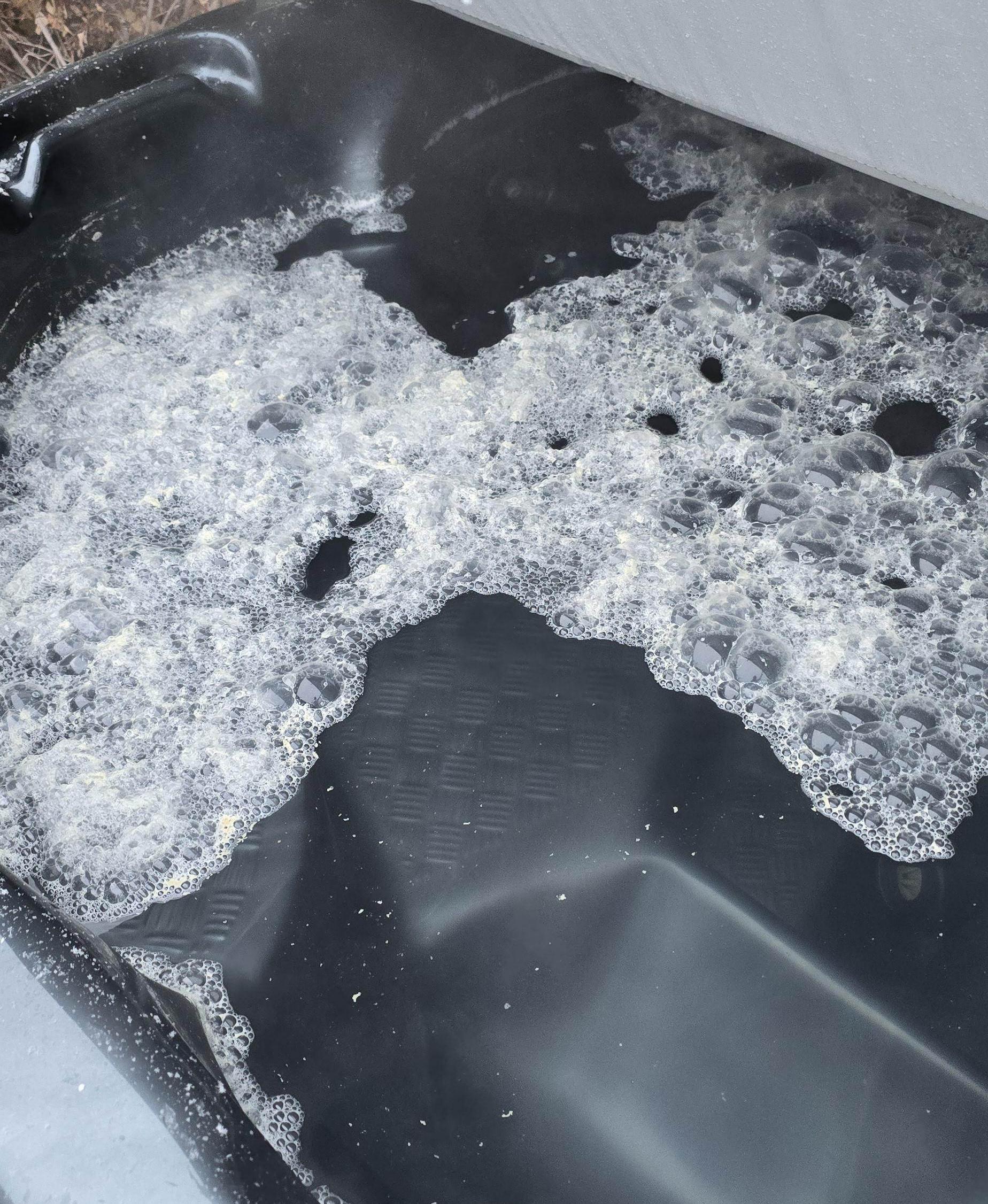
1.Source control (prevent contamination at the origin):
All users should take a shower before entering the hot tub
Swimwear should be rinsed only with clean water, or washed with a non-foaming specialized detergent
2.Physical absorption:
Use an oil-absorbing sponge to remove oils from the water surface (Oil Absorbing Sponge)
3.Water chemistry adjustment:
Total alkalinity should be maintained at 80–120 ppm, and calcium hardness at 175–250 ppm
Add a water clarifier to coagulate fine organic particles into larger clusters so they can be captured by the filter system
Clean or replace the filter cartridge: foam formation indicates the filter media may already be saturated with oils, requiring thorough cleaning or replacement.
How to remove biofilm and musty smells from hot tub ?
This issue usually indicates that biofilm has already formed. It is recommended to treat it during water draining. Steps are as follows:
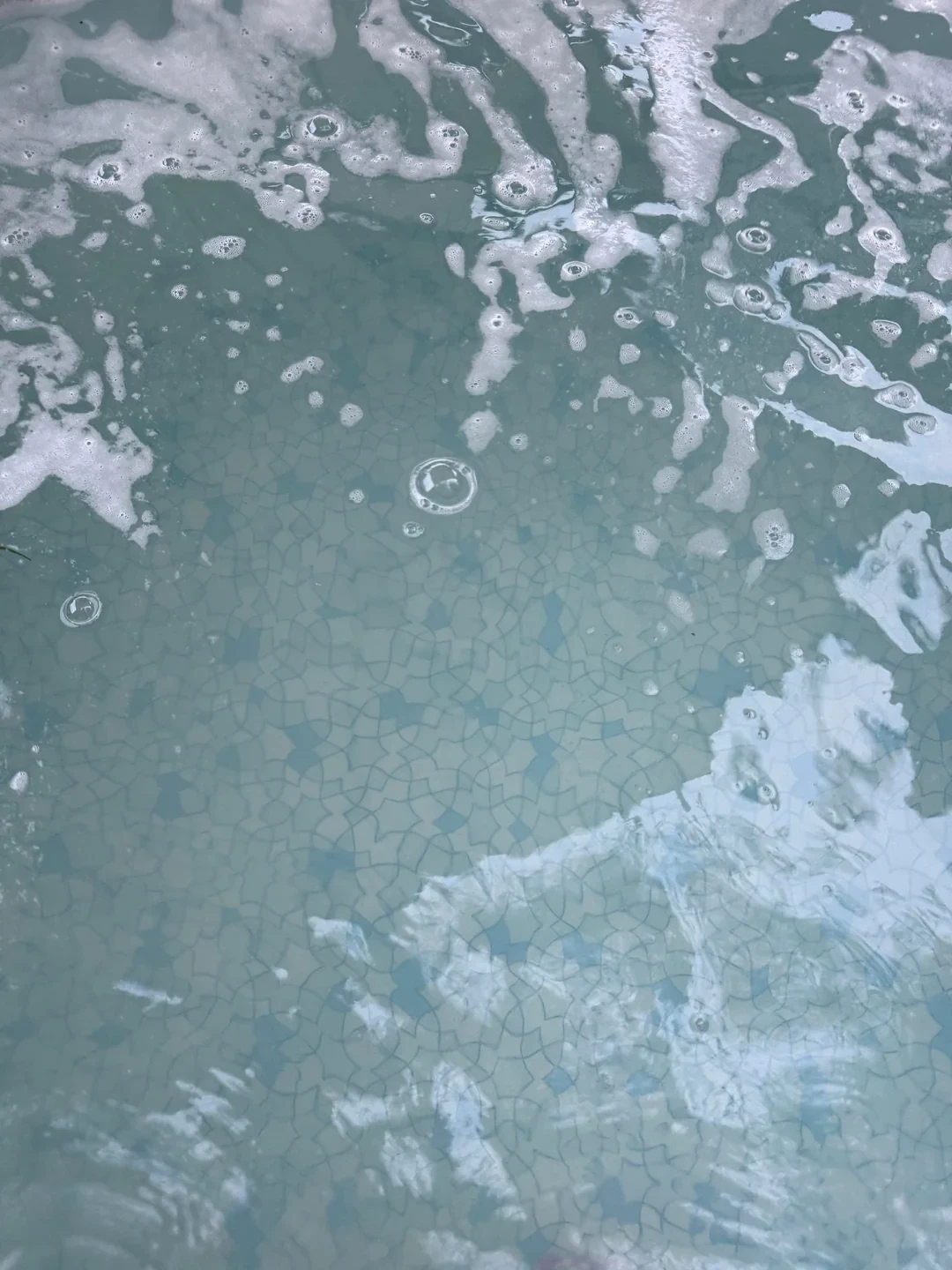
Before draining
1.Pipe cleaning:
Use a professional line flush treatment. Activate all hydrotherapy jets for 30 minutes to eradicate biofilm.
2.Intensive Oxidation Shock:
Apply a dual-dose of non-chlorine shock (MPS) to decompose organic debris and neutralize odors.
3.Drain and wipe the interior walls of the hot tub:
Drain the dirty water completely, then thoroughly wipe the interior walls, seats, bottom, and areas around jets with a soft cloth.
4.Refill and balance water:
After refilling, optimize pH balance to 7.2–7.6 first.
5.Enhance filtration:
Extend filtration runtime to at least 6 hours per day. For silent pump systems, extend filtration even further—ideally up to 24 hours.
6.Start regular disinfection:
Establish a stable bromine or chlorine sanitation system, maintaining residual sanitizer levels of 3–5 ppm.
How to change water discoloration in a hot tub?
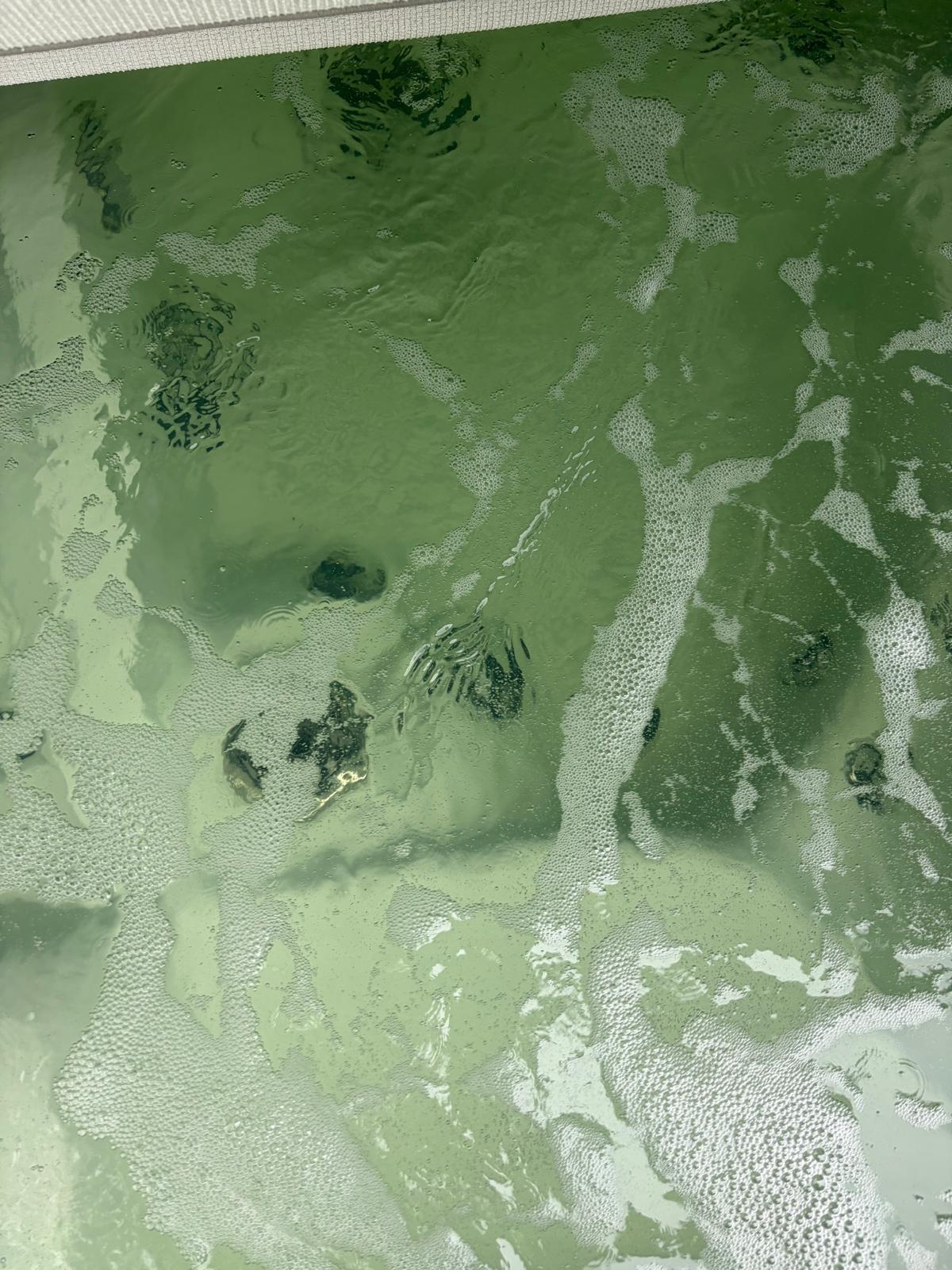
1. Source Prevention (Pre-fill Filtration):
When filling the spa, use a hose-end pre-filter to intercept iron oxide, sediment, and heavy metal ions.
2. Water chemistry adjustment
First adjust pH to 7.2–7.6.
Add a Metal Sequestering Agent, which chelates and binds dissolved metal ions. This process may take 2–3 days; rinse the filter daily.
Optimize Calcium Hardness to 175–250 ppm (Target: 200–250 ppm). If water is too “soft,” it becomes aggressive and may leach metals from components, exacerbating water staining.
3. Chemical replacement / CYA management:
Switch to a Non-Chlorine Shock (MPS) to avoid continuously adding cyanuric acid (CYA). When CYA exceeds 50 ppm, Chlorine Lockout may occur: sanitizer is present but chemically inactive.
Diagnosis-based prioritization:
| Symptom | Prioritize |
| Yellow or reddish-brown (iron) | Pre-fill Filtration + Metal Sequestering Agent |
| Green or blue-green (copper) | prioritize metal sequestrant + increase calcium hardness |
| Yellow-green (high CYA) | Prioritize switching Oxidizer |
Hydrorelax Recommended Water Quality Standards
“As-needed emergency fixes are not as effective as long-term maintenance.”
During routine spa operation, consistent maintenance practices prevent most water chemistry issues.
After each soak, apply the recommended dosage of oxidation shock. Routinely monitor sanitizer levels, test and calibrate water parameters weekly, and rinse the filter media. A complete drain and refill cycle should occur every 3–4 months.
The Hydrorelax-recommended water quality benchmarks are as follows:
| Parameter | Target Range | Low Range Risks | High Range Risks |
| Total Alkalinity (TA) | 80~120 ppm | pH Bounce / Instability Aggressive water Ocular & dermal irritation | Persistent high pH Turbidity Calcium scaling on heater |
| pH | 7.2~7.6 (ANSI Standards) | Component corrosion Skin/eye irritation Accelerated sanitizer depletion | Inhibited sequestering efficacy Reduced sanitizing efficiency Mineral precipitation |
| Residual Sanitizer (Cl/Br) | 3~5 ppm | Algae bloom Pathogenic proliferation Chloramine odors | Bleaching of accessories Pungent chemical smell Surface degradation |
Cyanuric Acid (CYA) | 20~30 ppm | UV degradation of chlorine | Chlorine Lockout Inactive sanitizer Greenish turbidity |
Calcium Hardness | 175~250 ppm | Aggressive 'soft' water Persistent spa foam | Turbidity Mineral calcification in plumbing Reduced heating efficiency |
Total Dissolved Solids (TDS) | Increase ≤1500 ppm from initial fill | / | Saturated 'dead water' Turbid/dull water Inhibited chemical efficacy |
Hydrorelax Words
The wellness experience and comfort of hot tub should not be disrupted by persistent foam, musty odors, or water discoloration. A truly worry-free bathing experience comes from scientific and consistent daily maintenance, rather than repeated emergency fixes.
Hydrorelax has been deeply engaged in the bathroom accessories industry for many years. We master every component—from plumbing networks and jet nozzles to filtration systems—and possess profound expertise in water chemistry dynamics.
We believe that high-quality components are the foundation of stable water conditions, while proper maintenance knowledge is the key to making the most of your equipment.
Whether you are a spa owner seeking an effective maintenance protocol for your home tub, or a distributor aiming to elevate post-purchase support and brand equity, Hydrorelax provides expert support and technical guidance. If you need assistance, feel free to contact our team.
Recommend Product
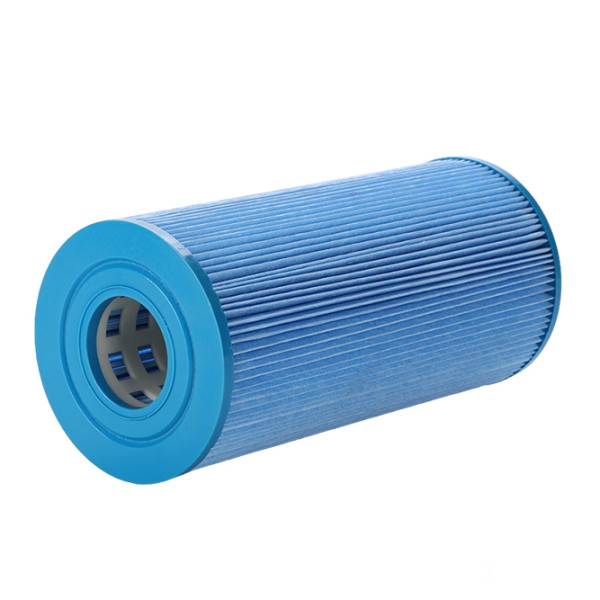
Antibacterial materials Cartridge filter
Diameter: 125mm;
length: 263mm
Top:54mm open
bottom:54mm open
pleat count:106
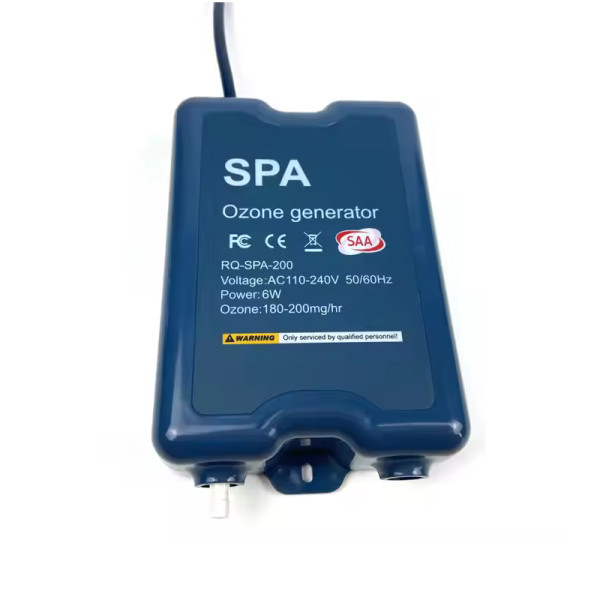
AC110-240V/50-60HZ
Ozone output:200mg/hr
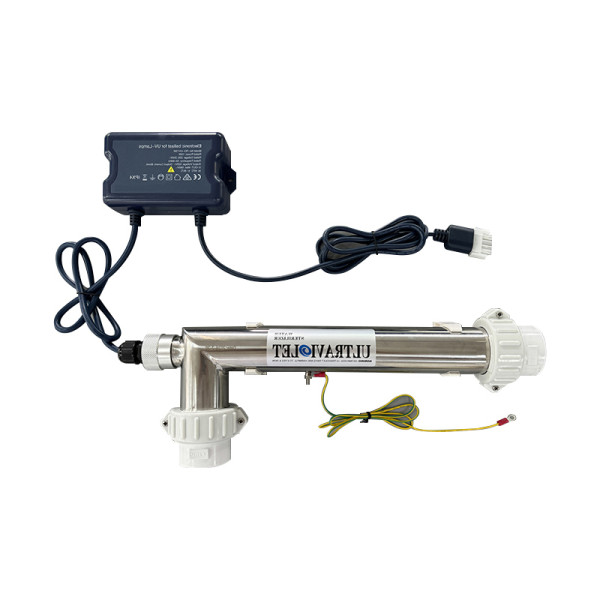
Voltage: AC220V/50-60HZ
Power: 15W