Sauna Thermometer and Hygrometer: Types, Materials, and Buying Guide
- Share
- Issue Time
- Nov 27,2026
Summary
Compare sauna thermometer and hygrometer materials, measuring mechanisms, ranges, accuracy, installation, care, and wholesale buying checks for dry saunas, steam rooms, and infrared saunas.
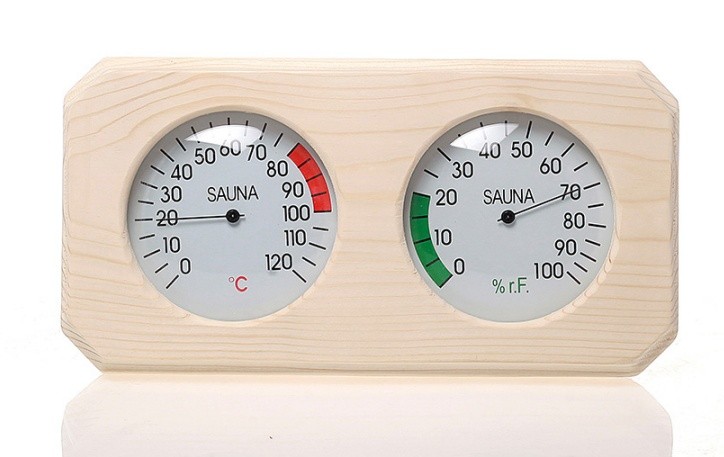
A sauna thermometer and hygrometer helps users monitor temperature and relative humidity, but buyers should compare more than the appearance of the frame. The measuring mechanisms, range, readability, material processing, calibration, and intended sauna environment all affect whether an instrument is suitable for a project.
This guide explains common frame materials, mechanical and electronic measuring methods, buying checks, installation, and routine care. It is written for sauna manufacturers, importers, distributors, and private-label buyers comparing products and suppliers.
Sauna Thermometer and Hygrometer Construction: What Are the Main Parts?
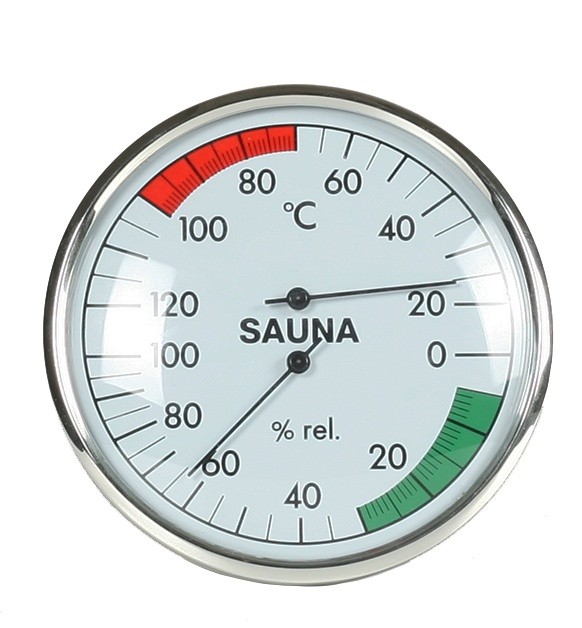
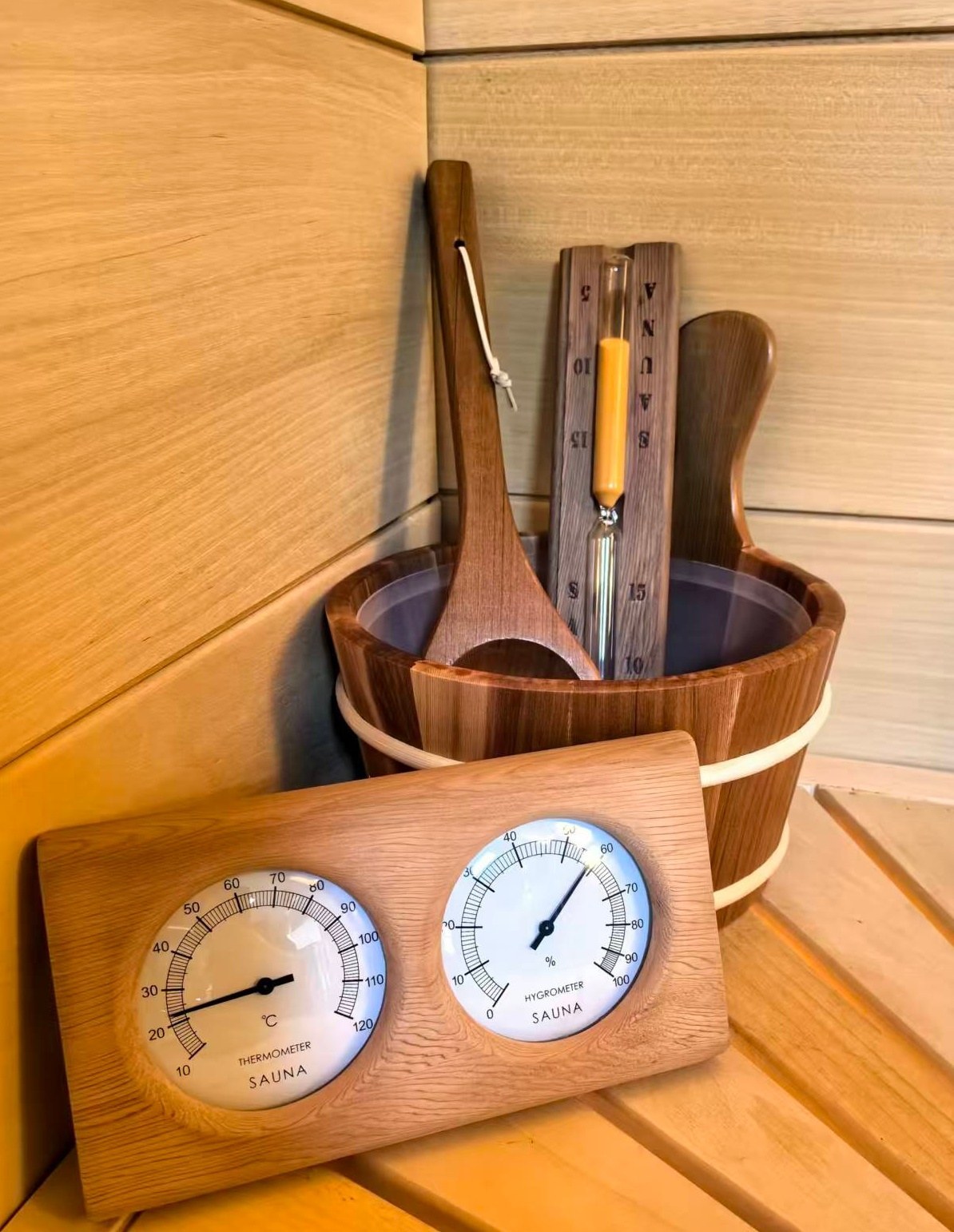
A typical sauna measuring instrument combines an outer frame with a temperature dial and a humidity dial, either as two separate faces or as two scales inside one round face.
How Does the Outer Frame Affect the Product?
The outer frame protects the measuring instruments and influences appearance, durability, handling, and installation. Common options include solid wood, metal, and heat-rated plastic.
Wood is often selected for traditional sauna interiors. Metal can suit a more modern design, but it conducts heat quickly, so placement and contact risk need attention. ABS plastic can reduce cost, but buyers should confirm the stated heat resistance for the intended environment.
Wood Frame Materials: How Do Common Species Differ?
Wood species differ in color, grain, scent, resin content, processing behavior, and cost. A species name alone does not confirm performance; moisture content, drying, construction, and surface treatment also matter.

- Pine: A common, cost-conscious option with visible natural grain. Buyers should check resin content and drying because heat can reveal resin problems.
- Aspen: Light in color with a restrained appearance, making it suitable for simple sauna accessory designs.
- Cedar and western red cedar: Distinctive grain and scent can support a different product position. Performance still depends on grade and processing.
- Beech: Fine, relatively even grain can suit products where surface appearance matters. Dimensional stability under changes in heat and humidity should be checked.
- Sapele: A red-brown wood with visible grain for products that emphasize a darker wood appearance.
Solid wood should not be treated as automatically moisture-proof. Ask how the wood is dried, joined, sanded, and finished, and whether the surface treatment is intended for a sauna environment. For a broader view of material and branding decisions, read our sauna accessories OEM guide.
Measuring Mechanisms: How Do Mechanical and Electronic Instruments Work?
The temperature and humidity sections may share one housing, but they are separate measuring mechanisms and may not have the same suitable operating range.
How Does a Sauna Thermometer Measure Temperature?
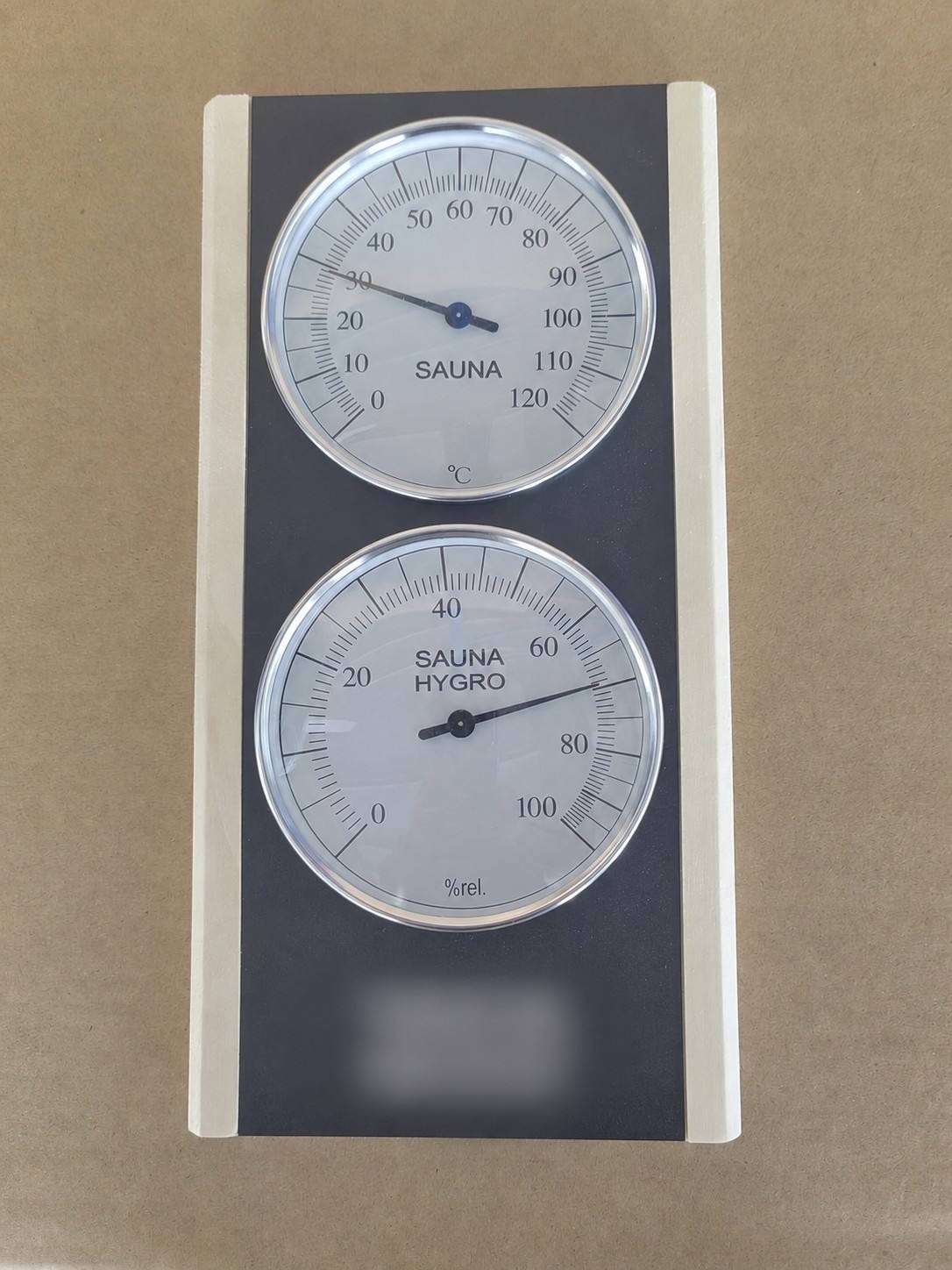
A mechanical bimetal thermometer uses two joined metals with different thermal expansion behavior. As temperature changes, the element bends and moves the pointer. This design needs no battery and has a relatively simple internal structure, but accuracy still depends on movement quality, calibration, and product construction.
An electronic thermometer uses a sensor and normally gives a direct digital reading. A standard household electronic thermometer is not automatically suitable for a sauna. Buyers should check the maximum working temperature, sensor location, heat resistance of the display section, and the manufacturer's stated operating range. Related system considerations are covered in our temperature system guide for manufacturers.
How Does a Sauna Hygrometer Measure Humidity?
A mechanical hygrometer can use a moisture-sensitive synthetic fiber. Changes in humidity alter the material's length, and a mechanical linkage moves the pointer. Some traditional instruments use treated natural hair. In both cases, performance depends on material treatment, movement design, and calibration.
An electronic hygrometer may use a capacitive humidity sensor and provide a digital display. Long exposure to heat and humidity can contribute to sensor drift or reduced performance, so the specified working environment needs to be checked rather than assumed.
Choosing a Sauna Thermometer and Hygrometer: Which Range Fits the Room?
Start with the sauna type, then compare range, accuracy, display format, and material. A broad range is useful only when it covers the real operating conditions and remains readable where the instrument will be installed.
| Sauna type | Common reference environment | Buying focus |
|---|---|---|
| Traditional Finnish dry sauna | About 80-100°C | The temperature range should cover the actual maximum; mechanical instruments are common. |
| Steam room | About 40-50°C, with humidity near saturation | Confirm that the product is explicitly intended for high humidity and review humidity measurement capability. |
| Infrared sauna | About 45-60°C | Choose a suitable range for the lower operating band instead of assuming a larger range is always better. |
These temperatures are common reference ranges only. Actual conditions should follow the sauna equipment instructions and the requirements of the specific project.
For a traditional dry sauna, a 0-120°C scale can leave enough room above the common operating band. A thermometer with a maximum of only 80°C cannot provide a normal reading if the room exceeds that range. For an infrared sauna, a smaller suitable range can be easier to use, but it does not automatically provide better accuracy.
Steam rooms need special attention. Near-saturated humidity places different demands on the instrument, and a hygrometer intended for a traditional sauna may not be suitable. Our guide to essential and optional sauna accessories explains how thermometers and hygrometers fit within a complete accessory range.
Wholesale Buying Checks: What Details Should Buyers Inspect?
A sample should be assessed for readability, stated accuracy, frame processing, assembly, and packaging before a volume order is approved.
1. Are the Dial and Scale Easy to Read?
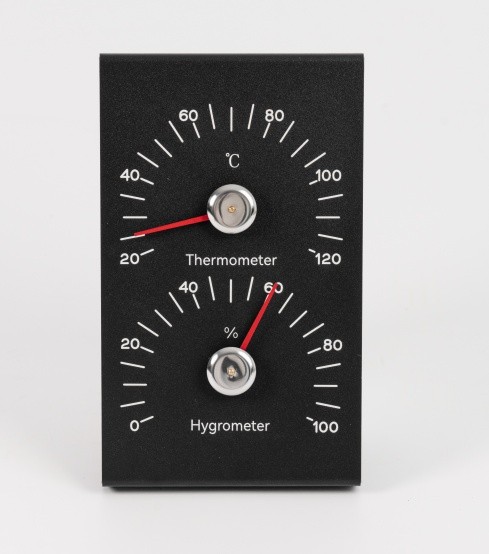
A dial of about 80-100 mm is often easier to read, but the final choice should reflect installation distance and available wall space. Check the contrast of the numbers and pointer as well as the spacing between scale marks.
2. Has the Supplier Stated the Accuracy?
For initial comparison, a mechanical thermometer target of about ±2°C and a hygrometer target of about ±5% RH may suit ordinary sauna use. Buyers should request the actual specification and confirm the range over which it applies. A stronger accuracy claim does not automatically mean the instrument remains stable under long-term heat and humidity.
3. How Is the Wood Processed and Finished?
Inspect the wooden frame for cracks, splinters, visible distortion, and surface defects. Ask about drying and surface treatment. An unsuitable coating can create odor or surface stability problems under heat, so the finish should be confirmed for the intended sauna application.
4. Has the Complete Product Been Checked?
Before volume production, confirm a sample and check the reading, assembly, pointer movement, frame condition, and packaging protection. For related sourcing choices, buyers can compare sauna accessories wholesale, sauna buckets, and sauna ladles when building a coordinated range.
Installation and Routine Care: How Can Buyers Support More Useful Readings?
Correct placement and routine checks help an instrument provide more useful reference readings. A suitable product can still give misleading results if it is installed in a poor location.
- Choose the position carefully. A common position is above the bench near the seated user's head height, away from direct heater radiation, direct water flow, and ventilation openings. Final placement should follow the sauna layout and heater manufacturer's requirements.
- Use suitable fasteners. Screws and fixing parts should have appropriate corrosion resistance for the intended environment.
- Allow the instrument to stabilize. After first installation, follow the product instructions and allow time for a mechanical instrument to adapt to the room before judging its reading.
- Do not judge the reading immediately after water is poured on the stones. Local temperature and humidity change quickly. Waiting about 60-90 seconds can provide a more useful observation, although ventilation and heater conditions still affect the result.
- Investigate unusual readings. Check placement, range, and instrument condition first. If necessary, compare with a verified reference instrument and follow the manufacturer's calibration or replacement instructions.
- Clean gently. Use a soft, slightly damp cloth, then dry the surface. Do not rinse, immerse, or use aggressive chemical cleaners that could reach the measuring mechanism.
Procurement Takeaways: Confirm These Five Points
- Match the temperature and humidity range to the actual sauna type and operating conditions.
- Compare mechanical and electronic instruments by working environment, not display style alone.
- Check wood drying, surface treatment, metal heat transfer, and the stated heat rating of plastic.
- Request the accuracy specification and inspect dial readability, assembly, pointer movement, and packaging on a sample.
- Confirm installation position and care instructions so the product is evaluated under suitable conditions.
Looking Ahead: Build the Instrument into the Accessory Plan
A thermometer and hygrometer is easier to source when it is treated as part of the full sauna accessory plan. Frame material, dial design, measuring range, packaging, and branding can then be compared alongside buckets, ladles, timers, and other items intended for the same market.
Discuss Your Sauna Accessory Requirements with Hydrorelax
Hydrorelax supports B2B buyers with sauna accessory selection and OEM requirements. Provide your target market, material preference, measuring range, planned quantity, and branding needs so the suitable configuration and current order conditions can be reviewed.
Contact UsSauna Thermometer and Hygrometer FAQ
1. Can a thermometer and hygrometer be purchased separately?
Yes. Buyers can purchase a thermometer or hygrometer separately, or choose a combined instrument with two dials or two scales in one housing.
2. Is a wooden instrument more heat-resistant than a metal one?
Not necessarily. Heat performance depends on the specific material, processing, construction, and installation position rather than the outer frame material alone.
3. Does a sauna thermometer and hygrometer need calibration?
Readings should be checked periodically. If a clear deviation appears, follow the manufacturer's instructions for comparison, calibration, movement replacement, or product replacement.
4. What should a wholesale buyer confirm with the supplier?
Confirm the material, dimensions, measuring range, accuracy, intended environment, minimum order quantity, lead time, packaging, and customization options.
5. What is the MOQ for Hydrorelax OEM sauna accessories?
MOQ depends on the product, material, and customization. For standard OEM sauna accessories, the usual starting quantity is 200 sets; the current quantity should be confirmed for the exact configuration and order conditions.