UV Spa Lamp Guide: Structure, Function, and Commercial Water Treatment Benefits
- Share
- Issue Time
- Mar 16,2026
Summary
This guide explains UV spa lamps' structure, function and role as a complementary sanitizer, supported by Hydrorelax.
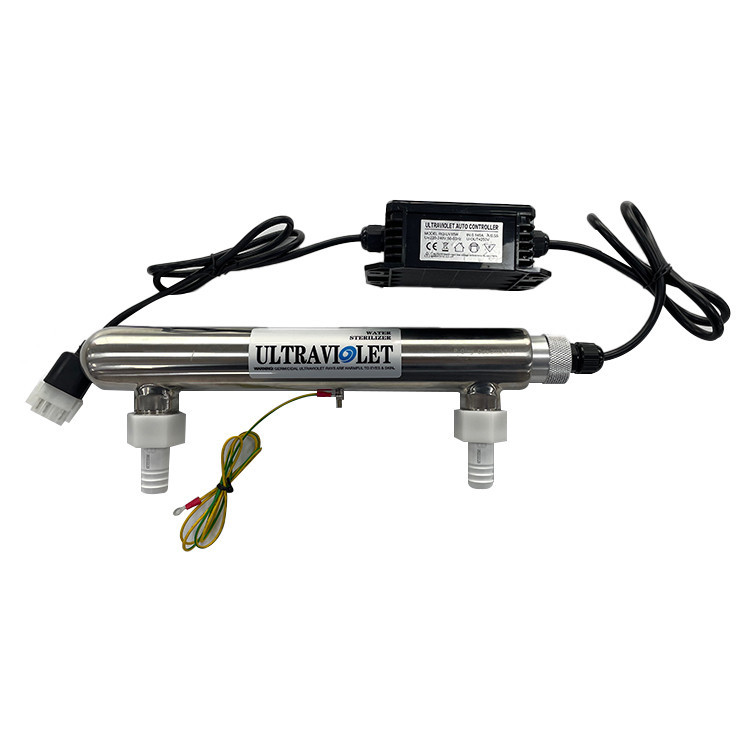
We've talked about ozone generators before. So you might wonder: do you really need a UV lamp in your spa? Does it actually work?
Today, we'll break down how UV lamps work, their key components, how to use and maintain them, and their real value in your water treatment system, so your spa water stays clean and safe.
Do I still need a UV lamp if I have an ozone generator?
Many high-end spas already have ozone. Is a UV lamp still necessary? The answer: yes, and it complements ozone.
Ozone quickly kills most bacteria and viruses in water but works only for a short time and depends on water quality. A UV lamp uses 254nm UV light to destroy microbes' DNA, stopping them from reproducing. Put together, ozone and UV leave almost no microbial "blind spots",making water sanitation more stable.
UV lamps also help reduce chemical disinfectants, cutting equipment corrosion and skin irritation. With proper water flow and a functioning filter, their disinfection is maximized, reaching areas ozone can't cover.
So, UV lamps don't replace ozone, they boost your overall sanitation system. For commercial spas or high-end homes, this means safer water and more efficient treatment.
Spa UV Lamp Components
To understand how a UV lamp improves your spa sanitation system, it is important to know its main parts.
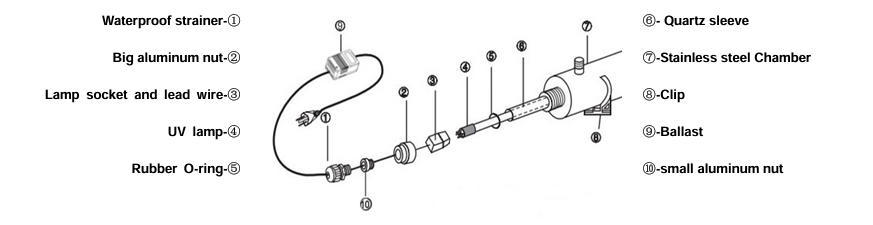
A complete UV lamp system usually consists of the core hardware, sealing and protective components, and installation accessories. Each part is essential for disinfection efficiency and long service life.
Hard Core
The core hardware produces UV light and delivers it into the water. It includes:
1. UV Lamp
The UV lamp is the key component that generates ultraviolet light. It is usually enclosed in a quartz glass tube and emits 254nm UV-C light, which effectively kills most microbes in water.
2. Quartz Sleeve
The sleeve isolates the lamp from water while allowing UV light to pass through. It is heat-resistant and chemical-resistant, protecting the lamp from direct contact with water and disinfectants and extending its life.
3. Protective Cap
Located at the top of the quartz sleeve, the cap is heat-resistant and chemically inert. It protects the lamp connection.
4. Sealing and Protection
UV lamps are sensitive to water. Seals and protective parts are essential:
O-Ring: Made of NBR or EPDM, it prevents water from entering the lamp chamber.
Aluminum Nut and Retainer: Secure the lamp assembly and maintain stability under water flow.
Waterproof Mesh: Placed at the chamber inlet, it filters out large particles to prevent blockages.
Reactor Chamber: Usually made of stainless steel or corrosion-resistant plastic. It holds the quartz sleeve and lamp, forming a dedicated water flow path.
Mounting Brackets, Clips, and Fasteners: Keep the UV lamp system firmly installed in spa piping or equipment.
How a UV Lamp Works
Once you understand the structure of a UV spa sanitizer, its operation is easy to follow. It works in three steps:
1. Water Flows into the Reactor Chamber
Filtered water enters the reactor chamber that holds the UV lamp.
2. UV Light Exposure
The lamp emits 254nm UV-C light that passes through the quartz sleeve. It destroys microbes' DNA and stops them from reproducing.
3. Sanitized Water Returns to the Spa
The treated water circulates back to the spa. A small amount of chlorine or bromine is still needed to maintain residual disinfection and ensure safe water.
Note: The UV lamp only treats water that passes through it. It cannot provide continuous residual disinfection and cannot replace chemical sanitizers.
UV Lamp Lifespan and Replacement
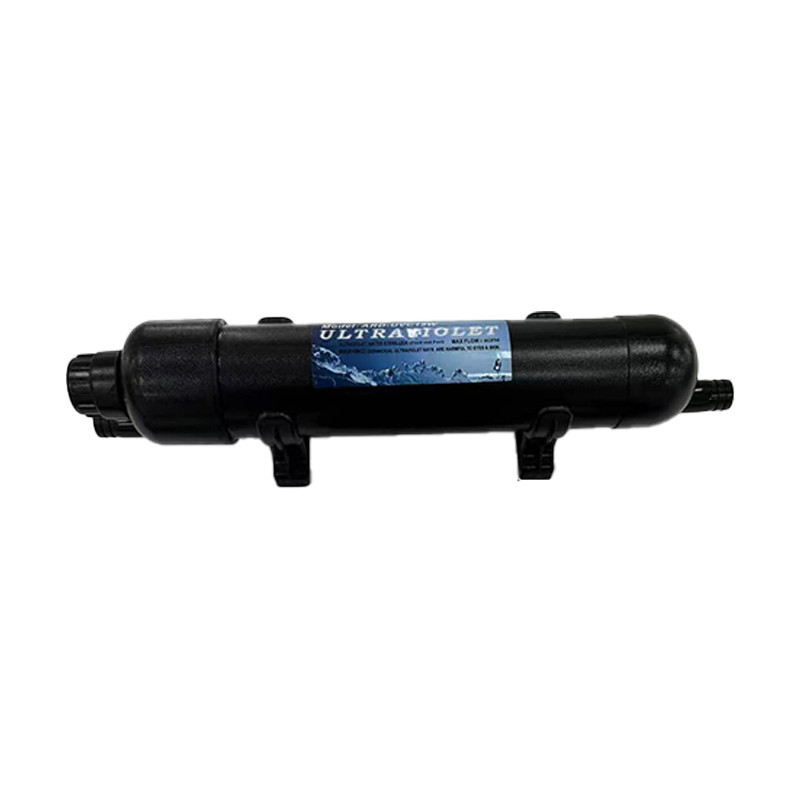
Here is a summary of the benefits and limits of a UV spa sanitizer. This helps you understand its real role and value in commercial spa systems.
Advantages
Effective Disinfection: Kills bacteria, viruses, and algae instantly.
No Chemical Byproducts: Does not change pH or create chloramines or odor.
Supports Sanitizers: Reduces chemical use, lowering equipment corrosion and skin irritation.
Limitations
Not Standalone: Only treats water that passes through the reactor chamber. No continuous protection.
Flow Sensitive: High flow or clogged filters reduce effectiveness.
Cannot Remove Large Particles: Filtration is still needed.
Tip: A UV lamp is an auxiliary sanitizer. In commercial spas, it improves water treatment efficiency but must be used with low-level chemical disinfectants.
Hydrorelax Guide
At Hydrorelax, we offer high-quality UV lamps and accessories for spas of all sizes:
Multiple Options: Various power, sizes, and base types.
Built to Last: Corrosion-resistant components for long-term use.
Custom Fit: Solutions matched to flow rate and water conditions.
Choosing and maintaining the right UV lamp not only improves water management but also reduces operating costs. It is an essential performance boost for high-end spa systems.
For tailored solutions and product support, Contact Hydrorelax for more information.