First published: August 12, 2026 · Last updated: September 23, 2026 · By Sofia · Category: Customer Case Study · Customer: ESL (Estonia)
Hydrorelax and ESL, an outdoor wooden hot tub manufacturer in Estonia, optimized an LED bathtub light system with a temperature display through remote feedback and technical teamwork. The two sides had met in person before, but no site visit was made for this issue. From requirement confirmation to sample delivery, the project was handled remotely around ESL's real-world feedback.
Customer and Project Background: Why the Display Status Mattered After the Light Was Off
ESL needed more than an accessory that could provide lighting and show water temperature; the electronic system also had to fit its nighttime use, energy management, and production requirements.
ESL serves home markets in Northern Europe and German-speaking regions. Its outdoor wooden hot tubs emphasize natural wood, simple design, and service life. For its end users, a hot tub is also a place for quiet, relaxation, and privacy, so the lighting, noise, and energy use of supporting electronic accessories can affect the experience.
Before this project, ESL had purchased our
LED bathtub light system with temperature display functionality. The system combines lighting with water temperature monitoring, and the two teams had already established a working communication process.
Original Issue and Constraints: What ESL Wanted to Change and Keep
ESL reported one specific issue: after the light was switched off, the temperature display remained illuminated, which could make nighttime users think the system had not shut down correctly.
In the existing system, the power supplies for the temperature display module and lighting module were not fully independent. After the light was switched off, the display module remained in standby power mode. This did not mean the lighting had failed, but the illuminated screen could cause disturbance in low-light conditions and make the system status unclear to users.
ESL therefore set clear requirements:
the temperature display panel needed independent on/off control, while the original mounting holes and waterproof structure had to remain unchanged to avoid extra production-line adaptation costs. Interface and component compatibility also mattered for the complete lighting assembly, as explained in our guide to
hot tub LED light system compatibility.
Remote Solution Confirmation: How the Technical Team Added Independent Control
The Hydrorelax technical team confirmed that a software-only adjustment could not provide the independent control ESL required, so the solution combined a panel hardware change with revised power management logic.
After receiving the feedback, the team assessed the existing design and confirmed the modification boundaries through several rounds of remote communication. The solution retained the original mounting-hole dimensions and waterproof structure without changing the overall layout or housing mold.
Hardware Adjustment: Adding a Physical Button in Reserved Panel Space
The technical team added a miniature physical button to the lower-right corner of the existing panel. The original PCB had reserved space in this position, so the overall layout did not need to change. The new button used a component with the same material and waterproof rating as the panel, with the aim of keeping the existing waterproof structure intact. A related approach can be seen in our
bathtub LED sealing solution case.
Software Adjustment: Separating Lighting and Temperature Display Power Control
The team rewrote the power management program. The original lighting switch continued to control the LED lighting module, while the new physical button independently connected and disconnected power to the temperature display module. After the display was switched off, overall standby power consumption was further reduced. ESL approved the proposal, and the project moved into development and sample production.
Before and After: What Was Added to the Optimized System
The optimized system retained the existing lighting, temperature display, and mounting structure while adding an independent control point for the temperature display module.
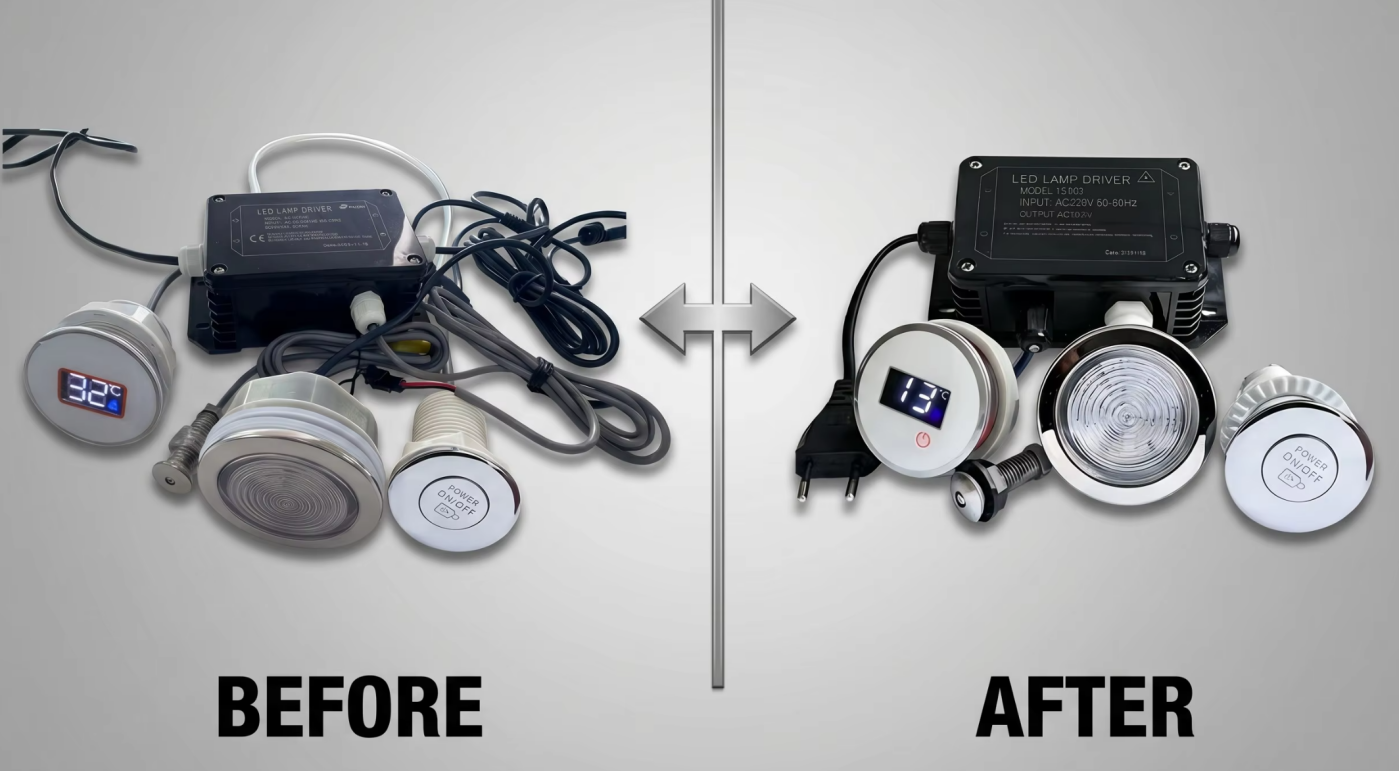
LED bathtub light system before function optimization (left) and after function optimization (right)
The image shows the component configuration before and after the functional change. No specific model or undisclosed specification is inferred from the image. Buyers reviewing light types, certification, and compatibility can also consult our
Spa LED Lights FAQ.
Sample Testing and Results: How ESL Verified the Modification
The project took 28 days from initiation to sample delivery. After receiving the sample, ESL carried out three tests covering nighttime use, humid conditions, and extended standby operation.
Nighttime test: ESL confirmed in a low-light environment that the temperature display could switch off completely after the light was turned off and no longer remained illuminated.
Humidity test: ESL simulated the high-humidity conditions of an outdoor hot tub and confirmed that sealing around the new physical button met the IP-rating requirement for the project without affecting the original waterproof structure. The source material does not disclose a specific IP rating, so no unconfirmed rating is added here.
Standby test: After an extended period of inactivity, ESL verified that the independent switch for the temperature display remained stable and that the system showed no abnormal increase in standby power consumption.
After all three tests passed, ESL's product manager confirmed the result by email:
"You not only listened to our real-world application scenarios but also provided an engineering solution that exceeded our expectations within a very short timeframe. This level of responsiveness and attention to detail is exactly what we look for in a long-term strategic partner."
After the customized project was completed, ESL adopted the optimized solution as a standard configuration for subsequent orders. Manufacturers integrating individual parts into a complete system can also refer to our
hot tub accessories sourcing practices.
Case Review: Four Reasons the Remote Collaboration Worked
- The issue came from a real application. ESL passed the end user's experience with the illuminated screen back to the supply chain, helping the technical team identify the exact function that needed adjustment.
- The modification boundaries were clear before development. Independent control, the original mounting holes, and the existing waterproof structure formed clear constraints for the solution.
- Hardware and software were addressed together. The new button provided a physical control point, while the revised power management program separated lighting control from display control.
- The sample was tested against the reported issue. Nighttime, humidity, and standby tests covered light disturbance, sealing, and independent-control stability before the change was adopted for later orders.
Looking Ahead: From One User Report to a Standard Order Configuration
This project shows that a mature product can still be adjusted around real end-user experience. The Hydrorelax technical team will continue working with ESL through remote communication, sample confirmation, and targeted testing, while handling new application requirements within confirmed structural and technical boundaries. Buyers considering other lighting changes can also review our
bathtub LED light kit upgrade guide.
Work With Us: How to Submit a Customization Requirement
If an existing accessory does not fully meet your project requirements, tell us which function must change and which mounting dimensions, structures, or compatibility conditions must remain unchanged. Clear constraints help the technical team determine whether the project requires hardware changes, software changes, or both.
Along with product names and specifications, we also welcome end-user feedback, application conditions, and testing priorities. We use this information to evaluate a workable solution. To discuss an LED bathtub light system or another custom component, please
contact us.
Frequently Asked Questions
1. What was the main issue ESL wanted to solve?
The temperature display remained illuminated after the light was turned off. ESL wanted independent display control without changing the original mounting holes or waterproof structure.
2. Why could the issue not be solved through software alone?
The technical team determined that ESL needed an independent physical control point. The project therefore required both a new panel button and rewritten power management logic.
3. Did the new button change the original mounting structure?
No. The solution used reserved space on the original PCB and added the button to the lower-right corner of the panel while retaining the mounting-hole dimensions, overall layout, and housing mold.
4. What tests were completed after the sample was delivered?
ESL completed nighttime, humidity, and standby tests to check screen shutoff, sealing around the button, and the stability of the independent display control.
5. Was an on-site visit arranged for this project?
No. The two sides had met in person before, but this LED bathtub light system optimization was completed through remote feedback from ESL and collaboration with the Hydrorelax technical team.
Does your project require changes to lighting, display, or control functions while retaining the original installation structure?
Visit the
Hydrorelax website or use our
contact page to share your project requirements.
About the author: Sofia prepared this ESL customer case. For questions about LED bathtub light systems, hot tub accessories, or OEM/ODM projects, please
contact us.
- End of case study · First published August 12, 2026 · Updated September 23, 2026 -