Summary
In November 2018, the Hydrorelax team visited EEH, an Eastern European SPA manufacturer, to see how 70% of their components — pumps, jets, PVC fittings, LED lights, skirt panels and covers — work on the real assembly floor.
Summary
In November 2018, the Hydrorelax team visited EEH, an Eastern European SPA manufacturer, to see how 70% of their components — pumps, jets, PVC fittings, LED lights, skirt panels and covers — work on the real assembly floor.
EEH is an SPA manufacturer based in Eastern Europe, serving the UK, Eastern European and Western European markets. By the time of our visit, roughly 70% of the components that go into every SPA EEH builds — pumps, jets, PVC pipes and fittings, hoses, LED chromotherapy lights, circulation systems, controllers, skirt panels and SPA covers — came from Hydrorelax. In November 2018, the Hydrorelax team walked into the EEH assembly workshop to see those parts in their real working environment — not in a catalog, but mounted inside half-built SPAs, with workers handling them, water running through them, and real feedback on what works and what could work better.

A single SPA shell requires components sourced from multiple factory lines, and any single supplier delay stops the entire assembly line at a cost of several thousand euros per day during peak season.
That is the core problem Hydrorelax set out to solve for EEH: instead of managing dozens of different suppliers with dozens of different lead times, freight documents and quality standards, EEH consolidates roughly 70% of its SPA components under one purchase order, one freight forwarder and one container. This is not just about unit price — it is about removing the hidden cost of supplier management, logistics fragmentation and production delays.
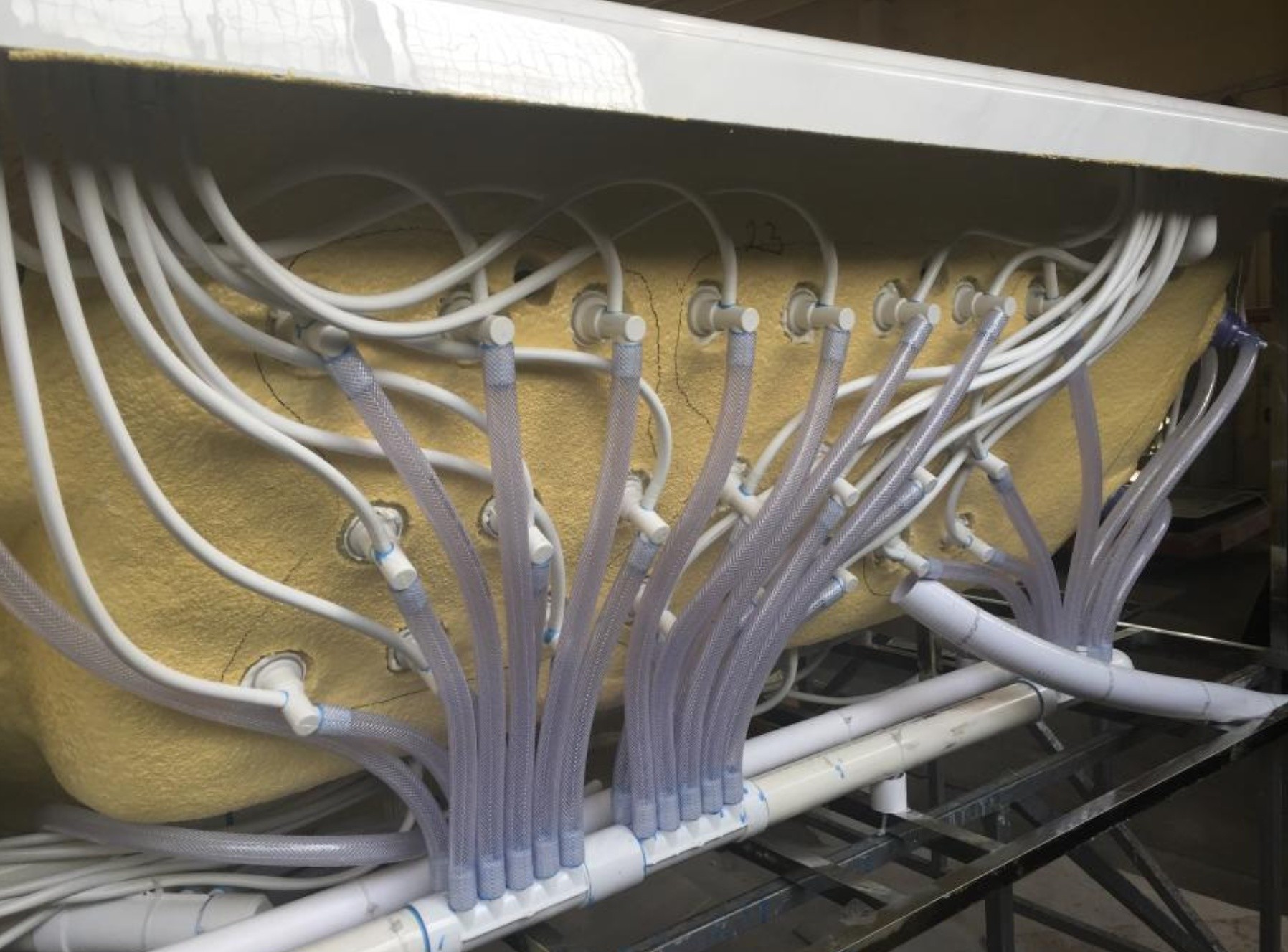
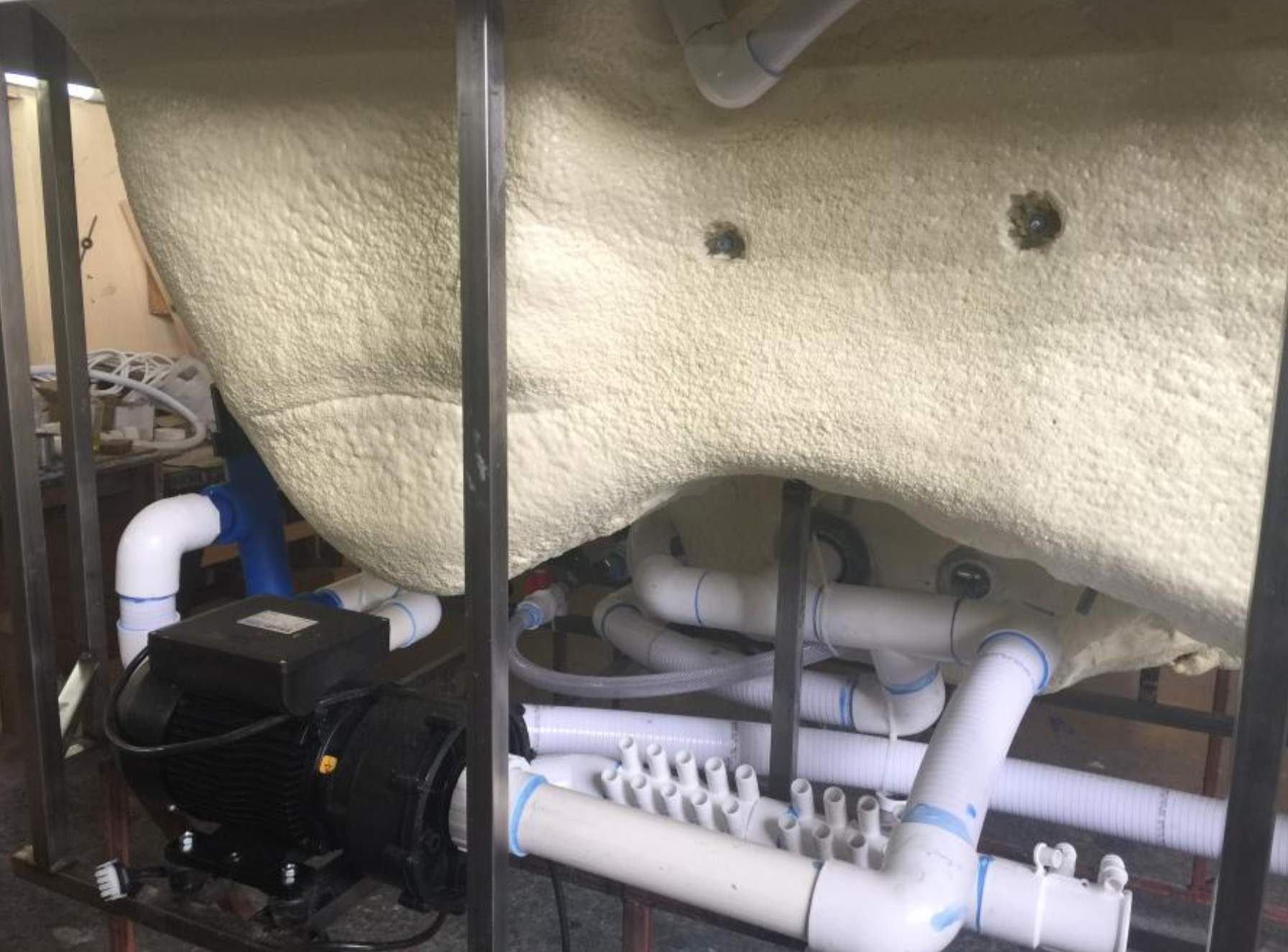
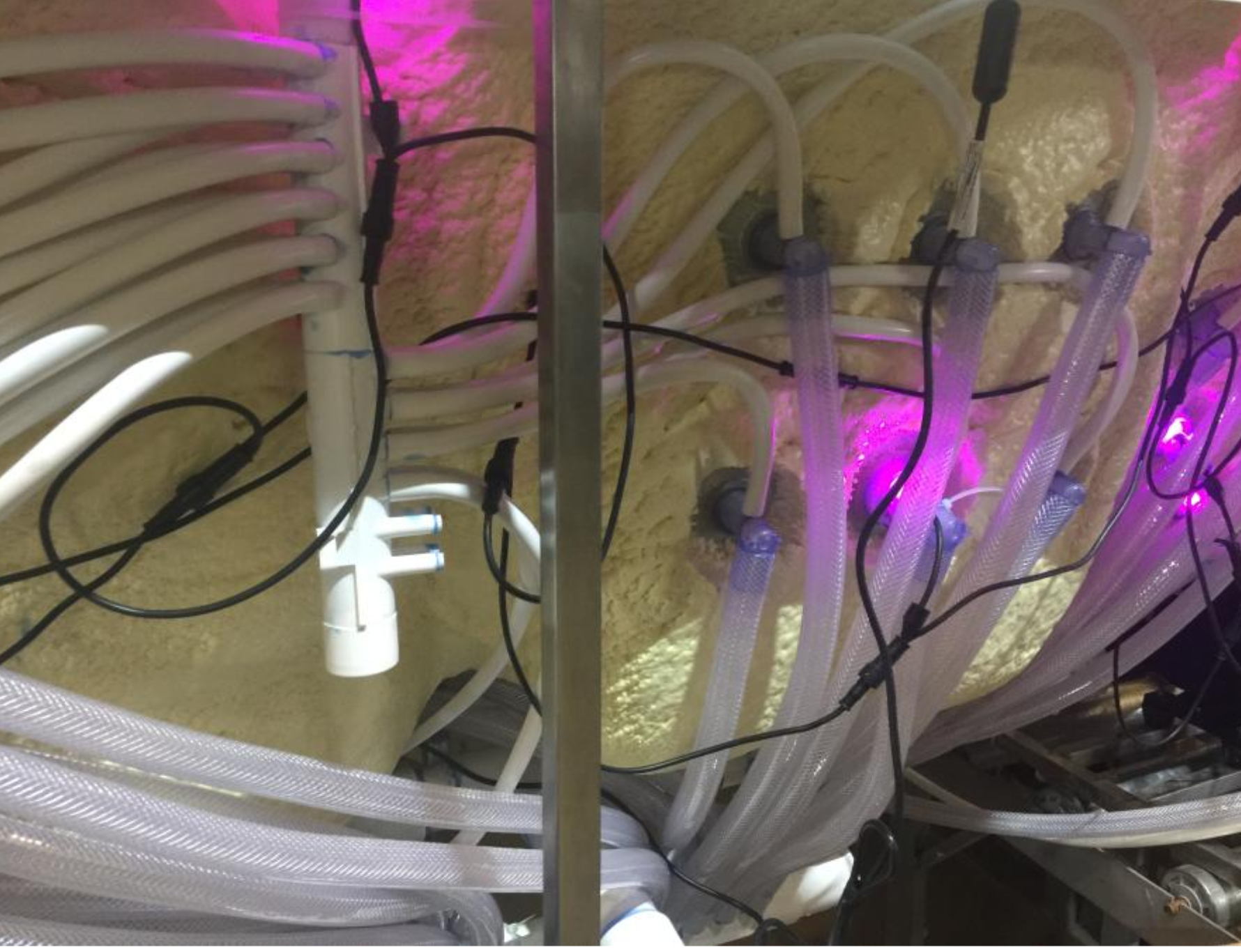
The first thing the Hydrorelax team noticed when a SPA shell was opened up was the network of white PVC pipes running through the frame like blood vessels.
Piping design is a discipline of its own, and three things matter most. First, pipe routing must be logical — the water path needs to be efficient, the massage system must perform reliably, and every branch should be easy to inspect and maintain. Second, glue application is not a case of "more is better." Every joint must receive three full clockwise rotations of PVC cement for an even bond — too little and it leaks, too much and the excess hardens inside, restricting water flow over time. Third, every fitting must match the pump it connects to.
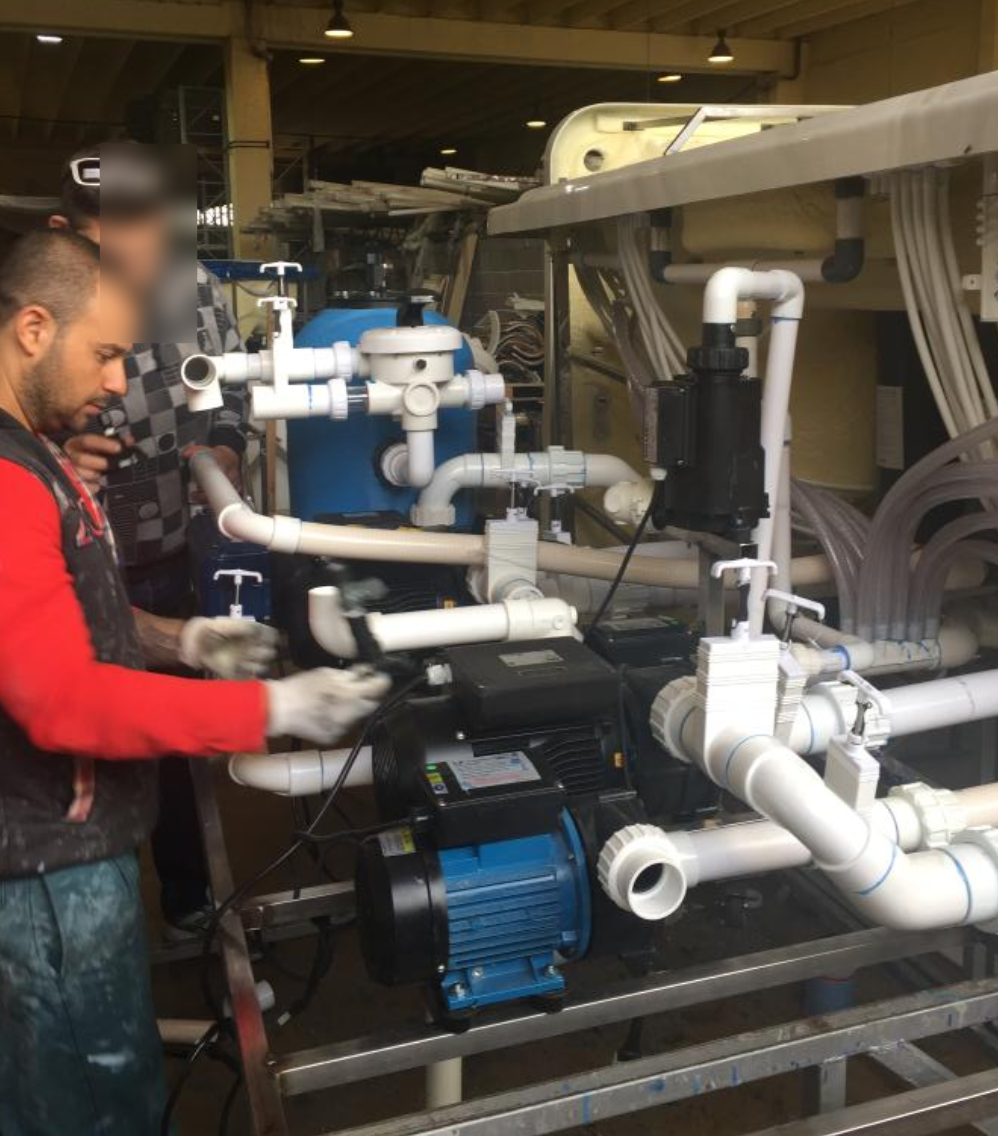
The white PVC pipe fittings, pump connectors, hoses and high-temperature joints we supply to EEH come as a complete, precision-matched kit with tight dimensional tolerances across all components. The client's assembly team can install everything in one go without cross-checking specifications from different suppliers — they just pick up the parts and mount them.
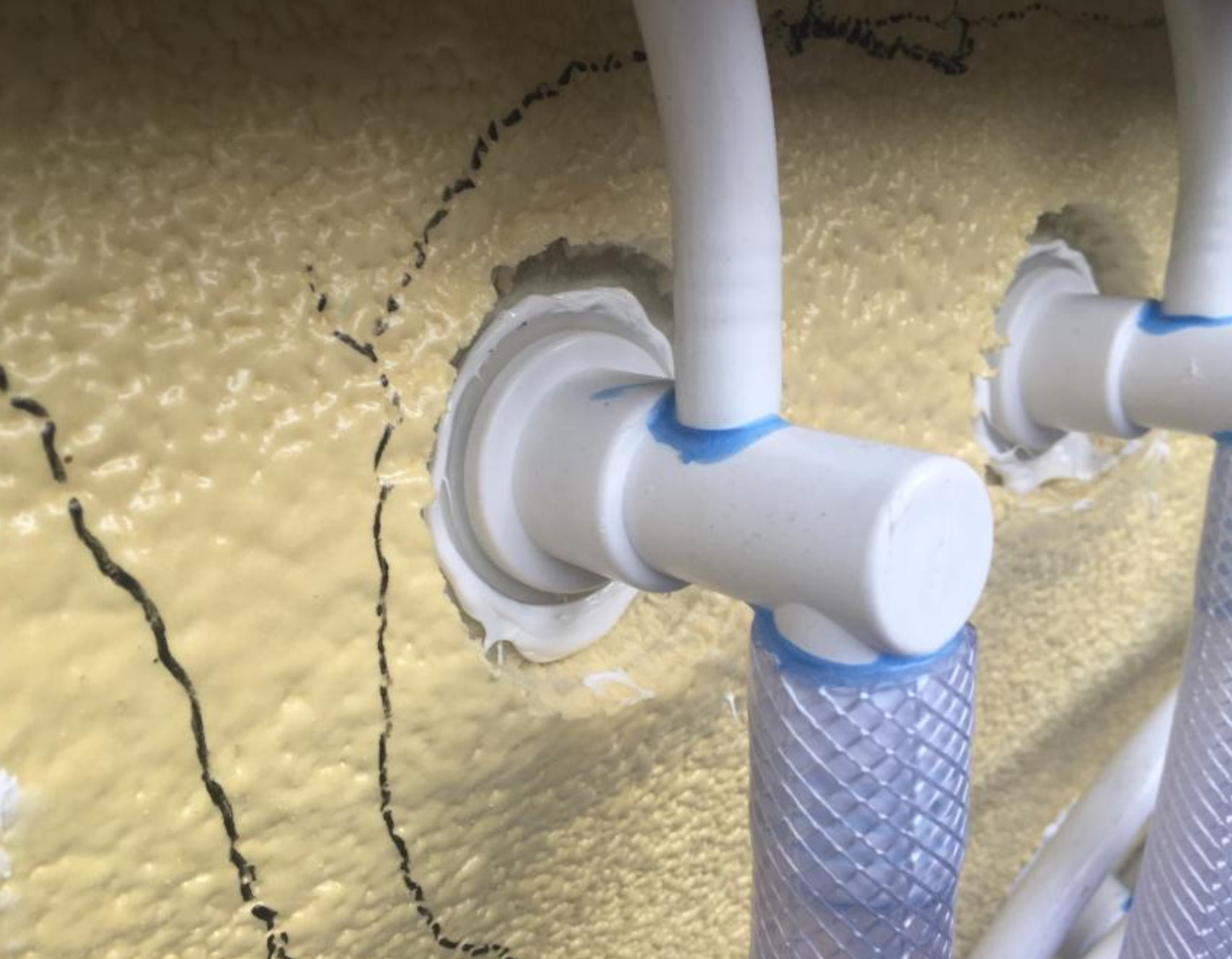
This is the first layer of value in one-stop supply: the customer never has to verify pump model → find matching fittings → align hose diameters across different vendor catalogs.
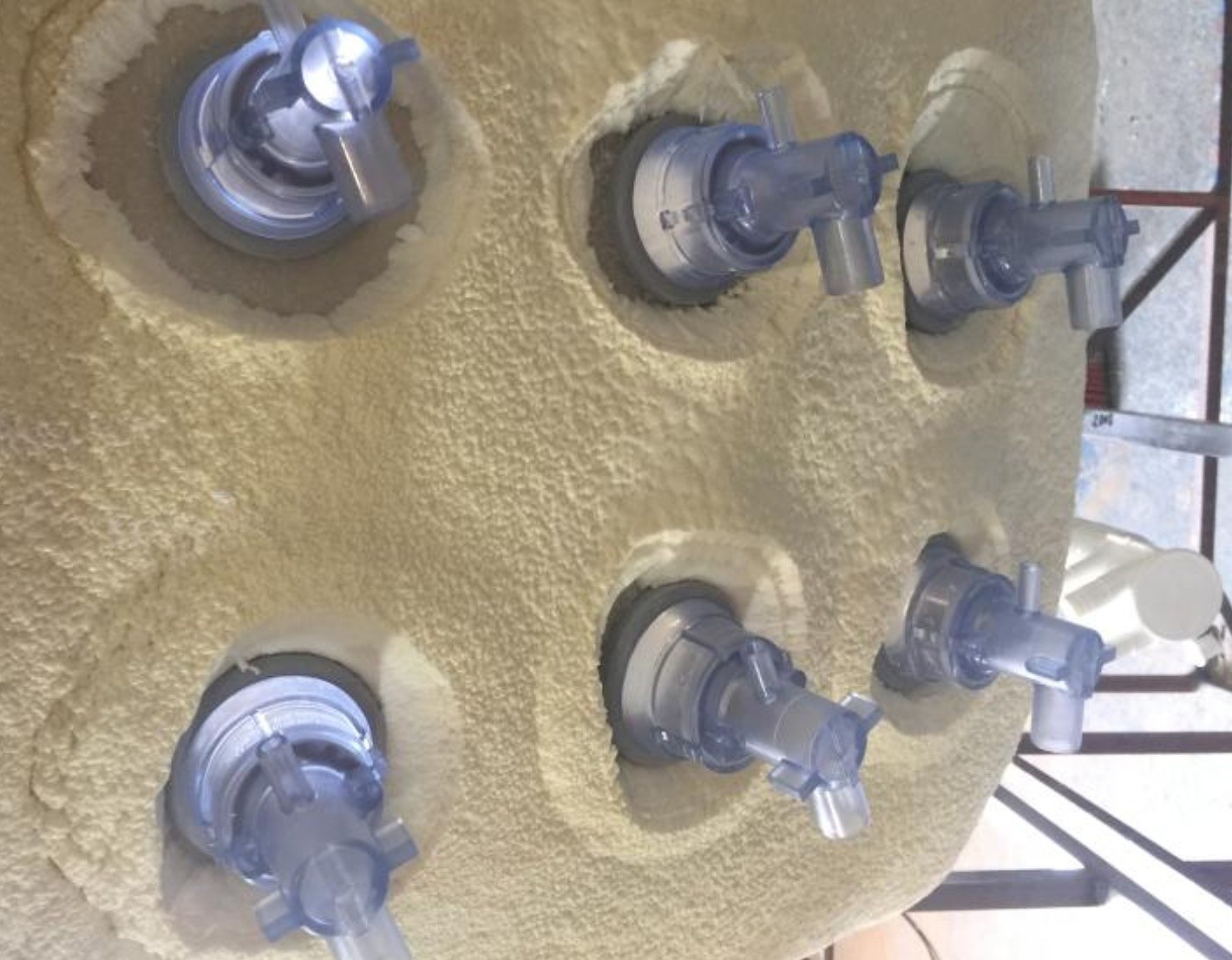
The drilling station is where dozens of holes are punched into every SPA shell for jets, water inlets, outlets, sensors and lights — and each hole must fit its corresponding part with zero tolerance for error.
Wall thickness after drilling is the difference between a durable SPA and one that leaks. If the remaining wall is too thin, the thread engagement is too weak and the part loosens under years of water pressure — a wall that is too thin can even crack outright. If the wall is too thick, the bolt cannot bottom out and the gasket never fully compresses. Either way, water finds a path. And if the drilling angle is off by even a small margin, the part simply will not mount.
Three things prevent leaks at this stage: (1) hole diameters held within a ±2 mm tolerance, (2) a flat, even sanding surface to eliminate the angular stress that causes cracking, and (3) a correctly matched rubber gasket.
For every jet, suction fitting, surface-mounted part, underwater light and overflow drain we ship to EEH, we include the recommended hole diameter. The customer drills to spec and installs in one pass.
This is the second layer of value: the parts arrive not as loose items, but as a kit that comes with assembly know-how.
Midway through the workshop, the Hydrorelax team stopped to photograph the external circulation system and the LED chromotherapy lights — two components that fundamentally change what an SPA is worth.
External circulation systems are built for commercial use. A home SPA can run on an internal loop, but hotels, gyms and wellness centres need an independent external circulation unit with dual-pump backup so a single pump failure does not shut down operations. A significant share of EEH's UK orders are commercial projects, which is why this category matters so much to them.
Lighting gives an SPA its emotional appeal — and its price premium. Add an RGB full-color LED chromotherapy system with timed cycling and IP68 underwater protection, and the same SPA can sell for 15% to 25% more. The controller can integrate with the main SPA board or work as a standalone remote — it is a component-level upgrade, not an afterthought.
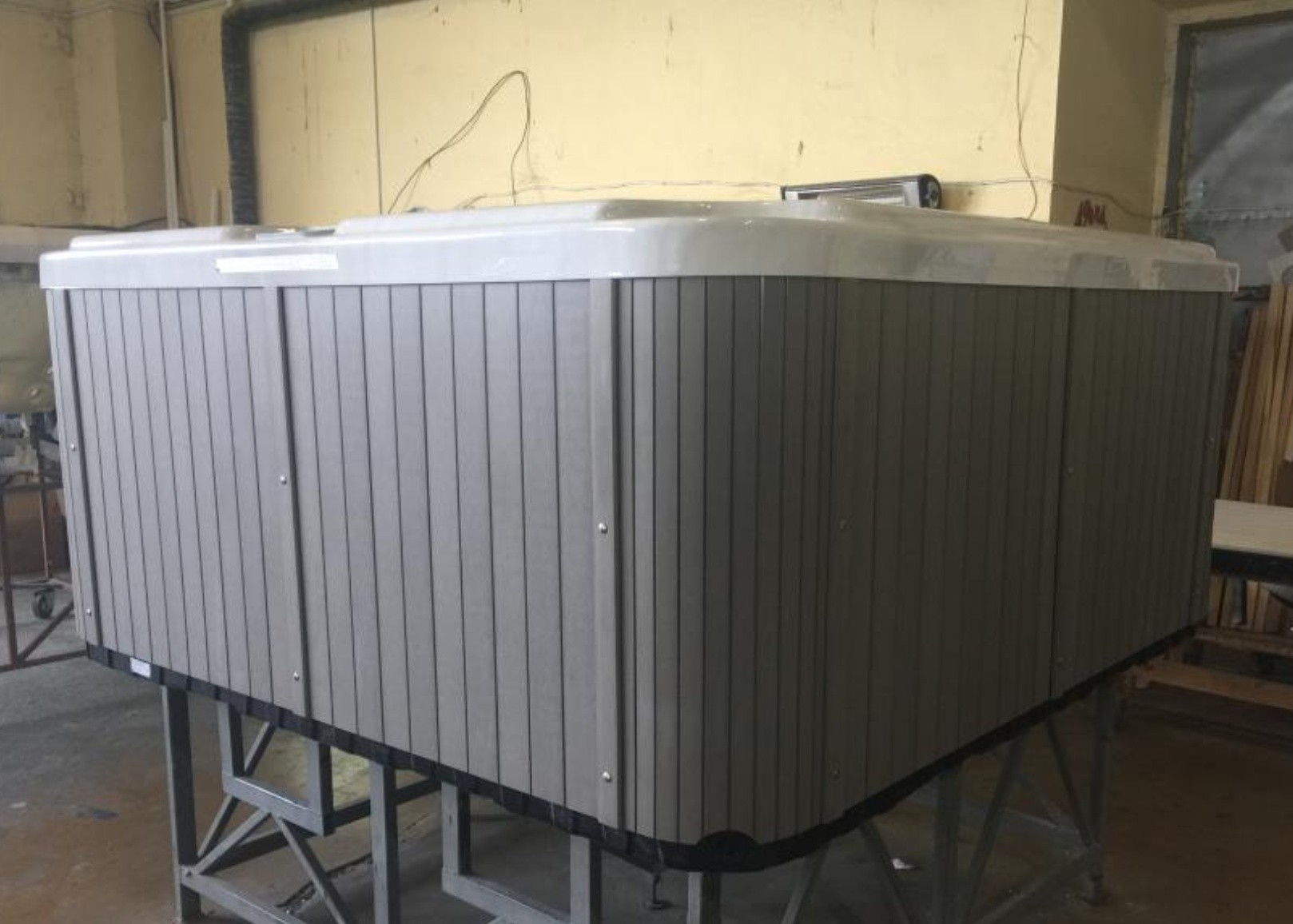
Roughly 60% of what a customer sees when they open an SPA crate is the outer shell, which is why the skirt panel assembly area is where an SPA's visual value is decided.
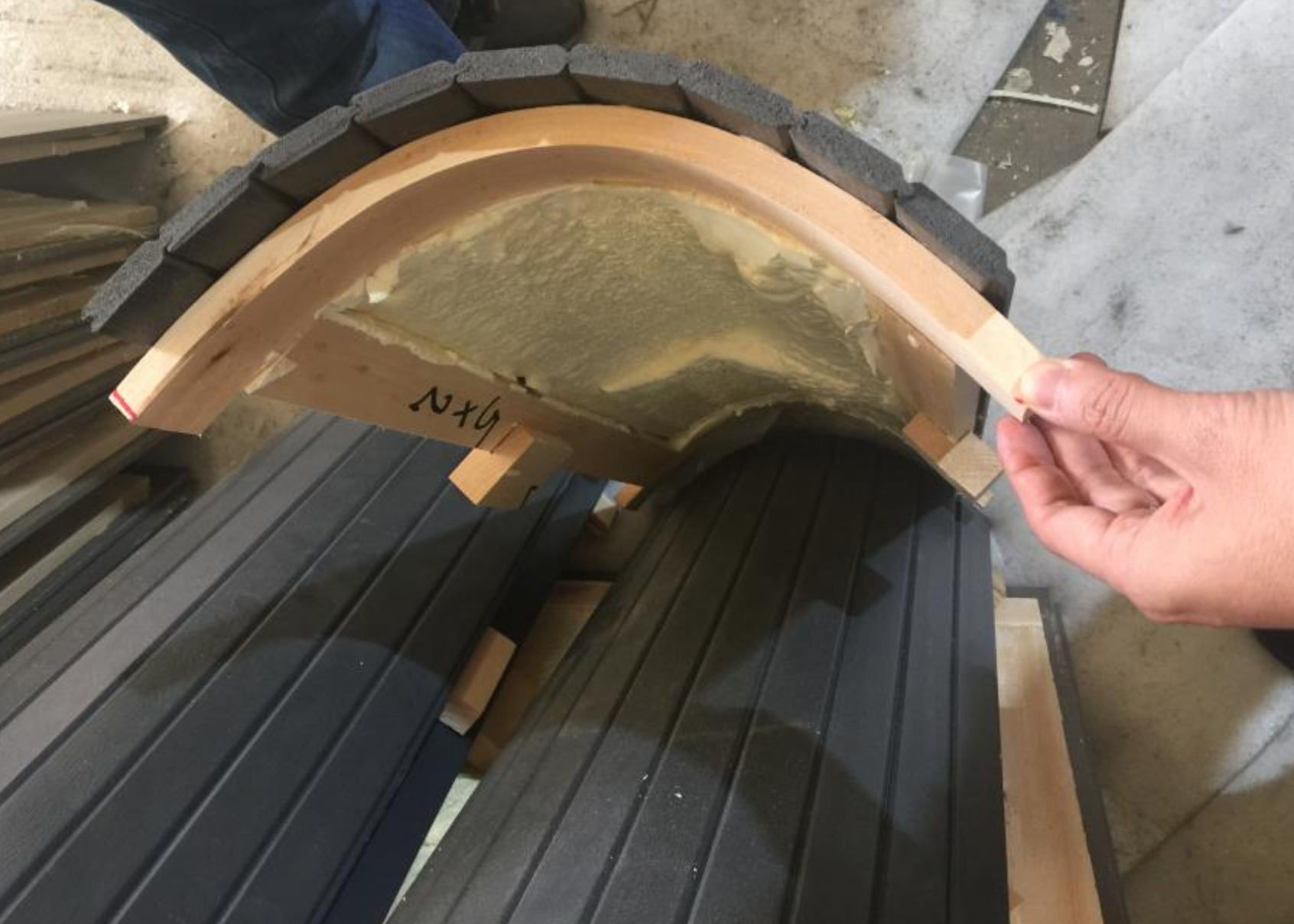
During the visit, we walked through three skirt panel configurations with the EEH team:
— 90 mm narrow-panel, vertical mount: Adapts to different SPA dimensions, can be cut to length on site, and offers a practical combination of flexibility and cost-efficiency, especially when paired with local labour.
— Corner reinforcement with 45 × 10 mm grey profiles: Used alongside the 90 mm front panels, with the corner section ordered as part of the same batch from the same supplier, eliminating the risk of colour mismatch and material hardness variation.
— Black panels with PS profile internal framing: Black is a popular skirt colour in its own right; the internal support can be made of treated timber (lower cost, suitable for dry climates) or polystyrene profiles (waterproof, moisture-resistant, insect-proof, stable over the long term).
There was one more detail we shared with EEH during the visit — not about a part, but about how to move an SPA during assembly. The client had been using fixed-frame workstations where any repositioning required a forklift. After seeing 80 cm-high automated roller conveyor lines with locking casters in domestic SPA factories, we passed that setup to EEH. They adopted it, and assembly efficiency improved measurably.
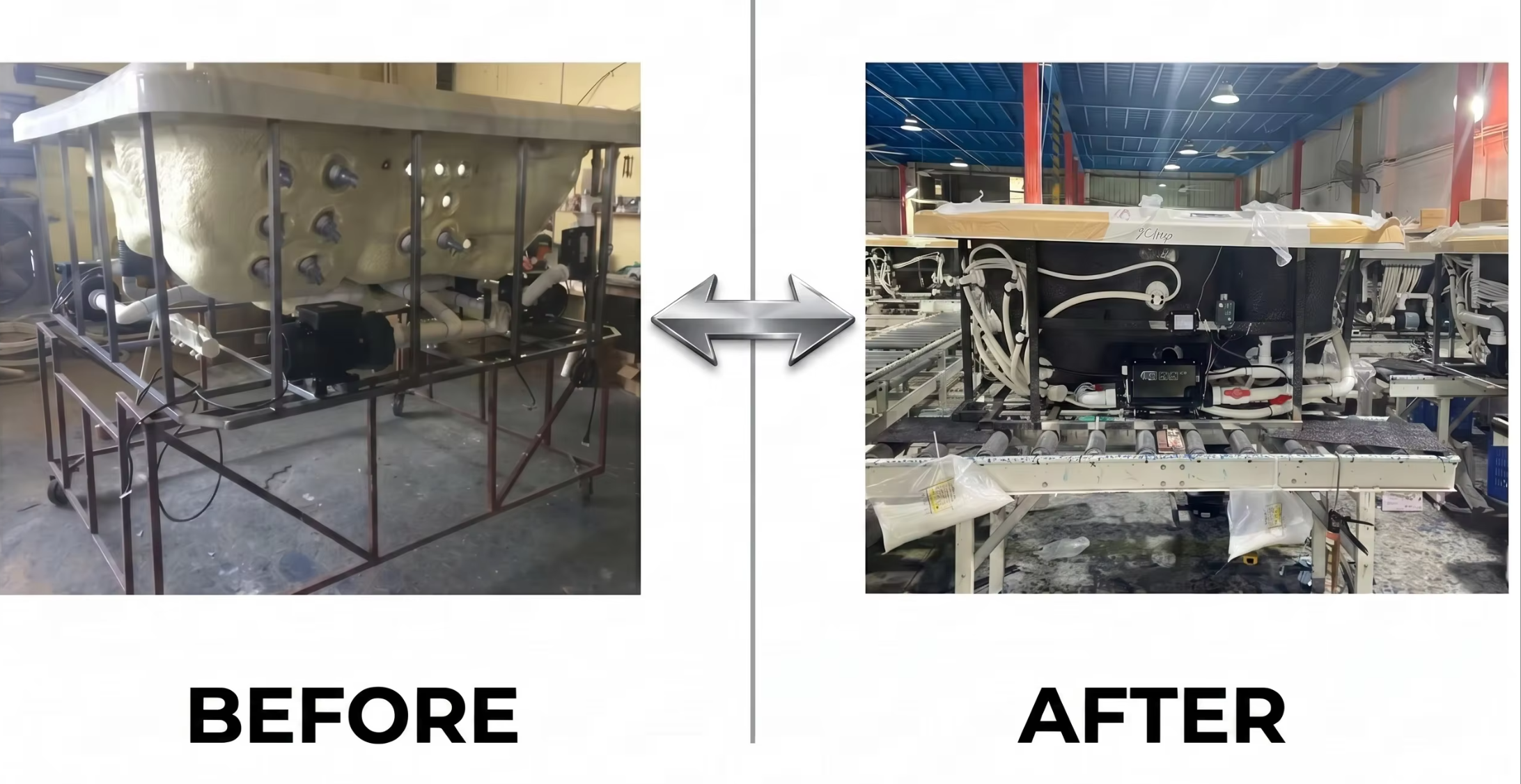
This is the third layer of value: passing along the good practices we see across the industry — not as a sales pitch, but as something the customer can use tomorrow.
If there is one product line most suppliers overlook, it is the SPA cover.
Most SPA component suppliers stop at the bathtub body and its internal fittings. The cover is left for the customer to source separately. The result: either a low-quality cover from a small workshop, or a decent cover with a lead time that does not align with the assembly schedule.
Our SPA covers are manufactured in our own facility — marine-grade PVC outer fabric, 1.5 lb/ft³ EPS foam core, UV stabilizer formulation, vacuum-sealed polyethylene film, reinforced corners and double-stitched tie-down straps. When the cover ships as part of the same one-stop package as the jets, the PVC fittings and the pumps, the customer does not need to run a separate sourcing project for it.
Between workshop sessions, the EEH team took the Hydrorelax team to the small town where the factory is based — a quiet, well-kept Eastern European community.

Over coffee that lasted more than two hours, three things came up — the kind of topics that never surface in an email thread. First, the owner talked about the early years of the factory: before Hydrorelax, his supply base was unstable — one supplier sent the wrong pipe specification, another's pump arrived 20 days late, one batch of LED lights failed after two months.
Second, he explained what drove the decision to consolidate 70% of his orders with a single supplier. He had learned — through industry contacts — that Hydrorelax had been a key components partner to one of Europe's largest SPA manufacturers for more than ten years. That track record, more than any price comparison, was what gave him the confidence to concentrate his supply chain.
Third, he shared what he saw coming — the project types the factory was winning, which told us what components he would need next season.
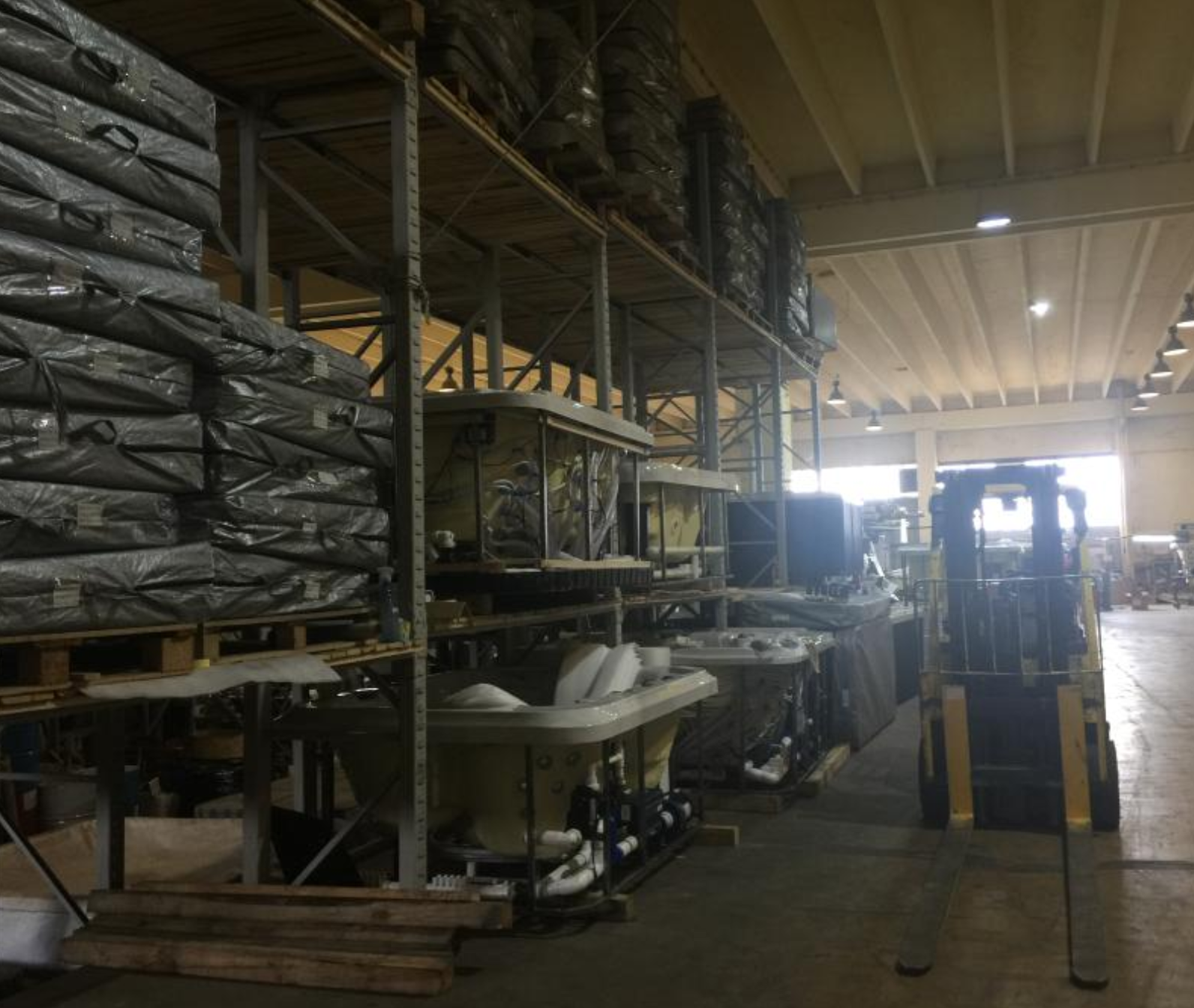
That two-hour conversation was more valuable than 24 months of email correspondence. Walking the factory floor, the Hydrorelax team saw: how EEH's workers actually handle each component; which parts were overstocked in the warehouse (a signal to help the customer plan smarter inventory next time); and what new project types were entering the pipeline (a preview of future demand).
Looking back at the November 2018 trip, four things stand out:
As manufacturers across the UK, Eastern Europe and Western Europe scale their SPA production, the complexity of managing a multi-supplier component pipeline only grows. EEH's decision to consolidate roughly 70% of its parts with a single partner reflects a broader shift: from chasing the lowest unit price to valuing supply-chain predictability, technical support and the ability to adapt as product lines evolve.
We continue to work with EEH on refining their component mix, adjusting stock plans ahead of peak seasons, and sharing the assembly practices we observe across our other partner factories. The parts we ship are only half the story — the other half is what happens when those parts arrive at the workshop and meet the people who build with them every day.
We welcome SPA manufacturers and assemblers across Europe to work with Hydrorelax. Beyond supplying jets, pumps, PVC pipes and fittings, hoses, LED chromotherapy lights, circulation systems, skirt panels and SPA covers, we provide ongoing technical support — from drilling specifications to glue application methods to assembly-line layout suggestions. The Hydrorelax team visits partner customers in Europe to walk the workshop floor, review the component mix, and plan the next stage of cooperation face-to-face.
If you are building SPAs anywhere in Europe and want a parts partner who understands what happens on your side of the shipment — not just what leaves our warehouse — get in touch. We are happy to start with a short call, ship samples, and plan the first visit together.
Who is EEH and what does the company do?
EEH is an SPA manufacturer based in Eastern Europe, serving the UK, Eastern European and Western European markets. The company assembles complete SPA units, and Hydrorelax supplies roughly 70% of the components that go into every unit — including pumps, jets, PVC pipes and fittings, hoses, LED chromotherapy lights, circulation systems, controllers, skirt panels and SPA covers.
When did Hydrorelax start working with EEH?
Hydrorelax and EEH began their cooperation around 2015. By the time the Hydrorelax team visited the EEH factory in November 2018, the partnership had already been running for several years, with Hydrorelax components feeding a significant share of EEH's production line.
What products does Hydrorelax supply to SPA manufacturers like EEH?
Hydrorelax supplies a comprehensive range of SPA and bathtub components: pumps, jets, PVC pipes and fittings, flexible hoses, LED chromotherapy lights (RGB full-color, IP68 rated), external circulation systems, control units, skirt panels in various widths and colors, and SPA covers manufactured in our own facility with marine-grade materials.
Why does one-stop SPA parts supply matter for assembly operations?
A single SPA shell requires components sourced from multiple factory lines. When a factory sources from multiple suppliers, any single delay stops the entire assembly line — costing thousands of euros per day during peak season. One-stop supply consolidates purchasing, shipping and quality control under a single partner, removing the hidden costs of supplier management, logistics fragmentation and production downtime.
What technical support does Hydrorelax provide beyond shipping parts?
For every component we supply — from jets to skirt panels to overflow drains — we include practical assembly guidance: recommended hole diameters, glue application methods, wall-thickness tolerances and gasket matching advice. Our team also shares assembly-line layout suggestions and production practices observed across our partner factory network. The Hydrorelax team visits partner customers in Europe to review the workshop floor and plan the next stage of cooperation in person.